






To stop cat scratching furniture immediately, apply double-sided tape or a citrus-based deterrent spray to targeted areas, and place a sturdy sisal scratching post within 3 feet of the location. Most affordable posts range from $20-50, with sisal rope posts offering the best durability for the price.
This is a behavioral crisis requiring consistent intervention over 2-4 weeks. Professional help is needed if scratching escalates despite deterrents, or if stress-related causes are suspected.
Key Takeaways
- Fastest fix: a deterrent (tape, foil, or citrus spray) on the target spot plus a sturdy sisal post within 3 feet of it. Most cats show real improvement within 7–14 days.
- It’s not spite. A 2024 survey of over 1,200 cats found stress, disrupted routines, and high play or nighttime activity are leading drivers of unwanted scratching — not misbehavior.
- Placement beats price. A wobbly, distant, or single-texture post gets ignored no matter how much it costs. Location and stability matter more than the brand.
- Declawing doesn’t work and is increasingly illegal. It removes the last toe bone, not just the claw, and causes lasting pain without stopping the underlying instinct. It’s now banned or restricted in roughly 40 countries and a growing list of US states, including California as of 2026.
- A $30–45 sisal rope post offers the best durability-to-price ratio for most adult cats — cheaper posts under $20 often have unstable bases or fraying sisal within weeks.
How to Stop Cat Scratching Furniture
Your couch is being destroyed. You’ve tried yelling, spraying water, and moving furniture—but your cat keeps returning to the same spot. This isn’t defiance. It’s instinct. And you can stop it with the right approach.
This guide delivers immediate deterrents that work within hours, compares affordable scratching posts under $50, and explains exactly why your cat chose your furniture in the first place. No guesswork. No wasted money.
Why Cats Scratch Furniture: The Root Cause
Understanding why your cat scratches furniture is the first step to stopping it. Cats don’t scratch to annoy you. They scratch because their biology demands it.
Primary Reasons for Furniture Scratching
| Reason | Explanation | Signs to Watch For |
|---|---|---|
| Claw Maintenance | Scratching removes dead outer claw layers | Visible claw sheaths near scratch sites |
| Territory Marking | Scent glands in paws leave chemical signals | Scratching increases when guests visit |
| Stretching Exercise | Full-body stretch engages leg and back muscles | Scratching after waking from naps |
| Stress Relief | Scratching releases tension and anxiety | Scratching spikes during household changes |
| Boredom | Lack of stimulation leads to destructive behavior | Scratching when left alone for hours |
According to the ASPCA, cats scratch to mark territory, maintain healthy claws, and stretch their muscles. When they choose your couch over a scratching post, it’s usually because the furniture better meets one or more of these needs.
A 2024 survey of 1,211 cats published in Frontiers in Veterinary Science found that a cat’s stress level was a leading reason for unwanted scratching, and that the presence of young children in the home, along with high levels of play and nighttime activity, significantly increased scratching frequency — though researchers note the exact link between children and scratching isn’t fully understood yet. The study also found that cats who play for very long, uninterrupted stretches may scratch more afterward, likely from overstimulation rather than a lack of play.
Immediate Intervention Steps (First 24-48 Hours)
When cat scratching furniture becomes urgent, you need actions that work immediately. Follow this sequence:
Step 1: Make the Furniture Unappealing (Day 1)
Apply deterrents to all targeted scratch zones:
- Double-sided tape: Cats hate sticky surfaces on their paws
- Aluminum foil: The sound and texture repel most cats
- Citrus-based spray: Natural orange oil formulas are safe and effective
- Silicone or static-cling deterrent strips: Transparent, reusable strips that cling to smooth surfaces like window sills and furniture edges without leaving adhesive residue
Reapply daily for the first week. Consistency matters more than the specific product.
Step 2: Place an Alternative Scratching Surface (Day 1-2)
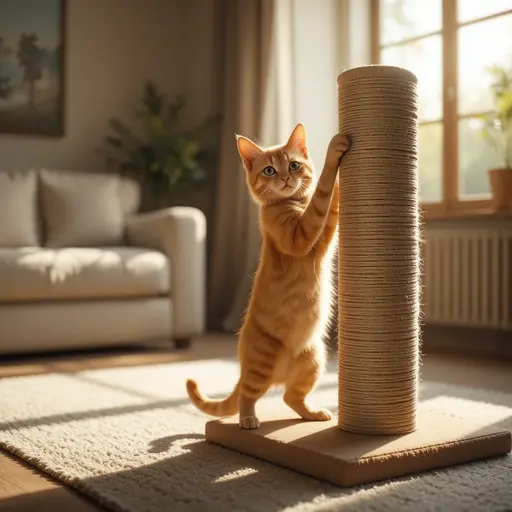
Position a scratching post within 3 feet of the furniture being scratched. Cats won’t travel far for an alternative. The post must be:
- Tall enough for full stretching (minimum 24 inches for adult cats)
- Stable enough not to wobble during use
- Textured appropriately (sisal rope beats carpet for most cats)
Step 3: Redirect and Reward (Ongoing)
When you catch your cat approaching the furniture:
- Calmly pick them up and place them at the scratching post
- Gently guide their paws in a scratching motion
- Immediately reward with a treat or praise when they use the post
Never punish after the fact. Cats don’t connect punishment with past behavior.
Common Mistakes That Make Scratching Worse
Avoid these errors that prolong the cat scratching furniture crisis:
| Mistake | Why It Fails | Better Approach |
|---|---|---|
| Yelling or hitting | Increases stress, triggers more scratching | Use calm redirection only |
| Moving the post too far | Cats won’t travel for alternatives | Keep posts near scratch zones |
| Using carpet-covered posts | Confuses cats about acceptable surfaces | Choose sisal or cardboard instead |
| Inconsistent deterrents | Cats test boundaries when protection lapses | Maintain deterrents for 3-4 weeks minimum |
| Only one scratching option | Different cats prefer different textures | Provide 2-3 post types |
Cost Breakdown: Scratching Posts Under $50
You don’t need expensive furniture to stop a cat from scratching furniture. Here’s what affordable options actually cost:
Price Range Table
| Post Type | Price Range | Durability | Best For |
|---|---|---|---|
| Cardboard Scratchers | $15-25 | 2-4 months | Kittens, low-budget starts |
| Sisal Rope Posts | $30-45 | 12-24 months | Adult cats, heavy scratchers |
| Sisal Fabric Posts | $35-50 | 18-30 months | Multiple cat households |
| Angled/Wall-Mount | $25-40 | 12-18 months | Senior cats |
| Multi-Level Trees | $45-50 | 18-24 months | Active cats needing vertical space |
Two real, independently tested standouts show up repeatedly at this price point: the SmartCat Ultimate Scratching Post (roughly $45–50, a 32-inch sisal-wrapped post on a solid wood base) and the Amazon Basics Cat Scratching Post (roughly $25–35, natural jute fiber), which undercuts most premium brands without sacrificing stability. If you’re also weighing whether a naturally calmer breed would scratch less to begin with, PetsMirror’s guide to cat breeds that scratch furniture less covers that separately — though as that guide points out, no breed is truly scratch-proof.
Factors Affecting Price
- Material quality: Natural sisal costs more but lasts longer
- Base stability: Weighted bases prevent tipping (critical for large cats)
- Height: Taller posts require more material and cost more
- Brand reputation: Established pet brands charge premium prices
When Cheaper Options Become Risky
Posts under $20 often have critical flaws:
- Unstable bases that tip during use (cats abandon them)
- Thin sisal that frays within weeks
- Glue containing toxic adhesives
- Heights too short for proper stretching
Investing $30-40 upfront saves money long-term by preventing furniture damage and repeat purchases.
Side-by-Side Post Comparison ($20-50 Range)
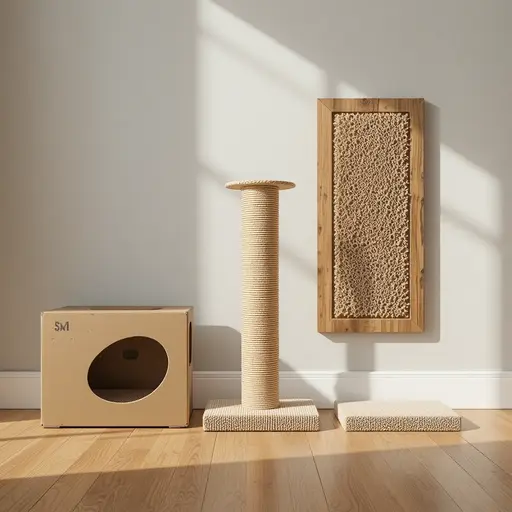
| Feature | Cardboard Lounger | Sisal Rope Post | Sisal Fabric Post | Wall-Mount Board |
|---|---|---|---|---|
| Price | $15-25 | $30-45 | $35-50 | $25-40 |
| Lifespan | 2-4 months | 12-24 months | 18-30 months | 12-18 months |
| Space Needed | Low | Medium | Medium | Low |
| Stability | High (low center) | Medium-High | High | High (mounted) |
| Best For | Kittens, seniors | Adult cats | Multi-cat homes | Small apartments |
| Maintenance | Replace when worn | Re-wrap rope yearly | Vacuum regularly | Check mounting |
Best Choice by Scenario
Choose Cardboard If:
- You’re testing whether your cat will use a post
- Budget is extremely tight under $20
- Your cat is elderly or has mobility issues
Choose Sisal Rope If:
- Your cat is an adult heavy scratcher
- You want the best durability-to-price ratio
- You have space for a freestanding post
Choose Sisal Fabric If:
- You have multiple cats
- You want the longest-lasting option
- Your cat prefers horizontal scratching
Choose Wall-Mount If:
- You live in a small apartment
- Floor space is limited
- Your cat likes climbing vertically
Decision-Making Framework
Use this flowchart to choose your intervention strategy:
Scenario 1: Single Cat, Minor Damage
- Action: Apply deterrent tape + one sisal post ($35)
- Timeline: Expect improvement in 7-10 days
- Budget: Under $50 total
Scenario 2: Multiple Cats, Severe Damage
- Action: Deterrent spray + 2-3 posts in different locations ($100-120)
- Timeline: Expect improvement in 14-21 days
- Budget: Higher initial cost prevents couch replacement
Scenario 3: Stress-Related Scratching
- Action: Deterrents + post + environmental enrichment (toys, playtime)
- Timeline: Expect improvement in 21-28 days
- Budget: $50-75 plus daily play investment
Scenario 4: Senior Cat or Mobility Issues
- Action: Low-profile cardboard or angled post ($20-30)
- Timeline: Expect improvement in 5-7 days
- Budget: Minimal, focus on accessibility
When to Seek Professional Help
Most cat scratching furniture cases resolve with consistent home intervention. However, professional help is warranted when:
Red Flags Requiring Veterinary or Behaviorist Consultation
- Scratching escalates despite 4 weeks of consistent deterrents
- Scratching is accompanied by other stress behaviors (hiding, aggression, litter box issues)
- Your cat scratches only when specific people or pets are present
- Scratching causes self-injury or bleeding paw pads
- Sudden onset in a previously well-adjusted cat
International Cat Care notes that scratching can indicate underlying medical issues if it appears suddenly in adult cats. Veterinary Partner confirms that behavioral consultation may be needed when environmental modifications fail.
Types of Professional Support
| Professional | When to Contact | What They Provide |
|---|---|---|
| Veterinarian | Sudden behavior changes, self-injury | Medical exam, anxiety medication if needed |
| Certified Cat Behaviorist | 4+ weeks of failed home intervention | Customized behavior modification plan |
| Professional Trainer | Multi-cat household conflicts | In-home observation and training |
Prevention Guidance: Long-Term Success
Stopping cat scratching furniture is only half the battle. Prevention keeps it from returning:
Weekly Maintenance Checklist
- Inspect scratching posts for wear and tear
- Rotate toy selection to prevent boredom
- Trim claws every 2-3 weeks (or use nail caps)
- Maintain deterrents on furniture for a full 4-week minimum
- Provide 15 minutes of interactive play daily
Environmental Enrichment That Reduces Scratching
Cats with adequate stimulation scratch less destructively. Purina identifies boredom as one of the top reasons cats target furniture. Provide:
- Vertical space: Cat trees, shelves, or window perches
- Hunting simulation: Wand toys, puzzle feeders, laser pointers
- Safe viewing: Window access to outdoor activity
- Consistent routine: Predictable feeding and play schedules
FAQ: Cat Scratching Furniture Questions
How long does it take to stop a cat from scratching furniture?
Most cats show improvement within 7-14 days of consistent deterrent use and post placement. Full habit change takes 3-4 weeks.
Will declawing stop furniture scratching?
No. Declawing amputates the last bone of each toe, not just the claw, and doesn’t stop the underlying urge to scratch — it’s linked to chronic pain, litter box avoidance, and other behavioral problems. The procedure is now banned or restricted in roughly 40 countries and a growing list of US states and cities; California’s statewide ban took effect in 2026, joining New York, Maryland, Massachusetts, Virginia, Rhode Island, and Washington, D.C. Never choose declawing for furniture protection.
Can I train an older cat to stop scratching furniture?
Yes. Age doesn’t prevent behavior modification, though it may take longer. Senior cats often respond well to low-profile scratching options.
What if my cat ignores the scratching post entirely?
Try different textures (sisal, cardboard, wood), different orientations (vertical, horizontal, angled), and add catnip or treats to attract interest. Location matters more than post features.
Are spray deterrents safe for cats and furniture?
Citrus-based and commercial deterrent sprays using orange oil and aloe are safe for both cats and upholstery when used as directed. Always test on a hidden area first.

Conclusion
Stopping cat scratching furniture requires immediate action, consistent deterrents, and the right scratching post positioned in the right location. Most cases resolve within 2-4 weeks when you address the root cause rather than just the symptom.
Invest $30-50 in a quality sisal post rather than risking hundreds in furniture replacement. Apply deterrents daily for the first month. Redirect your cat calmly and reward post-use generously. If scratching persists beyond 4 weeks or escalates with other stress behaviors, consult your veterinarian or a certified cat behaviorist.
Your cat isn’t trying to destroy your home. They’re following instinct. Give them an acceptable outlet, protect your furniture temporarily, and both of you will live peacefully together.