



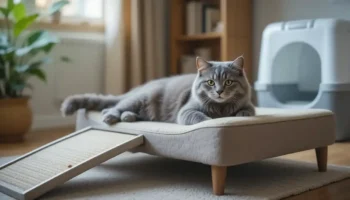
Is your older cat hesitating to jump, moving stiffly, or spending more time curled up? Those small changes are usually the first sign of feline arthritis, not just “getting old.” This guide walks you through how to spot it early, which treatment options have evidence behind them, and how to set up your home so your cat can keep moving comfortably.
Managing Arthritis in Senior Cats doesn’t have to mean watching them slow down—with the right approach, you can protect their quality of life, reduce pain, and help them enjoy their golden years with dignity and ease.
Key Takeaways
- Feline osteoarthritis is far more common than most owners realize, affecting up to 90% of cats over 12, but cats hide pain instinctively, so subtle behavior changes matter more than obvious limping.
- A monthly injection called Solensia (frunevetmab) has become a mainstream first-line option since its 2022 FDA approval, alongside or instead of daily NSAIDs.
- Weight control does as much for joint comfort as most medications; even a modest weight loss meaningfully reduces the load on arthritic joints.
- Home adjustments, ramps, low-entry litter boxes, and non-slip flooring can noticeably improve comfort within days.
- Joint supplement evidence is more mixed than product marketing suggests. Ask your vet which options actually have data behind them for your cat.
Why Early Detection Is Critical
Catching joint trouble early gives you the widest range of treatment options and the best odds of preserving mobility. The longer arthritis goes unmanaged, the more likely your cat is to lose muscle mass and develop compensating habits, like avoiding certain movements, that make the underlying pain harder to spot.
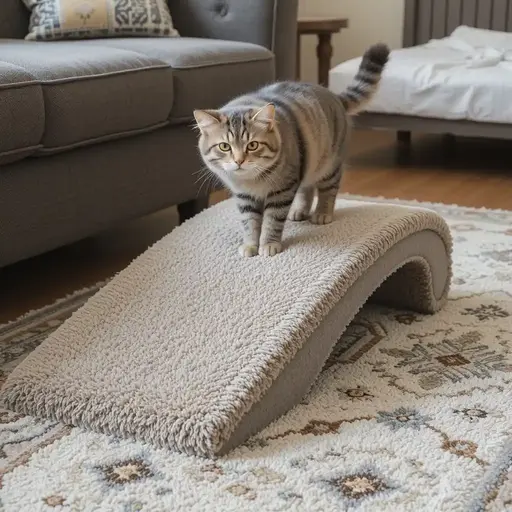
Benefits of early action
- Pain relief – Starting medication or supplements early reduces inflammation before it becomes chronic.
- Prevent muscle atrophy – Cats that stay active longer keep more muscle to support their joints.
- Simpler lifestyle changes – Small home adjustments are easier to make and less disruptive when the problem is caught early.
Understanding Feline Arthritis
Arthritis is inflammation of a joint’s cartilage, capsule, or surrounding tissue. In cats, the most common form is osteoarthritis (OA), a degenerative disease in which cartilage thins over time until bone begins rubbing against bone, causing chronic discomfort.
Types of feline arthritis
| Type | Description | Approx. Prevalence in Seniors |
|---|---|---|
| Osteoarthritis (OA) | Degenerative loss of cartilage, leading to bone-on-bone contact | Up to 90% of cats over 12 years show radiographic signs |
| Inflammatory arthritis | Joint inflammation driven by infection, immune disease, or trauma | Much less common than OA in senior cats |
Key takeaway: Osteoarthritis accounts for the large majority of cases. One of the most-cited studies found radiographic evidence of degenerative joint disease in 90% of cats over 12, and most of those cats had no arthritis noted anywhere in their medical records, meaning the pain was likely going unrecognized. Most management strategies focus on slowing OA’s progression and controlling the pain it causes.
Risk Factors & Early Warning Signs
Senior cats face several built-in risk factors that accelerate joint wear. Recognizing subtle cues can prompt a veterinary visit before pain becomes severe.
Common risk factors
- Advanced age – Cats over 12 years are most vulnerable, though joint changes can begin well before that.
- Obesity – Extra body weight adds mechanical stress to every weight-bearing joint.
- Previous injury – Old fractures or sprains can trigger early cartilage breakdown in that joint.
- Genetics and breed – Some breeds carry a higher inherited risk of joint problems; ask your vet whether this applies to your cat.
Early behavioral clues
Cats hide pain well, but watch for these “absence” symptoms:
- Reluctance to jump – Skipping favorite perches or misjudging jumps they used to make easily.
- Reduced grooming – Rough, matted, or greasy fur, especially over the back and hindquarters, that a cat can no longer reach comfortably.
- Litter box avoidance or hesitation – Struggling to climb into a high-sided box. A self-cleaning litter box with a low-entry design can make a real difference here.
- Changes in activity – Sleeping more, playing less, or general withdrawal.
If you notice any of these, schedule a check-up. Vague behavior changes are exactly what makes feline arthritis so often missed.
Diagnosing Joint Problems
A thorough work-up confirms arthritis, determines its severity, and rules out other conditions that can look similar, such as hyperthyroidism or dental pain.
Typical evaluation steps
- Physical exam – Your vet palpates each joint for swelling, warmth, crepitus, and pain response.
- Radiographs (X-rays) – Reveal bone spurs, joint space narrowing, and osteophytes.
- Advanced imaging (CT/MRI) – Reserved for complex cases; helps visualize soft-tissue structures.
- Laboratory tests – Blood work screens for metabolic disease, while joint fluid analysis can distinguish OA from infectious or immune-mediated arthritis.
An accurate diagnosis is the foundation everything else in this guide builds on, so don’t skip the vet visit even if home changes are already helping.
Medical Management Options
Pharmaceuticals are usually the fastest way to control inflammation and pain, but they work best paired with the lifestyle changes covered later in this guide. Feline pain management has changed significantly in the last few years, most notably with the arrival of a monthly injectable option, so don’t assume the choices are limited to a daily pill.
Solensia: a newer first-line option
Frunevetmab, sold as Solensia, is a monoclonal antibody that targets nerve growth factor (NGF), a key driver of osteoarthritis pain signaling. It was approved by the FDA in 2022 as the first monoclonal antibody treatment for any species, and it’s given as a monthly injection at your vet’s office rather than a pill you manage at home.
- How it works: By blocking NGF, it reduces pain signals from the joint before they reach the brain.
- What the evidence shows: In clinical studies, up to 77% of owners reported improvement in their cat’s pain signs by the second or third monthly dose, and it’s generally well tolerated even in cats with early-stage kidney disease.
- What to know before starting: The safety of combining Solensia with NSAIDs hasn’t been established, so talk to your vet before layering it onto an existing NSAID regimen. Cost typically runs $75–$115 per injection, and it isn’t labeled for cats under 7 months or under 5.5 lb.
First-line medications
| Drug (example) | Class | Main benefit | Monitoring requirements |
|---|---|---|---|
| Meloxicam | NSAID | Reduces prostaglandin-mediated inflammation | Baseline bloodwork and urine before starting, then periodic rechecks |
| Robenacoxib | NSAID | Targeted joint pain relief | In the US, labeled for short-term use only; watch for vomiting or appetite loss |
| Buprenorphine | Opioid | Short-term relief for moderate pain | Observe for sedation or constipation |
Long-term daily NSAID use in cats is a more nuanced topic than it’s sometimes made out to be. Chronic kidney disease is common in senior cats, and NSAIDs carry a real risk in cats with unstable kidney function. That said, veterinary pain-management guidelines now support long-term use of the lowest effective NSAID dose, with monitoring, even in cats with stable early-stage kidney disease, because untreated chronic pain is also a real welfare cost. This is a conversation to have directly with your vet, not a decision to make from an article.
Adjunctive options
- Gabapentin – Helps with the neuropathic component of chronic pain; start low and titrate slowly under veterinary guidance.
- Tramadol – Occasionally used in cases that don’t respond fully to other options, though its effectiveness varies cat to cat.
Safety tip: Never give human NSAIDs (ibuprofen, naproxen) to cats. Even a small dose can be fatal.
Nutritional Support & Supplements
A joint-friendly diet plus the right supplements can help slow cartilage breakdown and lower inflammation, but this is one area where it’s worth being honest about what the evidence actually shows rather than what packaging promises.
Core supplements
| Supplement | Primary action | What the evidence shows |
|---|---|---|
| Glucosamine + Chondroitin | Marketed to support cartilage matrix synthesis | Mixed. A 2022 randomized, placebo-controlled trial found no significant difference in pain scores or activity between cats given a glucosamine/chondroitin supplement and cats given a placebo. |
| Omega-3 fatty acids (EPA/DHA) | Reduces inflammatory cytokines | More consistent support; diets high in EPA/DHA improved objective mobility measures in controlled feline studies. |
| Green-lipped mussel extract | Natural source of glucosamine and omega-3s | Best evidence exists when combined with omega-3s in a therapeutic diet rather than as a standalone supplement. |
The honest takeaway: omega-3 fatty acids have the most consistent evidence behind them for feline joint comfort. Glucosamine and chondroitin are widely sold and may still help some individual cats, but controlled trials haven’t reliably shown a benefit over placebo, so treat bold claims on the label with some skepticism, and ask your vet which specific products have data behind them.
Prescription joint diets
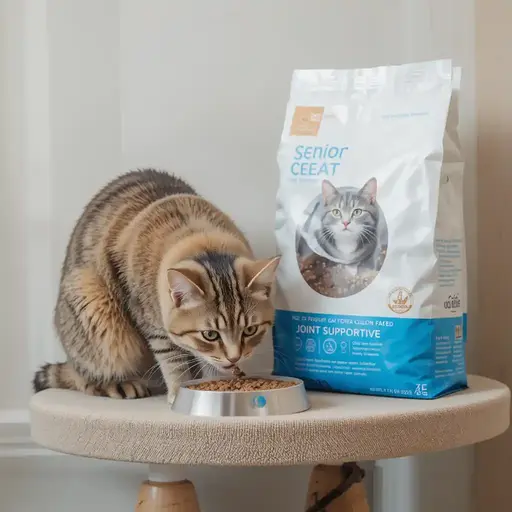
Therapeutic diets such as Hill’s Prescription Diet j/d and Purina Pro Plan Veterinary Diets JM Joint Mobility combine calorie control with added omega-3s, which is where a lot of the real benefit comes from. Because senior cats have different baseline nutrient needs than younger adults, most of these formulas are built around that shift rather than just adding a joint supplement to a standard recipe. These diets also help with the weight management piece covered later in this guide.
Physical Therapy & Alternative Treatments
Non-drug therapies complement medication, help maintain range of motion, and support muscle tone around affected joints.
Proven and emerging modalities
- Laser (LLLT) therapy – Low-level laser aims to reduce inflammation in and around the joint; some clinics report measurable weight-bearing improvements over a multi-session protocol.
- Acupuncture – Has reasonable evidence for pain relief in dogs and humans with osteoarthritis. Feline-specific research is thinner, but it’s a low-risk option many cats tolerate well, and some vets who practice integrative medicine report good results.
- Hydrotherapy – Underwater treadmills provide resistance without joint impact. Availability is limited to specialty rehab clinics, but it can be effective for cats with more advanced stiffness who tolerate the setting.
Home-based physical therapy
| Technique | How to perform | Frequency |
|---|---|---|
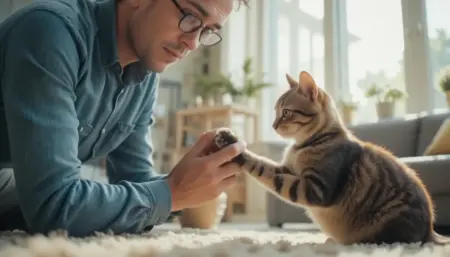
| Passive Range-of-Motion (PROM) | Gently flex and extend each joint through its natural arc; hold 5 seconds per motion | 2× daily |
| Gentle massage | Stroke along the spine and limb muscles, applying light pressure | 5 minutes, 2× daily |
| Targeted stretching | Use a feather wand to encourage forward reaching and stretching | 5–10 minutes, once daily |
Always consult your vet before starting a home PT regimen, especially PROM exercises, which can cause harm if done incorrectly on an inflamed joint.
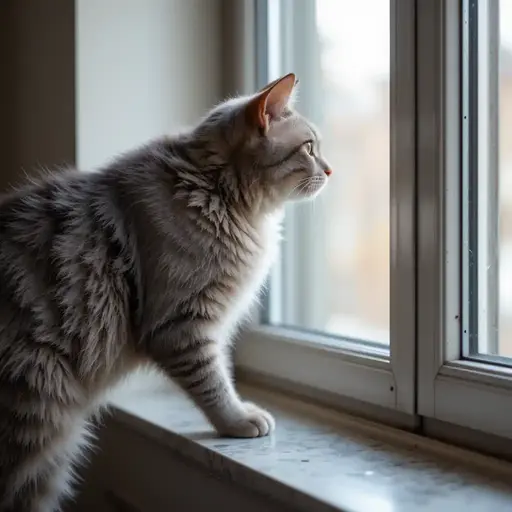
Home Environment Adjustments
Simple changes create a low-impact environment that lets your senior cat move freely without extra pain.
Mobility-friendly accessories
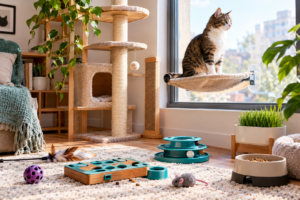
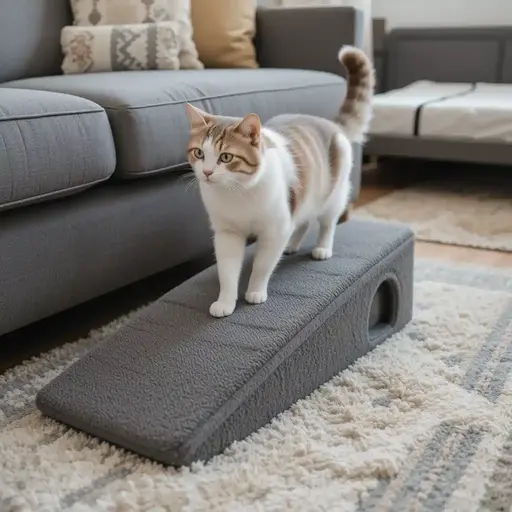
- Ramps – Non-slip surfaces with a gentle incline for couches, beds, and windowsills.
- Pet stairs – Wide treads, sturdy rails, and optional cushioned steps.
- Orthopedic bedding – Memory-foam or gel-infused pads relieve pressure points, especially on hard floors.
Flooring & litter solutions
| Issue | Fix |
|---|---|
| Slippery tiles or hardwood | Add low-pile, non-slip rugs in high-traffic zones. |
| High-sided litter boxes | Switch to a low-entry litter box and keep it on the same level as food and water so your cat isn’t climbing to reach either. |
| Cold surfaces | Provide a heated pet pad on sleeping spots, checked regularly to make sure it stays at a safe, gentle temperature. |
Quick checklist: Ramps → stairs → low-entry litter → non-slip mats → heated bed.
Weight Management & Safe Exercise
Keeping a senior cat at an ideal body condition score meaningfully reduces mechanical stress on already-compromised joints. This is one of the highest-impact things you can do, and it’s free.
Calorie-controlled feeding
- Weigh food – Use a kitchen scale rather than eyeballing portions.
- Feed multiple small meals – 3–4 meals a day help maintain metabolism and reduce begging-driven overfeeding.
- Prioritize protein – High-quality animal protein preserves lean muscle while calories are restricted.
Low-impact exercise ideas
| Activity | Description |
|---|---|
| Leash walks on a harness | 5–10 minutes, indoors or in a safe outdoor space, to encourage steady, low-impact movement. |
| Feather wand play | Encourages gentle stretching and stalking behavior without demanding jumps. |
| Assisted stair climbing | With supervision, guide your cat up a shallow set of steps to build hind-limb strength. |
Avoid high-impact games like aggressive fetch or encouraging jumps from height.
Advanced Regenerative Options
For cats with advanced OA, emerging regenerative therapies may offer additional relief, though they’re meant to complement rather than replace conventional care.
Stem-cell therapy
- Source – Autologous adipose-derived mesenchymal stem cells (taken from the cat’s own fat tissue).
- Procedure – Cells are harvested, processed, and injected into the affected joint.
- Current evidence – Small case series show reduced lameness scores, but larger controlled trials are still pending, so treat this as promising rather than proven.
Platelet-Rich Plasma (PRP)
- Mechanism – Concentrated platelets, drawn from the cat’s own blood, release growth factors that promote tissue repair.
- Typical protocol – One to three intra-articular injections spaced several weeks apart.
- Considerations – Because it uses the cat’s own cells, immune reaction risk is low, but cost and limited availability remain real barriers.
Bottom line: Discuss these options with a board-certified veterinary surgeon or rehabilitation specialist to weigh suitability and cost against expected benefit for your specific cat.
Technology Tools for Joint Monitoring
Modern pet tech can help you track subtle changes in your cat’s activity level and catch declines before you’d notice them by eye.
Wearable activity trackers
Several GPS and activity-tracking collars now include wellness features alongside location tracking, logging steps, active minutes, rest periods, and sleep quality over time. This kind of baseline data, captured while your cat is doing well, makes it much easier to spot a real decline later rather than relying on memory.
Our full comparison of current cat trackers breaks down which models include activity monitoring and which are location-only, since not every tracker on the market does both, and it flags at least one previously popular option we no longer recommend due to unresolved customer complaints.
Mobile apps for pain scoring
- Features – Daily questionnaires (for example, “How often does your cat jump today?”) paired with simple visual scales.
- Benefit – Gives your vet objective data to adjust medication or supplement dosing between visits, rather than relying on a once-a-year snapshot.
Tip: Pair tracker data with a simple log or spreadsheet to visualize trends over weeks. Bringing that to a vet visit makes the conversation far more precise than “I think she’s doing okay.”
Monitoring Progress & Adjusting the Plan
Regular evaluation keeps the treatment plan effective and safe as your cat’s needs change.
Key indicators to watch
- Mobility – Can your cat still reach a favorite perch or use the stairs comfortably?
- Pain behaviors – Vocalizing, guarding a limb, or resisting being touched in a specific spot.
- Body condition – Weight holding steady or trending toward ideal, not dropping rapidly.
- Appetite & grooming – A return to normal self-care is a good sign that pain is under control.
Schedule for follow-ups
- Initial phase (first 2 months) – Vet visit roughly every 4 weeks to fine-tune medications and supplements.
- Maintenance (after stabilization) – Twice-yearly physical exam and bloodwork, more often if anything changes.
Adjustment guidelines:
- If pain seems present more than occasionally through the day, talk to your vet about adjusting the NSAID dose or adding gabapentin.
- If weight climbs, tighten calorie targets and add short bursts of daily play.
- If new limping appears, re-image the joint to rule out a separate injury rather than assuming it’s “more of the same.”
Keeping a simple logbook or app record of changes gives you and your vet an objective view over time, instead of relying on memory.
FAQs
How quickly can I expect to see improvement after starting treatment?
Most cats show reduced stiffness within 1–2 weeks of starting an NSAID, and noticeable mobility gains after 4–6 weeks of combined supplements and physical therapy. With Solensia, many owners notice improvement by the second monthly dose. Patience matters here; some improvements take up to three months to fully show.
What is Solensia, and is it right for my cat?
Solensia (frunevetmab) is a monthly injectable medication that blocks a pain-signaling protein called nerve growth factor. It’s given at the vet’s office rather than at home, and it’s an option worth asking about whether your cat is newly diagnosed or hasn’t responded well to NSAIDs alone. It isn’t established as safe to combine with NSAIDs, so your vet will help you decide whether to switch or layer treatments.
Are there any over-the-counter products that work for cats?
Human joint supplements aren’t formulated for feline metabolism and may contain unsafe ingredients. Stick to cat-specific products, and don’t assume a supplement works just because the label makes bold claims; ask your vet which options actually have supporting data.
Can I use a heated blanket for my arthritic cat?
Yes, as long as it stays on a low, safe setting and your cat can move away if it gets too warm. Placing a thin towel between the blanket and your cat helps prevent burns, and it’s worth checking the temperature by hand periodically.
My cat refuses to take pills. Any tricks?
Hide the tablet in a small amount of tuna or pâté, use a pill pocket, or ask your vet about a transdermal gel applied to the inner ear flap. Consistency matters more than the specific method, so find what actually works for your cat and stick with it.
Will my cat outlive the arthritis if I manage it well?
Arthritis itself isn’t fatal, but uncontrolled pain can lead to secondary problems like muscle loss and reduced quality of life. With diligent, multimodal management, many cats live comfortably well into their late teens.
Conclusion
Managing arthritis in senior cats comes down to three things working together: early detection, a multimodal treatment plan, and a home built for low-impact movement.
Combine vet-prescribed medication, whether that’s a daily NSAID, a monthly Solensia injection, or both under guidance, with evidence-backed nutrition, gentle physical therapy, weight control, and smart home adjustments. Track activity, reassess pain levels regularly, and adjust the plan as your cat’s needs change.
Taking these steps gives your aging companion the comfort and freedom to keep enjoying every stretch, perch, and nap for years to come.