





Desensitization Techniques for Noise-Phobic Dogs gently introduce low‑volume recordings of scary sounds while rewarding calm behavior, teaching the brain that the noises are safe. By pairing the sounds with high‑value treats or favorite games, the dog learns to stay relaxed even as the volume slowly rises.
This step‑by‑step approach reduces panic, restores confidence, and makes thunder, fireworks, or vacuum cleaners tolerable. If you’ve watched your pup tremble at the first crack of a firework, keep reading—you’ll discover a complete, science‑backed plan that fits into a busy schedule and can be started today.
Key Takeaways
- Desensitization works by playing the trigger sound far below your dog’s fear threshold, then raising the volume in tiny steps — only after stress‑free sessions.
- Counter‑conditioning pairs that sound with a high‑value reward delivered within a second, so your dog’s brain learns the noise predicts something good, not something scary.
- Moving too fast (sometimes called flooding) can undo weeks of progress in a single session — slower is genuinely faster here.
- Persistent physiological signs, self‑injury, or no measurable progress after 4–6 weeks are red flags to loop in a veterinarian or veterinary behaviorist, sometimes alongside short‑term medication.
- Training matters, but so does prevention: a current microchip and a secure yard protect your dog if fireworks or a storm catch you off guard before the plan is complete.
What Is Noise Phobia in Dogs?
Noise phobia is an intense, disproportionate fear of specific sounds such as thunder, fireworks, gunshots, or household appliances. Unlike a brief startle reflex, the reaction triggers a full‐body alarm that can linger for hours. Veterinarians increasingly use the term “noise aversion” for the full spectrum of these fear-based reactions, from mild wariness to full panic.
How It Affects Your Pet’s Body and Mind
- Brain response: The sound hits the auditory cortex, and the amygdala (the brain’s alarm bell) releases cortisol and adrenaline.
- Physical cascade: Heart rate spikes, breathing quickens, blood is redirected away from the gut, and muscles tense.
- Emotional fallout: The dog remains on high alert long after the sound stops, creating chronic stress that can weaken immunity and damage the human‑animal bond.
Common Signs and Symptoms
| Behavioral cues | Physiological cues |
|---|---|
| Pacing, circling, or inability to settle | Trembling or full‑body shaking |
| Hiding under furniture, beds, or in closets | Rapid, shallow panting (even in cool rooms) |
| Excessive barking, whining, howling | Dilated pupils, flattened ears |
| Scratching doors, windows, or crates | Drooling, lip‑licking |
| Chewing or destroying objects | Elevated heart rate (often well above resting rate) |
Early detection lets you intervene before the fear spreads to softer sounds or anticipatory anxiety (e.g., reacting to a drop in barometric pressure before a storm).

Why Desensitization Techniques for Noise-Phobic Dogs Work
The Science of Neuroplasticity and Habitual Learning
Desensitization is a neuroplastic exercise. When the dog hears a sound far below its fear threshold, the amygdala fires weakly, preventing a full‑blown panic response.
Repeated exposure at this sub‑threshold level creates new neural pathways that label the sound as “non‑dangerous.” Over time:
- Initial exposure (10‑20% of the scary volume) keeps cortisol low.
- Neurochemical shift: GABA and serotonin rise, promoting calm.
- Habituation: The auditory cortex learns to treat the noise as background chatter, reducing heart rate and stress hormones.
This process mirrors how pilots train in flight simulators—master each cue at low intensity before scaling up.
Counter‑Conditioning: Rewriting the Emotional Script
Desensitization lowers the alarm; counter‑conditioning fills the silence with pleasure. By delivering a high‑value reward immediately after the softened sound begins, the dog learns that the noise predicts something good, not terrible.
- Timing: Offer the treat 0.5‑1 second after the sound starts, ensuring a clear cause-and-effect link.
- Magnitude: Use irresistible rewards (freeze‑dried chicken, cheese, or a favorite tug toy) that outweigh any lingering unease.
- Progression: As volume climbs, increase the reward “jackpot” (multiple rapid treats) to keep the positive association strong.
Together, these methods create a feedback loop: reduced anxiety from desensitization plus a joyful expectation from counter‑conditioning.
Preparing for a Desensitization Program
Choosing the Right Environment
Select a room your dog already views as safe:
- Low foot traffic, soft lighting, familiar bedding.
- Close windows and silence phones and other devices.
- Place a “Do Not Disturb” sign on the door for the session’s duration.
Gathering Tools and Supplies
| Tool | Why It Matters |
|---|---|
| Bluetooth speaker (studio‑grade) | Delivers clear, distortion‑free recordings. |
| Decibel meter app | Lets you track exact volume increments. |
| High‑value rewards (freeze‑dried chicken, small cheese cubes, or a tug toy reserved only for training) | Guarantees the reward outweighs any residual fear. |
| Timer (2–3 minute intervals) | Prevents neural fatigue and keeps sessions bite‑sized. |
| Heart‑rate monitor or fitness tracker (optional) | Provides an objective baseline for stress levels. |
Baseline Assessment
Before the first playback, note your dog’s resting heart rate, respiratory rate, and body language. A calm dog typically breathes 10‑20 breaths per minute and shows relaxed eyes, a loose jaw, and a neutral tail. Recording these numbers lets you spot subtle stress spikes later.

Step‑by‑Step Desensitization Techniques for Noise-Phobic Dogs
Selecting Appropriate Sound Files
- Target the exact trigger: If fireworks scare your dog, use a high‑quality fireworks recording; if the vacuum is the issue, record your device.
- Use tiered intensity files: Many apps offer “Level 1, Level 2…” versions recorded in 32‑bit depth to avoid hiss.
- Avoid generic “storm” tracks unless your dog reacts to every thunderclap; specificity speeds learning.
The Micro‑Escalation Protocol (Volume Ladder)
- Start below threshold – Set the speaker to 15–20 dB (barely audible). Your dog may twitch its ears, but should stay relaxed.
- Micro‑increase – Every 3–5 days, raise the volume by 3 dB only if the previous sessions were stress‑free.
- Observe and adjust – If the dog shows any sign of fear (tucked tail, lip‑lick, rapid panting), drop the volume two steps and hold there for 2–3 more sessions.
- Cap the session length – Two to three short bursts per day, each 2–3 minutes, never exceeding five minutes total. Think of it as interval training for the nervous system.
Timing and Rewarding
- Precision timing: Offer the treat the instant the sound begins; this predicts the reward, not the other way around.
- Jackpot scale:
- Low volume: 1‑2 pea‑sized treats.
- Mid volume: 3‑5 rapid treats.
- Higher volume: 5‑7 treats or a short 10‑second tug‑play burst.
- Play as a reward: For toy‑obsessed dogs, replace food with a 2‑second tug game, then remove the toy when the sound stops to preserve its special status.
Session Schedule and Duration
| Day | Volume (dB) | Session Length | Rewards |
|---|---|---|---|
| 1‑3 | 15–20 | 2 min x 2 | Small treat |
| 4‑6 | 18–23 | 2 min x 2 | Small treat |
| 7‑10 | 21–26 | 2 min x 3 | Small treat + brief play |
| 11‑14 | 24–29 | 3 min x 3 | Medium‑size treat |
| 15+ | Continue 3 dB per 3‑4 days upward | 3‑4 min x 3 | Jackpot reward |
Adjust the pace based on your dog’s reactions; slower progress is better than regression.
Common Mistakes and How to Avoid Them
Rushing the Volume Ladder
Jumping more than 5 dB at a time can reignite the amygdala’s alarm, erasing weeks of calm. Trainers call this flooding — forcing full-intensity exposure before the dog is ready — and it’s one of the most common ways a well-meaning owner sets a desensitization plan back by weeks. Treat each 3 dB step as a mini‑achievement—only move forward after two consecutive stress‑free sessions.
Inconsistent Routine
Skipping days or varying the time of day confuses the dog’s brain. Stick to the same morning and evening windows for at least two weeks before altering the schedule.
Over‑Stimulating Environment
Training while the TV blares, kids play, or the doorbell rings splits attention. Ensure the room is quiet and free of competing stimuli.
Low‑Value Rewards
Kibble or store‑bought biscuits rarely outweigh the fear. Reserve freeze‑dried chicken, shredded cheese, or a beloved toy exclusively for desensitization work.
Ignoring Subtle Stress Cues
A half‑moon eye, a single yawn, or a momentary tail tuck can be early warning signs. When you spot any of these, pause and step back two volume levels.
When to Seek Professional Help
Red Flags That Require Veterinary Intervention
- Self‑injury: Excessive paw chewing, biting through crate bars, or self‑mutilation.
- Redirected aggression: Snapping at people who try to console the dog.
- Stalled progress: No measurable decrease in heart rate, hiding time, or destructive behavior after 4–6 weeks of consistent training.
- Severe physiological signs: Persistent tachycardia, vomiting, or signs of panic that last for days.
How a Behaviorist Can Enhance the Plan
| Service | What It Adds |
|---|---|
| Tailored protocol design | Uses functional assessments and activity-tracking data to pinpoint exact trigger frequencies and create micro‑graded exposure ladders. |
| Pharmacologic adjuncts | Short‑acting anxiolytics — most notably Sileo (dexmedetomidine oromucosal gel), the only FDA-approved medication for canine noise aversion — can take the edge off fear responses enough for learning to occur safely, without heavy sedation. Always discuss dosing and suitability with your veterinarian first. |
| Controlled exposure chambers | Soundproof rooms with computer‑controlled volume and pitch eliminate household variables. |
| Live owner coaching | Real‑time telemetry alerts (heart‑rate spikes) guide you to pause, adjust, or reinforce on the spot. |
A single consultation can save months of trial‑and‑error and reduce the risk of the fear becoming further entrenched. Retreating a step isn’t failure — it’s simply recalibrating the ladder so the climb stays possible.
Additional Tools and Products That Can Support Desensitization
Acoustic Protection
- Canine earmuffs (e.g., Mutt Muffs): Provide roughly 20–24 dB of passive noise reduction, but that reduction is strongest at high frequencies and much weaker against the low, booming frequencies typical of thunder and fireworks. Most manufacturers are upfront that earmuffs alone won’t stop a dog from still hearing — and still fearing — a storm or fireworks at a lower volume, so treat them as a comfort layer alongside desensitization, not a standalone fix.
- Sound‑absorbing panels: Hang acoustic foam or heavy curtains in the training room to dampen reverberations.
Calming Apparel and Wraps
- Thundershirt or similar pressure wraps: Apply gentle, constant pressure that triggers the parasympathetic “rest‑and‑digest” response within minutes.
- Weighted vests: For some dogs, a modest weight can provide a grounding sensation, but introduced gradually.
Nutraceuticals and Supplements
| Supplement | Mechanism | Typical Use |
|---|---|---|
| Composure™ chews | L‑theanine + colostrum peptides | Reduces cortisol spikes after a thunder recording. |
| Zylkene (α‑casozepine) | Binds GABA receptors, mild anxiolytic | Daily dose during high‑stress periods (e.g., holiday season). |
| Adaptil (synthetic pheromone) | Mimics calming maternal pheromone | Diffuser in the training room or a collar during real‑world events. |
Introduce any new product on a neutral day, not during a desensitization session, to avoid confusing associations.
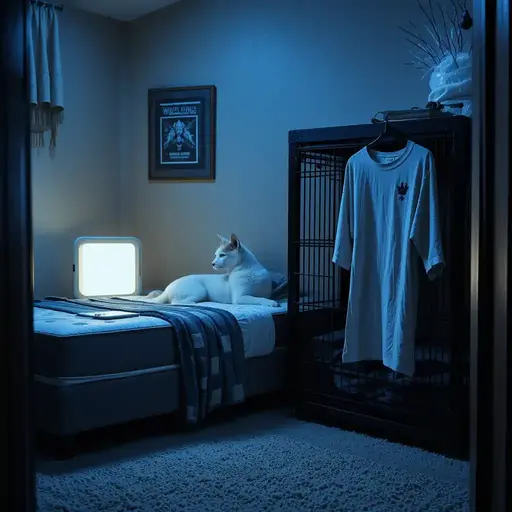
Safe Spaces and Refuge Rooms
- Location: Choose an interior room with minimal external walls (e.g., closet under stairs).
- Sound masking: Run a white‑noise machine or low‑volume classical music at 50–60 dB to blur abrupt booms.
- Comfort layer: Place a familiar blanket, a worn T‑shirt with your scent, and a puzzle feeder filled with frozen broth.
- Access control: Use a baby gate instead of a closed door to allow visual contact while still dampening sound.
- Consistency: Use the same refuge during desensitization drills so the dog learns, “When I hear that sound, I go here, and good things happen.”
One more thing worth handling before the real event, not just during training: confirm your dog’s microchip details and ID tag are current, and check your yard, gates, and doors for anything a panicked dog could slip through. In one ASPCA survey, nearly one in five lost dogs had gone missing after being startled by a loud noise like fireworks, since a frightened dog can clear a fence, slip a collar, or bolt through a door left ajar. That preparation matters just as much as the desensitization work itself.
Tracking Progress and Adjusting the Plan
Keeping a Training Log
- Date & Time: Record each session’s start and end.
- Volume (dB): Note the exact decibel reading.
- Reward Type & Quantity: Helps gauge reward effectiveness.
- Behavioral Observations: Rate calmness on a 1‑5 scale, note any stress cues.
- Physiological Metrics: Heart rate, breathing rate, and any drooling or panting.
A structured log makes it easy to spot trends, plateaus, or regressions.
Using Objective Metrics
- Decibel Meter App: Ensures consistent volume increments.
- Pet Fitness Tracker: Provides continuous heart‑rate and activity data.
- Video Recording: Review subtle body language you may miss in real time.
Recognizing Plateaus and Making Tweaks
If calmness stalls for more than 2 weeks:
- Reduce the volume one step and hold longer.
- Increase reward value (e.g., upgrade from cheese to chicken).
- Shorten session length to prevent fatigue.
If stress spikes unexpectedly:
- Pause the program for 24‑48 hours.
- Re‑establish baseline at the last “comfortable” volume.
- If spikes continue after re-establishing baseline, consider a short course of a vet‑prescribed anxiolytic before resuming.
FAQs
How to desensitize a dog to loud noises?
Gradually expose your dog to recorded sounds at very low volume while rewarding calm behavior with treats or play. Slowly increase volume over weeks, ensuring they stay relaxed. This desensitization process builds positive associations.
How to train a dog not to react to sounds?
Use counter-conditioning: Pair the trigger sound with high-value rewards (e.g., chicken) before the dog reacts. Start with faint noises and reward calmness. Consistency and early intervention are key to effective training.
What is the desensitization technique for dogs?
Desensitization involves controlled, incremental exposure to a fear trigger (like thunder recordings) below the dog’s reaction threshold. Combined with rewards, it reduces sensitivity. Always work at the dog’s pace to avoid overwhelming them.
How long does it take to desensitize a dog to noise?
Most dogs need anywhere from a few weeks to several months, depending on how severe the phobia is and how consistently sessions are run. Following the volume ladder above — moving up only after stress-free sessions — is usually faster in the long run than rushing, since setbacks from moving too quickly often cost more time than they save.
Do dog desensitization sounds work?
Yes, when used correctly. Pre-recorded desensitization tracks (fireworks, thunder) can reduce anxiety if played at low, non-threatening volumes during structured training sessions. Success requires patience and consistency over weeks or months.
What if my dog refuses to eat treats during training?
Try a different high‑value reward—some dogs prefer a favorite toy, a brief tug session, or a lick of peanut butter on a spoon. The reward must be irresistible enough to outweigh any lingering fear.
Conclusion
Desensitization Techniques for Noise-Phobic Dogs combine controlled, low‑volume sound exposure with high‑value rewards, reshaping the brain’s fear circuitry and building lasting calm.
By preparing a safe environment, following a micro‑escalation protocol, avoiding common pitfalls, and tracking progress, most owners can turn thunder‑shaken pups into confident companions. Start today with a 15‑dB recording and a few chicken bites—your dog’s peace of mind (and yours) begins in the next session.