





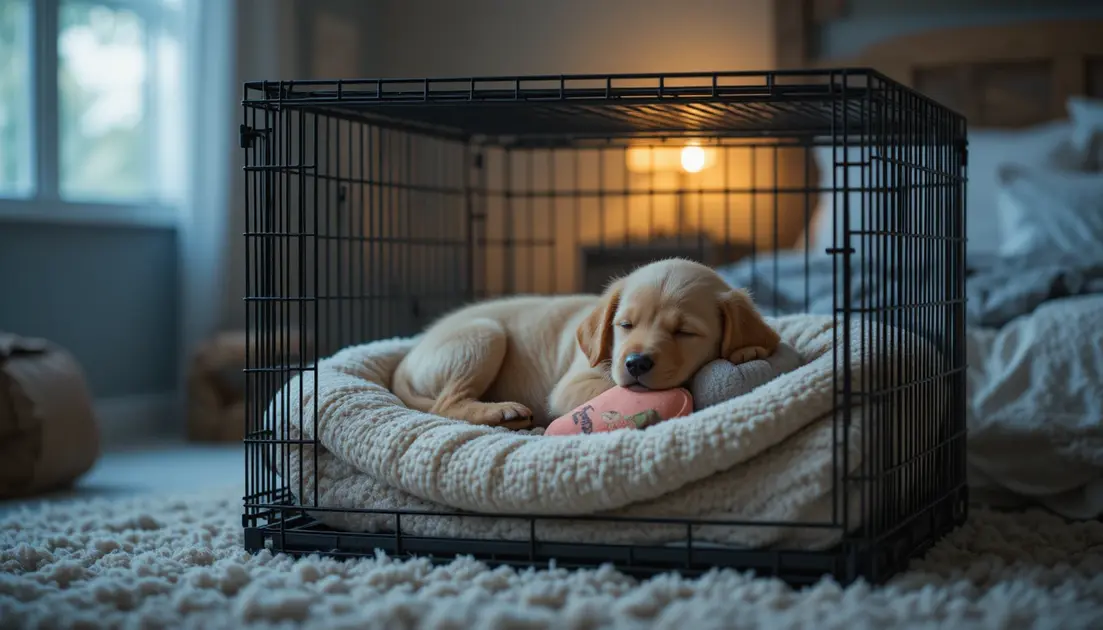
Start crate training on night one by placing the crate near your bed, using a soft blanket with your scent, and establishing a calming pre-bed routine. If your puppy cries, wait for a brief pause before offering quiet reassurance—never open the crate while crying peaks. Most puppies adjust within 3 to 7 nights with consistency.
Persistent crying beyond two weeks, signs of distress such as drooling or self-injury, or elimination issues may indicate separation anxiety or a medical concern requiring veterinary evaluation or consultation with a certified professional dog trainer.
How to Crate Train a Puppy at Night Without Crying
Bringing a new puppy home marks one of the most joyful transitions in pet ownership, yet the first nights are often challenging even for the most prepared owners. The sound of a puppy crying in a crate at night triggers an immediate emotional response—your instinct demands that you comfort them. Yet, sleep deprivation and conflicting advice from forums, friends, and family leave you paralyzed and uncertain.
Understanding how to crate train a puppy at night without crying requires far more than simple patience; it demands a structured, evidence-based plan rooted in canine developmental behavior, veterinary sleep science, and practical household management.
This guide delivers a comprehensive, actionable framework for nighttime crate training. You will learn the biological and psychological reasons puppies vocalize in confinement, the exact placement for your puppy’s crate to maximize security, a minute-by-minute first-night protocol, the critical mistakes that turn a crate into a source of fear, and the precise moment when crying signals a medical or behavioral crisis requiring professional intervention.
By the end, you will possess a clear decision-making framework that prioritizes your puppy’s emotional wellbeing while preserving your own sanity and sleep.
Why Puppies Cry in the Crate at Night
To stop nighttime crying effectively, you must first understand its origin. Puppies cry in the crate at night for specific, biologically hardwired reasons. They are not being defiant, manipulative, or spiteful; they are communicating a legitimate need using the only tool available to them.
Separation distress represents the most common trigger. Puppies leave their littermates and mother, often for the first time in their lives, on the very day they arrive in your home. For the preceding eight weeks, they slept in a warm pile of siblings, surrounded by familiar scents and the rhythmic heartbeat of their mother.
The crate, while physically safe, represents abrupt isolation from everything neurologically familiar. Their survival instincts—deeply encoded through thousands of years of pack evolution—drive them to vocalize in an attempt to reunite with their social group. This is not disobedience; it is biology.
Physical elimination needs trigger a significant portion of nighttime crying. An 8-week-old puppy possesses limited bladder control and a small digestive system. According to standard veterinary guidelines, puppies can typically hold their bladder for approximately one hour per month of age, plus one additional hour.
A two-month-old puppy therefore needs a bathroom break roughly every three hours, sometimes more frequently depending on water intake and activity levels. A crying puppy at 2:00 a.m. may simply be communicating an urgent, unavoidable biological need.
Environmental discomfort contributes substantially to crate resistance. Crates placed near cold drafts, in direct line with heating vents, on hard, cold floors without bedding, or in rooms with excessive light or noise create physical stress.
Puppies cannot regulate body temperature as efficiently as adult dogs, making ambient conditions critical to their comfort. Additionally, the texture of the crate floor—often hard plastic or wire—can feel foreign and uncomfortable against paws accustomed to soft nesting materials.
Negative crate associations develop rapidly and destructively. If the crate was introduced as a punishment after house soiling, if the puppy was physically forced inside, or if the door was slammed while the puppy attempted to exit, the space transforms from a den into a trap.
The goal of crate training is to create a sanctuary that triggers relaxation, not a prison that triggers panic. Understanding these root causes allows you to address the correct problem rather than suppressing a symptom.
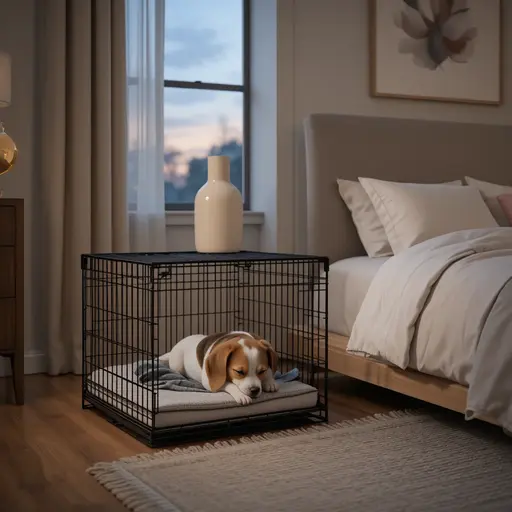
Immediate Intervention Steps for a Crying Puppy
When your puppy cries in the crate at night, your response in the first sixty seconds determines whether the behavior extinguishes or escalates over the coming nights. Follow this precise intervention sequence without deviation.
Step 1: Pause and Assess
Do not rush to the crate the instant vocalization begins. Wait thirty to sixty seconds, listening carefully. Puppies often vocalize briefly—thirty to ninety seconds—before self-settling. Immediate physical attention reinforces the crying by rewarding it with your presence, teaching the puppy that vocalization reliably summons you.
During this pause, listen for the cry’s quality: a soft, rhythmic whine differs significantly from a high-pitched, frantic, continuous scream. The latter may indicate genuine distress, pain, or an urgent bathroom need that cannot wait.
Step 2: Address Elimination Needs
If the crying persists beyond the initial pause or sounds urgent, attach a leash with minimal ceremony and take your puppy directly to the designated bathroom spot. Use a calm, boring, monotone voice—no play, no treats, no eye contact, no petting.
Keep the leash short and the trip purely functional. Wait for elimination, offer quiet praise, and return directly to the crate. This teaches your puppy that nighttime waking serves one purpose only: elimination. It is not a social event, playtime, or bonding opportunity.
Step 3: Provide Calm Verbal Reassurance
If elimination is not the issue and the crying continues, offer brief verbal reassurance from your position near the crate. Use a soft, low, steady voice: “Quiet. Good puppy. Settle.” Avoid opening the crate door while crying remains at peak intensity.
Opening the crate during a crying episode teaches the puppy that vocalization unlocks the door. Instead, wait for a two-to-three-second pause in crying, then offer a calm hand near the crate bars if needed. Never reward crying with freedom, play, or exuberant attention.
Step 4: Optimize the Environment
Ensure the room temperature sits between 68 and 72 degrees Fahrenheit, the range veterinary professionals recommend for canine comfort. Place a worn t-shirt or pillowcase carrying your scent inside the crate—familiar smells significantly reduce separation anxiety by simulating pack proximity.
For very young puppies, a soft heartbeat toy or a safely mounted warm water bottle wrapped in fabric can mimic the warmth and rhythm of littermates. Ensure the crate contains appropriate bedding that cannot be shredded and ingested.
Step 5: Reset and Exit Quietly
Once the puppy calms and lies down, leave the room quietly and without fanfare. Do not linger, repeatedly check, or hover outside the door. Prolonged presence creates dependency and extends the puppy’s arousal state. The American Veterinary Medical Association emphasizes that consistent, predictable routines help puppies develop emotional confidence and reduce anxiety-related behaviors over time.
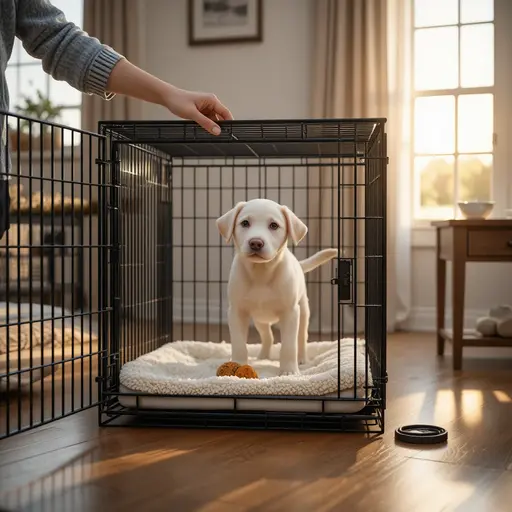
Where to Put the Puppy Crate in the Bedroom
The physical location of the crate directly impacts nighttime success, yet the question of where to put the puppy crate in the bedroom generates substantial confusion among new owners. Should the crate remain in your bedroom, move to a hallway, or occupy a separate room entirely?
For the initial two to four weeks, place the crate within arm’s reach of your bed—ideally against the bedside or on a stable nightstand at mattress height. This proximity serves multiple critical behavioral purposes. Your breathing, scent, subtle movements, and body heat reassure the puppy that they are not abandoned.
You can respond to pre-elimination signals—restlessness, sniffing, circling, or soft whining—before the puppy fully wakes and escalates to frantic crying. You can also place a reassuring hand on the crate without leaving your bed, providing contact that often prevents crying from starting at all.
As the puppy matures, demonstrates consistent quiet nights, and shows reliable bladder control, gradually move the crate toward the bedroom door over the course of several nights—six inches to one foot per night. Eventually, transition the crate to its permanent location, whether that remains in a corner of your bedroom or moves to a common living area.
This graduated distance approach prevents behavioral regression by making the change incremental rather than abrupt. Sudden isolation after weeks of bedside sleeping often triggers a full return to crying.
Avoid placing the crate in high-traffic hallway areas, near loud appliances such as washing machines, or in direct line with heating or air conditioning vents. The Cornell University College of Veterinary Medicine notes that environmental stability—consistent temperature, limited noise, and predictable lighting—supports healthy sleep architecture in young dogs and significantly reduces stress-related vocalization behaviors.
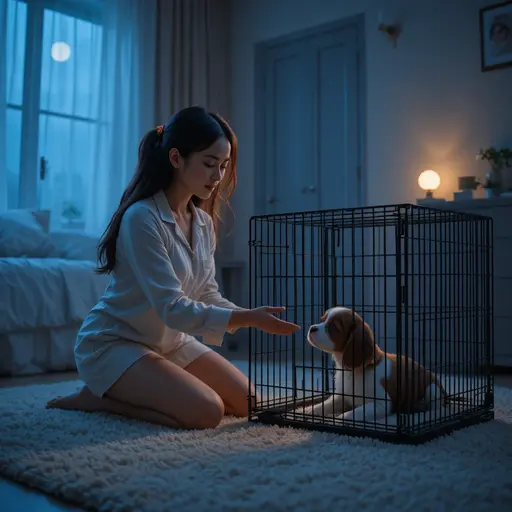
Crate Training Puppy First Night: A Complete Routine
Night one establishes the neurological and behavioral precedent for every subsequent night. Execute this routine with precision and consistency.
Evening Preparation (Two to Three Hours Before Bed)
Offer the last meal of the day at least two hours before bedtime, preferably three.
This window allows time for digestion and a subsequent bathroom trip before the pre-bed wind-down begins. Remove access to water one hour before bed to reduce overnight elimination needs, but never restrict water during daytime hours, as this risks dehydration and does not accelerate bladder development.
Pre-Bed Wind Down (Thirty to Sixty Minutes Before Bed)
Engage exclusively in low-energy, calming activities. Avoid vigorous play, chase games, or exciting training sessions that elevate arousal and cortisol levels. A short, calm leashed walk around the block, gentle handling and brushing, or simply allowing the puppy to explore a puppy-proofed room under supervision works well. Offer a final bathroom break immediately before entering the crate—this should be the last thing you do before lights out.
Crate Entry Protocol
Place a high-value treat, a small food-stuffed toy, or a portion of the puppy’s regular dinner inside the crate to create positive anticipation. Allow the puppy to enter voluntarily, sniffing and investigating. Never shove, drag, or force a puppy into the crate.
Close the door gently once the puppy is settled and focused on the food item. Sit quietly nearby for five minutes without interacting, allowing the puppy to associate the closed door with safety rather than abandonment.
First Half of the Night (10:00 p.m. to 2:00 a.m.)
Expect one to two waking periods for an 8- to 10-week-old puppy. When you hear movement, soft whining, or restless shifting, respond before the crying escalates to a full emotional episode.
Attach the leash, take the puppy to the designated spot, wait for elimination, offer quiet praise, and return immediately to the crate. The entire interaction should last under three minutes.
Second Half of the Night (2:00 a.m. to 6:00 a.m.)
By the second half of the night, most puppies enter deeper sleep cycles as their circadian rhythm adjusts. If crying occurs during this window, it is more likely driven by habit, anxiety, or early morning arousal rather than a full bladder. Use verbal reassurance first. Only open the crate if you strongly suspect a bathroom need based on timing or specific behavioral signals.
Morning Release (6:00 a.m. to 7:00 a.m.)
Open the crate calmly and without excitement. Do not greet the puppy with high-pitched vocalizations or enthusiastic physical contact. Take the puppy directly outside for elimination. This maintains the routine and reinforces that crate time leads to predictable, positive outcomes—specifically, bathroom relief and eventual freedom.
Common Mistakes to Avoid
Even well-intentioned, loving owners inadvertently undermine crate training with these preventable errors.
Removing the Puppy Too Quickly
Opening the crate every time the puppy emits a brief whine teaches vocalization as a reliable escape strategy. The puppy learns, through simple operant conditioning, that crying produces immediate freedom. This pattern, once established, requires weeks of consistent extinction training to reverse. Differentiate between genuine need and protest crying.
Using the Crate as Punishment
Sending a puppy to the crate after house soiling, destructive chewing, or hyperactivity creates a powerful negative association. The crate should represent safety, rest, and positive solitude—not consequences. Negative associations dramatically increase anxiety and nighttime crying while destroying the den instinct you are trying to cultivate.
Inconsistent Schedules and Locations
Puppies possess developing neurological systems that thrive on predictability. Varying bedtimes, inconsistent bathroom break timing, alternating crate locations between rooms, or changing the routine based on your own fatigue level confuses the puppy. Confusion manifests as stress, and stress manifests as vocalization.
Overstimulation Before Bedtime
Late-night play sessions with children, exciting visitors, high-energy training, or exposure to television noise and bright lights before bedtime leave a puppy mentally and physically aroused. An aroused puppy cannot produce the physiological changes necessary for sleep. The UC Davis School of Veterinary Medicine recommends maintaining calm, dimly lit evening environments to support healthy circadian rhythm development in juvenile dogs.
Ignoring Medical or Pain-Related Signs
Not all crying is behavioral or attention-seeking. Urinary tract infections, gastrointestinal distress, teething pain, orthopedic injury, or parasitic discomfort can cause vocalization that sounds identical to anxiety. If crying is accompanied by lethargy, vomiting, diarrhea, straining to eliminate, excessive drooling, or reluctance to move, schedule a veterinary examination immediately rather than attributing the behavior to training failure.
When to Seek Professional Help
Most well-adjusted puppies adapt to nighttime crate training within one to two weeks, with significant improvement visible after the first three to seven nights. However, certain behavioral and physical patterns warrant immediate professional intervention.
Persistent Distress Signals
If your puppy drools excessively, injures themselves by biting at crate bars, paws until their nails bleed, or exhibits destructive behavior specifically directed at escaping the crate, consult a veterinarian. These signs may indicate clinical separation anxiety, a neurochemical condition that requires behavioral modification protocols and possibly medical management rather than standard training.
Regression After Initial Success
A puppy who slept quietly for five to ten nights and then suddenly begins intense, prolonged crying without environmental changes may have an underlying medical issue. Urinary tract infections, gastrointestinal parasites, emerging orthopedic conditions such as panosteitis, or ear infections often surface first as behavioral changes and sleep disruption.
Failure to Progress After Two Weeks
If your puppy shows absolutely no reduction in crying duration or intensity after fourteen nights of consistent, correct training implementation, contact a certified professional dog trainer (CPDT-KA or equivalent) or a board-certified veterinary behaviorist.
The American Veterinary Medical Association recommends early behavioral intervention to prevent the crystallization of anxiety disorders, which become significantly more difficult to treat as puppies mature into adult dogs with reinforced neural pathways.
FAQ: Crate Training a Puppy at Night
Should I let my puppy cry it out in the crate at night?
No. The traditional “cry it out” method risks significant emotional distress, learned helplessness, and damage to the human-animal bond. However, you should not immediately open the crate at the first sound. Differentiate between brief protest whining—often self-resolving in under two minutes—and genuine distress. Escalating, frantic, continuous crying requires immediate assessment and response.
How long does it take to crate train a puppy at night?
Most puppies establish a reliable nighttime routine within 3 to 7 nights, with the first night typically being the most vocal. Full comfort with the crate, including quiet settling within five minutes of entry and sleeping through the night without elimination breaks, typically develops within 2 to 4 weeks. Individual temperament, breed tendencies, early socialization experiences, and the consistency of your routine heavily influence the timeline.
Is it okay to put the puppy crate on my bed?
Placing the crate on a sturdy nightstand or chair at bed height can help the puppy feel socially included, but the crate itself should remain a distinct, enclosed structure. Sleeping with a loose puppy in your bed eliminates the boundary training benefits of the crate, increases safety risks such as accidental suffocation or falls, and complicates future independence training. Keep the crate near your bed, not your puppy loose inside it.
What if my puppy cries for hours nonstop?
Nonstop crying exceeding thirty to forty-five minutes indicates a significant problem requiring investigation. Check for unmet elimination needs, illness, injury, environmental temperature extremes, or crate discomfort. If all physical and environmental factors are addressed and the crying continues unabated, consult your veterinarian to rule out medical causes before assuming the behavior stems from training defiance.
Should I cover the crate with a blanket at night?
A partially covered crate can create a den-like atmosphere that reduces visual stimuli, dims light, and promotes neurological calm. Ensure adequate ventilation on multiple sides and avoid heavy, non-breathable coverings that trap heat or limit airflow. Some puppies prefer an open view of their surroundings; observe your individual puppy’s response and adjust the covering accordingly.
Can I use a puppy pad in the crate at night?
Veterinary behaviorists generally discourage puppy pads inside the crate. The crate should represent a clean sleeping space, and introducing elimination surfaces inside confuses house training by teaching the puppy that eliminating in small, enclosed spaces is acceptable. If your puppy cannot hold their bladder through the night, schedule alarm-driven bathroom breaks instead of providing indoor elimination options.
What is the best crate size for nighttime training?
The crate should be large enough for the puppy to stand up without hitting their head, turn around comfortably, and lie down with legs extended. It should not be so large that the puppy can eliminate in one corner and sleep in another. Many owners purchase a larger crate with a divider panel that adjusts as the puppy grows, providing appropriate spatial constraints during house training.
Final Thoughts on How to Crate Train a Puppy at Night
Learning how to crate train a puppy at night without crying requires the disciplined combination of consistency, environmental awareness, and the emotional maturity to respond rather than react. Place the crate near your bed during the initial adjustment period, establish a predictable evening wind-down routine, and develop the skill to differentiate between urgent bathroom needs and anxiety-driven vocalization.
Avoid the common traps of over-attending to every sound, maintaining inconsistent schedules, using the crate as punishment, and ignoring potential medical contributors. Most puppies adapt remarkably quickly when given clear, calm, predictable guidance from a confident owner.
If distress persists beyond two weeks, includes physical symptoms, or involves self-injurious escape attempts, seek veterinary or professional training support without delay. A well-established nighttime crate routine protects your puppy from household hazards, accelerates house training, supports healthy sleep architecture, and ensures restful, peaceful nights for the entire family.