





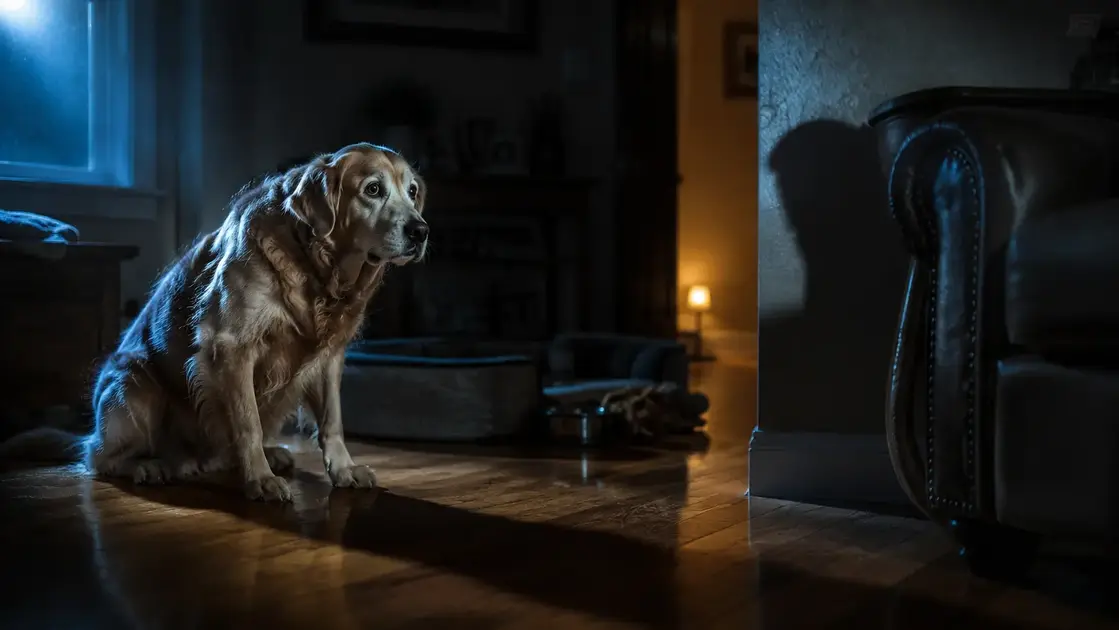
A dog suddenly scared of familiar things at night is most often experiencing canine cognitive dysfunction (CCD)—a degenerative brain condition similar to dementia in humans. Other common causes include vision or hearing loss, chronic pain from arthritis, nocturnal anxiety, or sundowner’s syndrome, where confusion and fear worsen after sunset.
This is a moderate-urgency concern; schedule a veterinary exam within 24–72 hours to rule out medical causes and discuss treatment options. Early intervention with prescription diets, medication, and environmental changes can significantly improve your dog’s quality of life and your own sleep.
What “Suddenly Scared of Familiar Things at Night” Really Means
When a dog who has slept peacefully for years begins pacing, panting, or cowering from familiar furniture, doorways, or family members after dark, owners often assume it’s “just aging.” In reality, this behavior is a clinical sign of an underlying medical or neurological issue—not a normal part of getting older.
The phenomenon is so common in senior dogs that veterinary behaviorists have developed specific assessment tools. The DISHAA checklist (Disorientation, Interaction, Sleep, House-soiling, Activity, Anxiety) and the CRASH acronym (Confusion, Responsiveness, Activity, Sleep-wake, House-training) help veterinarians distinguish cognitive decline from other conditions.
What owners typically report:
- The dog stares at walls or gets “stuck” in corners
- Previously friendly dogs hide from their owners at night
- Familiar objects (like a coffee table or chair) suddenly seem threatening
- Pacing, whining, or pawing at the bed starting around dusk
- Sleeping all day but restless, anxious, or vocal all night
These signs are not behavioral stubbornness. They are symptoms of a brain struggling to process information, interpret sensory input, or regulate the sleep-wake cycle.

Common Causes of Nighttime Fear in Dogs
Understanding the “why” behind your dog’s sudden fear is essential for choosing the right treatment. The causes generally fall into three categories: neurological/cognitive, sensory, and physical/medical.
Canine Cognitive Dysfunction (CCD / Doggie Dementia)
CCD is a progressive, degenerative brain disease affecting up to 68% of dogs aged 16 years and older. The condition involves the buildup of beta-amyloid proteins that create toxic conditions for neurons, leading to the behavioral changes owners observe.
A hallmark of CCD is sundowner syndrome—a pattern where confusion, anxiety, and restlessness intensify in the late afternoon and evening.
Researchers believe this is linked to disruptions in the circadian rhythm and changing light levels that alter an already compromised brain’s ability to process environmental cues.
Key CCD signs that appear at night:
- Disorientation in familiar rooms
- Forgetting the location of food bowls or doors
- Increased anxiety or irritability after sunset
- Reversed sleep-wake cycles (sleeping days, pacing nights)
Vision and Hearing Loss
Senior dogs commonly experience nuclear sclerosis, cataracts, or glaucoma, which reduce their ability to navigate in low light. A dog that could easily distinguish a doorway at noon may see only shadows and vague shapes at night, turning a familiar hallway into a confusing maze.
Similarly, hearing loss forces dogs to rely more heavily on vision and scent. When vision also declines, the dog becomes hypervigilant—startling at sounds they can’t locate or reacting fearfully to shadows they can’t identify.
Chronic Pain and Medical Conditions
Pain is a frequently overlooked cause of nighttime anxiety. Conditions like osteoarthritis, dental disease, or spinal discomfort often worsen when a dog lies still for long periods. The discomfort wakes them, and because they cannot understand why they hurt, they may express fear or agitation toward their surroundings.
Other medical issues that mimic or worsen nighttime fear include:
- Urinary tract infections or incontinence (causing restlessness from the urge to eliminate)
- Hypothyroidism or Cushing’s disease (affecting mood and metabolism)
- Gastroesophageal reflux or nausea (worse when lying down)
- Heart or kidney disease (reducing blood flow to the brain and causing cognitive changes)
Nocturnal Anxiety and Separation Distress
Some dogs develop late-onset separation anxiety that manifests specifically at night. These dogs may view their owner’s sleeping as a form of abandonment, leading to pacing, panting, and pawing for attention. This is particularly common in dogs with early CCD, where the brain’s ability to self-soothe is compromised.
When to Call the Vet Immediately
While sudden nighttime fear is not always an emergency, certain symptoms require same-day or emergency veterinary evaluation:
| Red Flag | Why It Matters |
|---|---|
| Sudden collapse, head tilt, or rapid eye movements (nystagmus) | Could indicate vestibular syndrome or stroke |
| Crying out in pain when touched or moved | Suggests acute injury, spinal issue, or severe arthritis flare |
| Pacing combined with vomiting, diarrhea, or bloating | May signal gastrointestinal distress or toxin ingestion |
| Aggression that is completely out of character | Can indicate acute pain, brain tumor, or severe neurological decline |
| Inability to settle at all for 6+ hours | Severe distress risking exhaustion and cardiovascular strain |
If your dog shows any of these signs, contact your veterinarian or an emergency clinic immediately. For non-emergency but persistent nighttime fear, schedule a comprehensive senior wellness exam within 24–72 hours.
Diagnosing the Root Cause
Because there is no single test for CCD or sundowner’s syndrome, diagnosis is a process of exclusion. Your veterinarian will:
- Take a detailed behavioral history — When did the fear start? Does it happen only after dark? What specific objects or situations trigger it?
- Perform a complete physical and neurological exam — checking for pain, joint stiffness, vision deficits, and reflex abnormalities
- Run baseline diagnostics — CBC, serum chemistry, thyroid panel, urinalysis, and blood pressure measurement to rule out metabolic disease.
- Use a validated cognitive screening tool—such as the DISHAA questionnaire — to score symptom severity.
- Recommend imaging if indicated — MRI or CT to rule out brain tumors, strokes, or other structural abnormalities.
Important: Never assume nighttime fear is “just dementia” without ruling out pain, sensory loss, or systemic illness. Treating an underlying urinary infection or arthritic pain can resolve what appears to be cognitive anxiety.
Treatment and Management Options
There is no cure for CCD, but a multimodal approach combining medication, diet, enrichment, and environmental management can slow progression and dramatically improve nighttime behavior.
Prescription Medications
| Medication | Purpose | Notes |
|---|---|---|
| Selegiline (Anipryl®) | FDA-approved for CCD; protects neurons and enhances dopamine | Many owners report improvement in sundowners symptoms within 3–6 weeks |
| Trazodone | Short-acting anxiolytic given 1–2 hours before bedtime | Helps with nocturnal anxiety and sleep initiation |
| Fluoxetine | SSRI for chronic anxiety and compulsive behaviors | Takes 4–6 weeks to reach full effect |
| Gabapentin | Neurogenic pain relief and mild sedation | Can worsen CCD symptoms in some dogs; use with caution |
| Melatonin | Natural sleep aid to regulate circadian rhythm | Give 2–3 hours before bedtime; discuss dosage with your vet |
Warning: Never combine multiple serotonin-affecting drugs (SSRIs, trazodone, selegiline) without veterinary supervision. This can cause serotonin syndrome, a potentially life-threatening condition causing agitation, tremors, seizures, and elevated heart rate.
Brain-Supporting Diets
Veterinary prescription diets formulated for cognitive health contain antioxidants, omega-3 fatty acids (EPA/DHA), and medium-chain triglycerides (MCTs) that provide alternative energy sources for aging neurons. Options include:
- Hill’s Prescription Diet b/d — Brain Aging Care
- Purina Pro Plan NeuroCare — Contains MCTs and arginine
- Royal Canin Veterinary Canine Mature Consult — Antioxidant-rich formula
These diets show the most benefit when combined with environmental enrichment and exercise. Expect 2–3 months before noticeable cognitive improvement.
Supplements and Nutraceuticals
| Supplement | Proposed Benefit | Evidence Level |
|---|---|---|
| SAMe (Novofit, Denosyl) | Supports brain cell function and liver health | Moderate |
| Senilife | Phosphatidylserine and antioxidant blend | Limited but promising |
| Omega-3 fatty acids | Anti-inflammatory, supports neuronal membranes | Strong |
| Aktivait | Antioxidant and mitochondrial support | Limited |
| Phosphatidylserine | Supports cell membrane integrity in neurons | Emerging |
Always consult your veterinarian before starting supplements, as some interact with prescription medications.
Environmental Management for Nighttime Fear
Immediate changes to your home environment can reduce your dog’s anxiety tonight:
- Add nightlights along hallways and near water/food bowls to help dogs with declining vision navigate safely
- Maintain rigid routines — Feed, walk, and settle at the same times daily. Predictability reduces cognitive load.
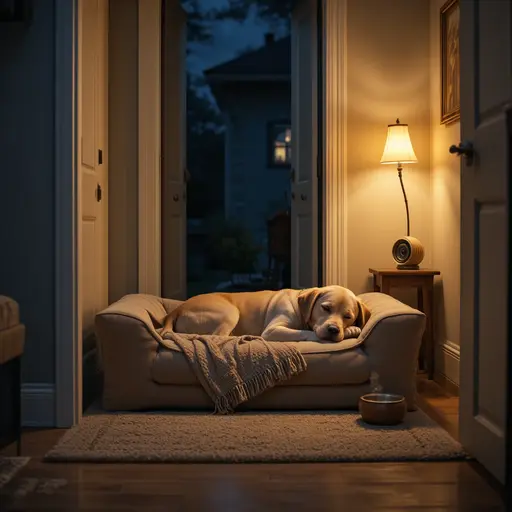
- Create a “safe zone” — Use a familiar, enclosed space with non-slip bedding, pheromone diffusers (Adaptil), and white noise to mask startling sounds.
- Avoid rearranging furniture — Dogs with CCD rely on spatial memory; moving a chair can be disorienting.
- Increase daytime activity — Extra sniff walks, food puzzles, and gentle training sessions promote better sleep at night.
- Use calming wraps — Pressure garments like Thundershirts can reduce anxiety in some dogs.
- Consider a late-evening walk — A gentle stroll right before bed can help tire your dog physically and mentally.
What NOT to Do
- Do not punish pacing, whining, or house soiling. These are symptoms, not disobedience. Punishment increases anxiety and damages your bond.
- Do not crate a senior dog who is not accustomed to it. Confinement can escalate panic in a disoriented dog.
- Do not ignore the behavior, hoping it will pass. CCD is progressive; early intervention is key to maintaining quality of life.
- Do not give human sleep aids like diphenhydramine (Benadryl) or prescription sleep medications without veterinary guidance. Many are toxic or contraindicated in dogs with heart or cognitive issues.

When to Seek Professional Behavioral Help
If your veterinarian has ruled out medical causes and prescribed initial treatment, but your dog’s nighttime fear persists or worsens, consult a board-certified veterinary behaviorist (DACVB) or a Certified Applied Animal Behaviorist (CAAB).
These professionals can design a desensitization and counterconditioning (DSCC) protocol tailored to your dog’s specific triggers. They may also recommend advanced pharmacological combinations or alternative therapies, such as acupuncture, which some integrative veterinarians use alongside conventional treatment for senior dogs.
Frequently Asked Questions
Why is my dog fine during the day but scared at night?
Dogs with sundowner’s syndrome or CCD experience circadian rhythm disruption. As natural light fades, their already compromised brains struggle to process environmental cues, and declining vision makes shadows and dim spaces frightening. Additionally, chronic pain often worsens when the body cools and settles at night.
Can young dogs suddenly become scared of familiar things at night?
While CCD primarily affects dogs over 9–10 years, sudden nighttime fear in younger dogs can result from noise phobias, traumatic experiences, separation anxiety, or medical issues like epilepsy or gastrointestinal pain. Any sudden behavioral change warrants a veterinary exam regardless of age.
How long does it take for dementia medication to work in dogs?
Selegiline (Anipryl) may show initial improvement in 3 weeks, but many dogs require 6 weeks for noticeable changes. Dietary interventions typically take 2–3 months. Patience and consistent administration are essential.
Will my dog’s nighttime anxiety get worse?
CCD is a progressive, degenerative condition. Without intervention, symptoms typically worsen over months to years. However, early and aggressive multimodal treatment—including diet, medication, enrichment, and environmental management—can slow progression and maintain quality of life for a significant period.
Is euthanasia the only option for severe sundowners?
Not necessarily. While severe CCD with constant pacing, vocalization, and distress can strain the human-animal bond, many dogs respond well to combination therapy. The decision depends on your dog’s overall quality of life, response to treatment, and whether they still experience moments of joy and comfort. A quality-of-life assessment with your veterinarian can guide this difficult decision.

Final Thoughts: Helping Your Dog Through the Night
Watching a beloved companion suddenly fear their own home after dark is heartbreaking. But understanding that this behavior is a medical symptom—not a personality change—empowers you to take effective action.
Start with a thorough veterinary exam to rule out pain, sensory loss, and systemic disease. If CCD or sundowner syndrome is diagnosed, commit to a multimodal plan: prescription medication, brain-supporting nutrition, environmental adaptations, and consistent routines.
Progress may be gradual, but many owners report significant improvement in their dog’s nighttime comfort and their own sleep within weeks to months.
Your dog’s golden years can still be filled with peace and security. With early intervention, informed care, and patience, you can help them navigate the darkness with confidence again.