





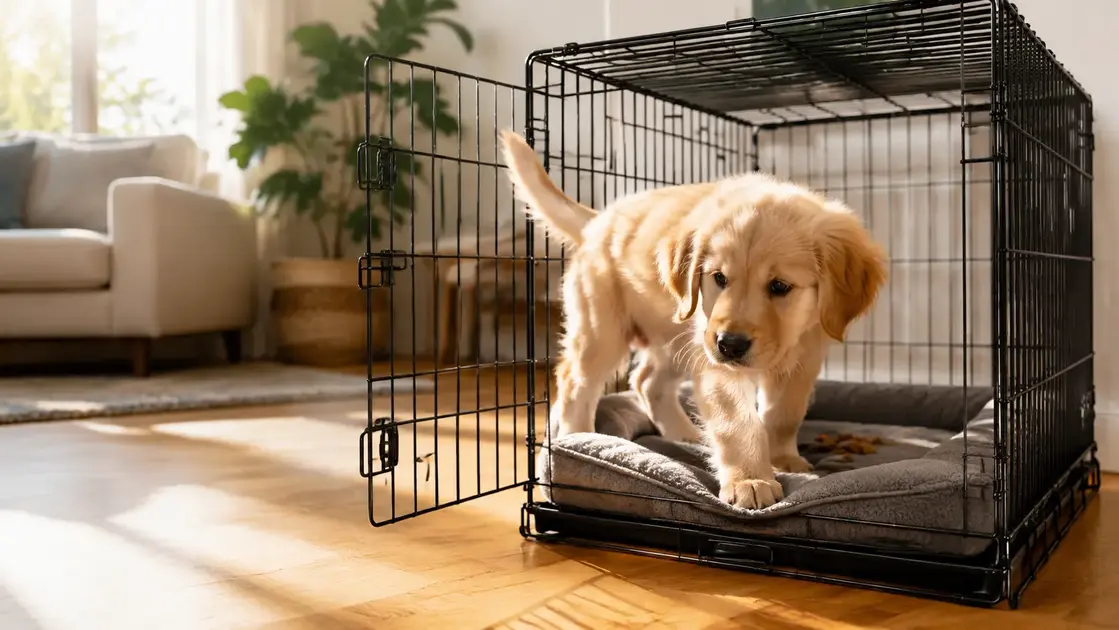
Learning how to crate train a dog involves creating positive associations with a properly sized crate, then gradually increasing confinement time with treats, meals, and safe toys.
Most dogs adjust within days to several weeks, depending on age and past experiences. The crate should be large enough for your dog to stand, turn around, and lie down comfortably—but not so large that they can eliminate in one corner and sleep in another.
Never use the crate as punishment, and never force your dog inside. If your dog shows signs of significant distress (excessive drooling, persistent vocalization, escape attempts), consult your veterinarian before continuing.
Why Crate Training Matters
A crate is not a cage—it is a management tool that mirrors a dog’s instinct to seek out small, enclosed spaces. In the wild, dogs naturally seek dens for sleeping quarters because the single entrance provides a sense of security.
When introduced correctly, a crate becomes your dog’s personal retreat: a familiar “home away from home” during travel, a safe recovery space after veterinary procedures, and a calm zone during household chaos.
The benefits extend beyond convenience. According to the American Veterinary Medical Association, providing offspring with early training such as crate training supports behavioral development and socialization needs. For adult dogs—especially rescues with unknown histories—a crate offers structure during the critical adjustment period to a new home.
Choosing the Best Dog Crate Size
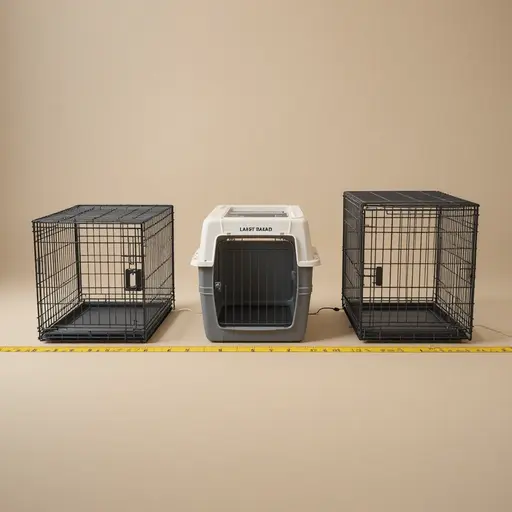
Getting the size right is non-negotiable. A crate that is too small causes discomfort and resistance. A crate that is too large invites house-soiling, since dogs instinctively avoid soiling their sleeping area only when the space is appropriately sized.
The Rule: Your dog must be able to stand up without crouching, turn around freely, and lie down with legs fully extended. The crate should be the size of a bed, not a bedroom.
| Dog Weight | Recommended Crate Size | Typical Breeds |
|---|---|---|
| Up to 25 lbs | 24″ L x 18″ W x 19″ H | Chihuahua, Yorkie, Pomeranian |
| 26–40 lbs | 30″ L x 19″ W x 21″ H | Beagle, Corgi, French Bulldog |
| 41–70 lbs | 36″ L x 23″ W x 25″ H | Border Collie, Bulldog, Australian Shepherd |
| 71–90 lbs | 42″ L x 28″ W x 30″ H | Labrador Retriever, Golden Retriever, German Shepherd |
| 90+ lbs | 48″ L x 30″ W x 33″ H | Great Dane, Mastiff, Bernese Mountain Dog |
Pro Tip for Puppies: Purchase a crate sized for your dog’s adult weight and use a divider panel to reduce the interior space as they grow. This prevents the need to buy multiple crates and maintains the correct den-like proportions during house-training.
Crate Types: Which One Is Right for Your Dog?
| Type | Best For | Pros | Cons |
|---|---|---|---|
| Wire Crate | Home use, dogs who like visibility | Collapsible, good airflow, easy to clean | Not airline-approved; dogs may chew bars |
| Plastic Crate | Anxious dogs, airline travel | Enclosed den-like feel, contains messes | Less ventilation, harder to see dog |
| Metal Box-Style | Strong chewers, car travel | Extremely durable, escape-proof | Heavy, expensive |
| Soft-Sided | Calm, small dogs, travel | Lightweight, portable | Not for chewers or escape artists |
For dogs with anxiety, plastic crates often work better because the reduced visual stimulation creates a calmer environment. For car travel, crash-tested crates (Sleepypod, Variocage, RuffLand) provide the highest safety standards.
How to crate train a dog: The Complete Process
Phase 1: Introduction (Days 1–3)
Place the crate in a common area where your family spends time—never isolate your dog. Leave the door open and secured so it cannot swing shut and startle your dog.
Action Steps:
- Drop high-value treats near the crate, then just inside the doorway, and then at the back.
- Add a comfortable blanket or towel (remove it if your dog chews or soils it)
- Let your dog discover the crate on their own terms—never force them inside
- Toss a favorite toy inside and praise any voluntary exploration
Critical Rule: Before any training session, ensure your dog has exercised and eliminated. A tired dog with an empty bladder is far more receptive to learning.
Phase 2: Mealtime Association (Days 2–5)
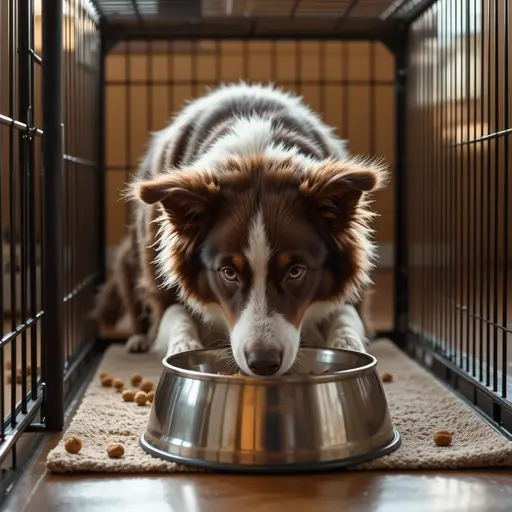
Once your dog enters the crate willingly for treats, begin feeding meals inside.
- Place the food bowl just inside the crate entrance
- Gradually move it toward the back over successive meals
- When your dog stands comfortably inside to eat, gently close the door
- Open the door immediately after they finish eating
- Over the next several meals, increase the time the door stays closed after eating by 2–3 minutes
If your dog whines, you have increased the duration too quickly. Return to a shorter interval and progress more slowly.
Phase 3: Building Duration (Days 5–14)
Now you introduce the verbal cue and extend confinement time.
Teaching the “Kennel” Cue:
- Toss a treat into the crate; the moment your dog moves toward it, say “kennel” (or “crate,” “bed”)
- After several repetitions, say the cue before tossing the treat
- Reward with multiple treats delivered inside the crate, then toss one outside to reset
Extending Time:
- Give a stuffed, frozen KONG or long-lasting chew
- Close the door and sit nearby for 5–10 minutes
- Gradually increase distance and time out of sight
- Use a pet camera to monitor for distress during early solo sessions
The Release Cue: Teach your dog to wait before exiting. Ask for a “sit,” make eye contact, then say “free” or “okay” while opening the door. If they rush out, calmly close the door and try again. This prevents door-dashing and reinforces impulse control.
Phase 4: Alone Time (Week 2–4+)
Start with absences so brief they seem trivial to you:
| Session | Duration | Frequency |
|---|---|---|
| 1–3 | 1–10 seconds | Multiple times daily |
| 4–6 | 30 seconds–2 minutes | 3–5 times daily |
| 7–10 | 5–15 minutes | 2–3 times daily |
| 11–15 | 30 minutes–1 hour | 1–2 times daily |
| 16+ | 2–4 hours | As needed |
Departure Protocol: Keep exits low-key. No emotional goodbyes. Vary your routine so your dog does not associate the crate specifically with abandonment.
Return Protocol: Enter calmly. Wait for quiet behavior before releasing your dog. Rewarding calmness reinforces that the crate predicts good outcomes, not just isolation.
Crate Training Adult Dogs: Special Considerations
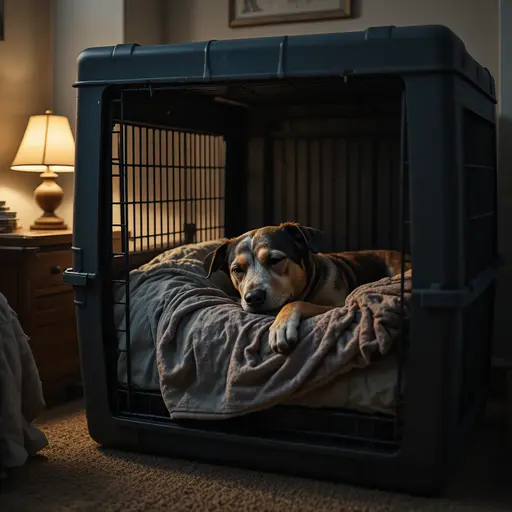
Adult and senior dogs often require more time than puppies because they may carry negative associations from previous homes, shelters, or transport. The process is identical in structure but demands extra patience.
Key Adjustments for Adult Dogs:
- Slower pace: Each phase may take twice as long. Rushing risks reinforcing fear.
- Enrichment focus: Use lick mats, puzzle toys, and frozen treats to build positive associations stronger than any past negative experience.
- Location flexibility: Some adult dogs prefer crates in quieter corners; others need to see household activity. Experiment.
- Scent comfort: Place an unwashed T-shirt with your scent inside to reduce anxiety during alone time.
If your adult dog was previously forced into crates or used them as punishment, you may need to “rebrand” the crate entirely—use a different style, location, and cue word to break the negative association chain.
How Long Can a Dog Stay in a Crate?
| Age | Maximum Daytime Duration | Overnight |
|---|---|---|
| 8–10 weeks | 30–60 minutes | 2–3 hours (with potty break) |
| 11–14 weeks | 1–2 hours | 4–5 hours |
| 15–16 weeks | 3–4 hours | 5–6 hours |
| 17+ weeks | 4–5 hours | 6–8 hours |
| Adult dogs | 4–6 hours* | 6–8 hours |
*No adult dog should be crated longer than 4 hours without a break if crated regularly during the day.
The Math Problem: If you crate your dog during your 8-hour workday and overnight, that is 16+ hours of confinement daily. This is excessive and can lead to physical atrophy, behavioral issues, and emotional distress. Dogs need exercise, mental stimulation, and social interaction to remain healthy.
Alternatives for Long Workdays:
- Hire a dog walker for a midday break
- Use a dog-proofed room with the crate left open as an option
- Consider dog daycare 2–3 days per week
Common Mistakes to Avoid
1. Using the Crate as Punishment
Never send your dog to the crate after undesirable behavior. The crate must remain exclusively associated with positive experiences—meals, treats, rest, and safety.
2. Forcing Your Dog Inside
Forcing a dog into a crate triggers fear responses that can take weeks to undo. If your dog refuses to enter, go back to Phase 1 and increase the value of your rewards.
3. Responding to Whining Incorrectly
If you let your dog out while they are vocalizing or scratching, you teach them that those behaviors work. Wait for a pause in whining, then release. However, if distress signs escalate (excessive drooling, self-injury, uncontrolled elimination), release immediately and consult your veterinarian.
4. Leaving Collars and Tags On
Dogs should never wear collars, tags, or harnesses inside a crate. Tags can catch on wire bars, creating a strangulation hazard.
5. Using the Crate to “Fix” Anxiety
Crating a dog with separation anxiety does not treat the anxiety—it may intensify it. Dogs with true separation anxiety may break teeth chewing bars or rip nails digging at the floor. If your dog panics when confined, consult a veterinary behaviorist rather than purchasing a stronger crate.
When to Seek Professional Help
Contact your veterinarian or a certified applied animal behaviorist if you observe any of the following:
- Persistent escape attempts resulting in self-injury (broken teeth, torn nails, bleeding)
- Excessive salivation or panting that does not subside within 10 minutes of confinement
- Elimination in the crate despite appropriate scheduling and sizing
- Complete food refusal inside the crate (anorexia is a reliable stress indicator in dogs)
- Regression after initial success, suggesting an underlying medical or emotional issue
Your veterinarian can rule out urinary tract infections, gastrointestinal disorders, or pain conditions that may be driving crate aversion. They can also refer you to a qualified trainer or veterinary behaviorist for a customized desensitization plan.
Decision Framework: Is Crate Training Right for Your Dog?
Crate training is a valuable tool for most dogs, but it is not universally appropriate. Use this framework:
| Scenario | Recommendation |
|---|---|
| New puppy needing house-training | Highly recommended—accelerates learning and prevents destructive habits |
| Adult rescue adjusting to new home | Recommended—provides structure and security during transition |
| Dog with mild crate hesitation | Proceed with modified, slower protocol and professional guidance |
| Dog with separation anxiety | Do not crate without behaviorist consultation—may worsen panic |
| Dog with confinement phobia | Avoid crates; use dog-proofed rooms or exercise pens instead |
| Senior dog with mobility issues | Use low-entry crate with orthopedic bedding; limit duration |
Frequently Asked Questions
How long does it take to crate train a dog?
Most puppies adapt within 1–3 weeks. Adult dogs, especially rescues with negative past experiences, may require 1–2 months or longer. Consistency and patience determine speed more than any other factor.
Should I put a bed in my dog’s crate?
A thin crate mat or towel works for most dogs. Some will chew or soil bedding, in which case the crate floor itself is acceptable—dogs often prefer hard surfaces for thermoregulation. Remove bedding if it becomes a target for destruction or soiling.
My dog sleeps in the crate at night but cries during the day. Why?
Nighttime crating often succeeds because the dog is naturally tired. Daytime crating may trigger anxiety because the dog is alert and expects activity. Ensure vigorous exercise before daytime sessions and provide a high-value chew to occupy them.
Can I crate train two dogs together?
No. Each dog needs their own appropriately sized crate. Crating dogs together can lead to resource guarding, overheating, and inability to monitor individual health or behavior.
Is it too late to crate train my 5-year-old dog?
Absolutely not. Dogs of any age can learn to accept a crate when the introduction is positive and gradual. Adult dogs may take longer, but the long-term benefits for travel, veterinary visits, and emergencies make the investment worthwhile.
Final Thoughts
Learning how to crate-train a dog is an investment in your pet’s safety, your home’s preservation, and your peace of mind. The process demands patience—there will be setbacks, vocal protests, and moments of doubt. Stay consistent. Reward calm behavior. Never use the crate as punishment.
When your dog voluntarily walks into their crate and settles down for a nap with the door wide open, you will know the training has succeeded. That voluntary retreat—their chosen safe space—is the true measure of success.