





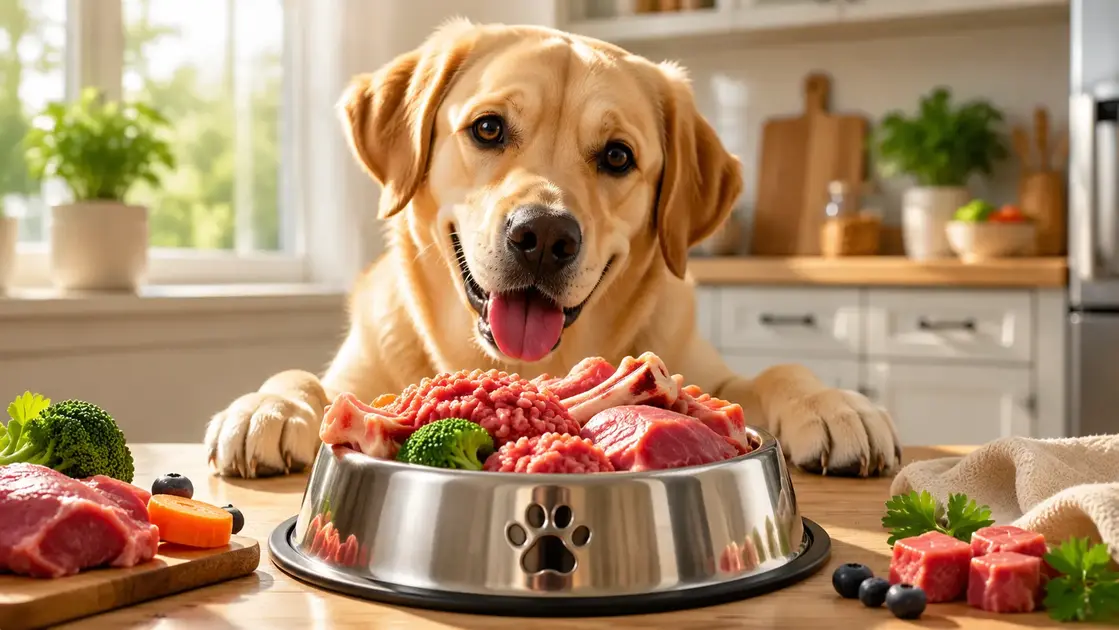
Are you ready to give your dog the nutritional upgrade they deserve, but terrified of triggering days of digestive disaster? You’re not alone. The raw dog food transition is where most well-intentioned pet owners stumble—rushing the process and ending up with a miserable pup and a very messy floor.
Here’s the paradox: switching too slowly can leave you stuck in limbo, but switching too quickly can cause severe gastrointestinal upset that makes you question the entire raw-food journey. The secret isn’t speed or caution—it’s strategy.
This structured 7-day transition schedule eliminates the guesswork. You’ll learn exactly how much raw food to introduce each day, what warning signs to watch for, and how to adjust if your dog’s digestive system needs extra time. By day 7, your dog will be thriving on a species-appropriate diet without the drama.
Key Takeaways
- Gradual transition prevents digestive upset by allowing gut bacteria to adapt to new food sources over 7-10 days.
- Start with 25% raw food mixed with 75% current diet, gradually increasing the raw percentage every 2-3 days.
- Monitor stool quality daily—firm, well-formed stools indicate a successful transition; loose stools mean slow down.
- Hydration is critical during transition, as raw food has a different moisture content than kibble.
- Never rush the process—some dogs need 10-14 days, especially seniors or dogs with sensitive stomachs.

Why Rushing Your Dog’s Raw Food Transition Backfires
Let’s address the elephant in the room: you’ve probably read horror stories about dogs experiencing explosive diarrhea, vomiting, or refusing to eat during a raw food transition. These aren’t myths—they’re real consequences of doing it wrong.
Your dog’s digestive system is home to trillions of beneficial bacteria (the microbiome) that are perfectly adapted to their current diet. These microscopic workers produce specific enzymes to break down processed kibble or whatever your dog currently eats.
When you suddenly introduce raw meat, bones, and organs, you’re essentially firing the entire workforce and hiring a completely new team overnight.
The result? Digestive chaos.
Veterinarians generally recommend a gradual transition period because the canine gastrointestinal tract needs time to:
- Adjust enzyme production for protein and fat digestion
- Repopulate gut bacteria with strains that thrive on fresh meat
- Adapt to different fiber content and moisture levels
- Settle into a new baseline for bowel movement frequency and volume
The most common mistake beginners make is assuming their dog’s wolf ancestry means they can handle raw food immediately. While dogs are biologically designed to eat raw meat, domestic dogs who’ve eaten processed food for months or years have lost some of that digestive flexibility. Think of it like someone who’s eaten fast food their entire life suddenly switching to a whole-foods diet—their body needs time to recalibrate.
Another dangerous myth? “My dog has an iron stomach, so I can switch overnight.” Even the hardiest dogs benefit from a structured transition. The goal isn’t just survival—it’s setting your dog up for long-term success on a raw food diet.
The Science Behind Digestive Adaptation
Imagine you’re training for a marathon. You wouldn’t go from watching Netflix on the couch to running 26.2 miles in one day, right? Your muscles, cardiovascular system, and mental endurance all need progressive training to handle the stress.
Your dog’s digestive system works the same way.
When transitioning to a raw food diet, you’re asking your dog’s body to perform a metabolic marathon. The digestive tract must shift from processing highly processed, carbohydrate-heavy kibble to breaking down fresh proteins, fats, and raw bones. This isn’t just a menu change—it’s a complete physiological recalibration.
The Microbiome Makeover
Inside your dog’s intestines lives a complex ecosystem of bacteria, fungi, and other microorganisms. This microbiome is diet-specific. Dogs eating kibble have bacterial populations optimized for breaking down grains and processed ingredients. Dogs on raw food have different bacterial strains that excel at digesting animal proteins and fats.
During the transition period, you’re facilitating a hostile takeover. The “kibble bacteria” gradually decline as the “raw food bacteria” multiply and establish dominance.
If you switch too quickly, you create a bacterial vacuum—old populations die off before new ones can establish, leaving your dog vulnerable to digestive upset and nutrient malabsorption. Veterinary microbiome researchers call this temporary imbalance dysbiosis, and it’s the real driver behind most transition-related soft stools—not a lack of “readiness” in your dog’s stomach.
Enzyme Production Takes Time
Your dog’s pancreas produces specific digestive enzymes based on dietary patterns:
- Amylase for carbohydrate breakdown (high in kibble-fed dogs)
- Protease for protein digestion (increases on raw diet)
- Lipase for fat metabolism (adjusts based on fat content)
These enzymes don’t switch on and off like lightbulbs. Research on pancreatic secretion in dogs has shown that enzyme output shifts gradually over days to weeks in response to the actual fat and protein content of what they’re eating, not all at once.
A gradual transition gives the pancreas time to downregulate amylase production while upregulating protease and lipase production—preventing the digestive lag that can cause diarrhea or constipation.
Stomach Acid Isn’t the Bottleneck
Here’s a myth worth clearing up: your dog’s stomach doesn’t need to “build up” acid strength to handle raw food. A dog’s stomach is already highly acidic—typically around pH 1-2—whether they’re eating kibble or raw, an evolved trait that helps break down bone and control pathogens like Salmonella and E. coli. That baseline doesn’t meaningfully shift over the course of a week.
So if your dog has temporary soft stools around days 3-5, the microbiome shift described above is the more likely explanation—not a stomach acid deficit that needs time to “catch up.”
The bottom line: Your dog’s digestive system is remarkably adaptable, but adaptation requires time, patience, and a strategic approach. The 7-day schedule isn’t arbitrary—it’s based on the biological timeline for microbial population shifts and enzymatic adjustments.

Your Step-by-Step 7-Day Raw Food Transition Schedule
Here’s your roadmap to success. This schedule assumes a healthy adult dog with no pre-existing digestive conditions. Puppies, seniors, and dogs with health issues may need a slower 10-14 day transition—always consult your veterinarian if you’re unsure.
Before You Start: Preparation Checklist
✓ Calculate your dog’s daily caloric needs (typically 2-3% of ideal body weight for adult dogs)
✓ Source high-quality raw food from reputable suppliers—knowing how to evaluate any pet food applies here too
✓ Gather supplies: kitchen scale, separate storage containers, cleaning supplies
✓ Plan transition start date for a low-stress period (avoid holidays or travel)
✓ Stock probiotics and pumpkin puree (for emergency stool firming)
✓ Set up a raw-handling routine: wash hands, bowls, and prep surfaces after every raw meal, and keep raw food away from other groceries—especially important if anyone in the household is very young, elderly, pregnant, or immunocompromised
The 7-Day Transition Table
| Day | Current Food | Raw Food | What to Expect | Action Steps |
|---|---|---|---|---|
| Day 1-2 | 75% | 25% | Minimal changes; some dogs show increased enthusiasm | Mix thoroughly; feed the same total volume as the current diet |
| Day 3-4 | 50% | 50% | Possible soft stools; increased water consumption | Monitor stool quality closely; ensure fresh water is available |
| Day 5-6 | 25% | 75% | Stools may be firmer; increased energy in some dogs | Watch for constipation; adjust portions if needed |
| Day 7 | 0% | 100% | Transition complete; stools should normalize | Celebrate! Continue monitoring for 1-2 weeks |
Daily Feeding Guidelines
Days 1-2: The Introduction Phase (25% Raw)
Start by replacing one-quarter of your dog’s current meal with raw food. If your dog normally eats 2 cups of kibble daily, you’d now feed:
- 1.5 cups kibble (75%)
- Equivalent of 0.5 cups in raw food (25%)
Pro tip: Mix the raw food thoroughly with the kibble so your dog can’t pick out favorites. Some dogs are suspicious of new textures and will eat around the raw portions if not well-integrated.
What to watch for:
- Possible increase in water intake (raw food’s moisture content differs from kibble)
- Slightly softer stools (normal)
- Enhanced food enthusiasm (common—raw food is highly palatable)
Days 3-4: The Halfway Point (50/50 Mix)
You’re now feeding equal parts current diet and raw food. This is where most digestive adjustments happen.
Feeding example for a 50-pound dog:
- Total daily food: 1-1.5 pounds (2-3% of body weight)
- Day 3-4 portions: 8-12 oz current food + 8-12 oz raw food
Critical monitoring points:
- Stool consistency (should be firm but not hard)
- Energy levels (a temporary dip is normal)
- Vomiting (not normal—slow down if this occurs)
If stools become loose or watery, hold at 50/50 for an extra 2-3 days before progressing. Don’t rush—your dog’s comfort matters more than sticking to the calendar.
Days 5-6: The Commitment Phase (75% Raw)
Your dog’s digestive system is now primarily processing raw food. You should notice:
- Smaller, firmer stools (raw food is more digestible)
- Less frequent bowel movements
- Improved coat shine (omega fatty acids kicking in)
- Fresher breath (reduced carbohydrate fermentation)
Potential challenges:
Some dogs experience temporary constipation around days 5-6 as their system adjusts to higher protein and lower fiber. If your dog strains to defecate or produces hard, dry stools:
- Add a teaspoon of plain canned pumpkin (not pie filling)
- Increase water intake by adding water to meals
- Ensure adequate bone content (bone provides natural fiber)
Day 7: Full Raw Food Diet
Congratulations! Your dog is now 100% on raw food. However, the transition isn’t truly complete until you’ve monitored for another 7-10 days to ensure full adaptation.
Final adjustments:
- Fine-tune portion sizes based on weight and energy levels
- Establish a feeding routine (once or twice daily)
- Rotate protein sources every 2-3 weeks for nutritional variety
Troubleshooting Common Transition Issues
Problem: Diarrhea or loose stools
- Solution: Drop back to the previous ratio for 2-3 days, then progress more slowly. Add probiotics and ensure you’re not overfeeding.
Problem: Refusing to eat raw food
- Solution: Warm the food slightly (to room temperature, not hot) to enhance aroma. Mix in a small amount of bone broth or sardine juice as a topper. If your dog has always been a picky eater, the same patience-and-routine strategies that work for kibble tend to work here too.
Problem: Vomiting
- Solution: Stop raw food for 24 hours, feed a bland diet (boiled chicken and rice), then restart transition at 25% raw. Consult your vet if vomiting persists.
Problem: Excessive gas
- Solution: Normal during transition. Feed smaller, more frequent meals. Avoid high-fat protein sources initially (start with leaner meats like turkey or rabbit).

What to Expect After the Transition
Completing the 7-day raw dog food transition schedule is a milestone, but the real transformation happens over the following weeks. Here’s what successful adaptation looks like—and when to call your veterinarian.
Positive Signs of Adaptation (Weeks 2-4)
Improved stool quality: Within 2-3 weeks of full transition, your dog’s stools should be:
- Smaller in volume (up to 50% reduction from kibble days)
- Firm and well-formed
- Less odorous
- Darker in color (normal with a meat-based diet)
Enhanced energy levels: Many owners report their dogs showing:
- More consistent energy throughout the day (no post-meal crashes)
- Improved endurance during exercise
- Brighter, more alert demeanor
Coat and skin improvements: The omega-3 fatty acids in raw food typically produce:
- Noticeably shinier coat within 3-4 weeks
- Reduced shedding
- Healthier skin with less itching or dryness
- Faster wound healing
Dental health benefits: Raw meaty bones (if included) provide natural teeth cleaning:
- Reduced tartar buildup
- Fresher breath
- Stronger gums
Red Flags That Require Veterinary Attention
While most dogs transition smoothly, contact your veterinarian if you notice:
- Persistent diarrhea lasting more than 48 hours
- Blood in stool (small amounts of dark, tarry stool can be normal initially; bright red blood is not)
- Lethargy or weakness lasting beyond the first week
- Refusal to eat for more than 24 hours
- Unexplained weight loss
- Chronic vomiting
Special considerations for sensitive dogs:
Some dogs need a slower, 10-14 day transition. This includes:
- Senior dogs (7+ years)
- Dogs with a history of digestive issues
- Dogs on medications
- Breeds prone to sensitive stomachs (German Shepherds, Boxers, some terriers)
For these dogs, extend each phase by 2-3 days. Instead of progressing every 2 days, move to the next ratio every 4-5 days. Patience prevents setbacks.
Long-Term Success Strategies
Rotating proteins: Once fully transitioned, rotate between different protein sources (chicken, beef, lamb, fish, turkey) every 2-3 weeks to:
- Prevent nutritional deficiencies
- Reduce the risk of developing protein sensitivities
- Provide varied amino acid profiles
- Keep meals interesting
Monitoring weight: Weigh your dog weekly for the first month, then monthly. Adjust portions if you notice:
- Weight gain: Reduce daily amount by 10%
- Weight loss: Increase the daily amount by 10% or check for underlying health issues
Regular veterinary check-ups: Schedule a wellness exam 3 months after transitioning to raw food. Blood work can confirm:
- Proper nutrient absorption
- Healthy organ function
- Appropriate protein levels
FAQs
Can I transition my puppy to raw food using this schedule?
Puppies can transition to raw food, but they need a slower schedule (10-14 days minimum) and specific nutritional balances for growth. Always consult a veterinary nutritionist before feeding puppies raw diets to ensure proper calcium-phosphorus ratios.
My dog’s stools are still soft after day 7. Should I be worried?
Mild softness can persist for 2-3 weeks as the microbiome fully adapts. If stools are watery or your dog shows other symptoms, slow the transition. Adding probiotics or a small amount of plain pumpkin can help firm stools.
Do I need to add supplements during the transition?
If you’re feeding a commercially prepared complete-and-balanced raw food, supplements aren’t necessary. For homemade raw diets, you’ll need calcium, vitamins, and minerals—see our guide to which supplements dogs actually need, and consult a veterinary nutritionist for proper formulation.
Can I mix raw and kibble long-term after the transition?
Vets are split on this one. The common concern is that raw and kibble digest at different speeds, which some worry could contribute to GI upset—though there isn’t much direct research confirming that specific mechanism, and plenty of dogs handle a mixed diet without issue. If you want the benefits of both, most raw-friendly vets suggest feeding them as separate meals a few hours apart rather than combining them in one bowl, then watching your dog’s stool for any signs it isn’t agreeing with them.
How do I know if I’m feeding the right amount of raw food?
Start with 2-3% of your dog’s ideal body weight daily. Adjust based on body condition score—you should be able to feel (but not see) ribs, and your dog should have a visible waist. Active dogs may need 3-4%; sedentary dogs may need 1.5-2%.
Is raw feeding safe for the rest of my household?
Raw meat and bones can carry pathogens like Salmonella, Listeria, and E. coli. A healthy dog’s gut is well-equipped to handle these, but the food itself isn’t sterile once it’s in the bowl or on your counter. This is why the AVMA’s current policy on raw pet diets discourages feeding raw animal-source protein that hasn’t been processed to reduce pathogens—not because it’s unsafe for every dog, but because handling it can expose other pets and people to illness. Wash your hands, bowls, and prep surfaces after every raw meal, and take extra care if anyone in your home is very young, elderly, pregnant, or immunocompromised.
Conclusion
Transitioning your dog to raw food doesn’t have to be a digestive disaster. By following this 7-day schedule, respecting your dog’s biological need for gradual adaptation, and monitoring closely, you’re setting the foundation for improved health, energy, and vitality.
Remember: every dog is unique. Some sail through in 7 days; others need 10-14. The goal isn’t speed—it’s success. Trust the process, trust your dog’s signals, and trust that you’re making one of the most nutritionally sound decisions for their long-term health.