




The best training methods for reactive dogs combine desensitization, counter‑conditioning, and positive reinforcement with consistent management and impulse‑control work. By pairing feared triggers with high‑value rewards, you teach your dog to stay calm while gradually increasing exposure, creating lasting change without punishment.
Key Takeaways
- Desensitization, counter-conditioning, and positive reinforcement — backed by consistent management — form the core, evidence-based approach; veterinary behavior organizations agree there’s no role for aversive tools like shock or prong collars.
- Progress is measured in distance and duration, not force. Find your dog’s threshold distance — where they notice a trigger but stay calm — then close the gap gradually.
- Most dogs show early improvement within 3–6 weeks of consistent, short daily sessions; full generalization across environments typically takes several months.
- Muzzle training is a safety tool, not a punishment, and it pairs naturally with the same reward-based approach used for reactivity.
- Severe cases, multiple triggers, or a training plateau are good reasons to bring in a certified behaviorist rather than push through alone.
Understanding Reactivity in Dogs
Reactive dogs react strongly—often with barking, lunging, or growling—to everyday stimuli. Recognizing why these responses happen is the first step toward using the best training methods for reactive dogs.
What Is a Reactive Dog?
- Definition: A dog that displays heightened emotional responses to specific triggers such as other dogs, strangers, or loud noises.
- Key point: Reactivity is driven by fear or overstimulation, not by a desire to be aggressive.
Causes and Common Triggers
| Category | Typical Triggers | Why It Happens |
|---|---|---|
| Fear-based | Unfamiliar people, sudden movements, loud bangs | Past trauma or lack of early exposure creates a threat perception. |
| Over-excitement | Playful peers, fast-moving toys | Too much arousal overwhelms the dog’s self-control system. |
| Frustration | Leash tension, blocked pathways | The dog feels trapped and reacts to regain freedom. |
| Sensory overload | Crowded streets, construction noise | Multiple stimuli compete for attention, raising stress levels. |
Urban vs. Rural Challenges
| Setting | Primary Stressors | Training Implications |
|---|---|---|
| Urban | Dense foot traffic, sirens, limited quiet spaces | Use “safe zones” (quiet alleys, early-morning walks) and short, frequent training bouts. |
| Rural | Fewer social exposures, sudden wildlife encounters | Schedule intentional social outings and controlled “novelty walks.” |
Understanding these contexts lets you tailor the best training methods for reactive dogs to your dog’s everyday world.
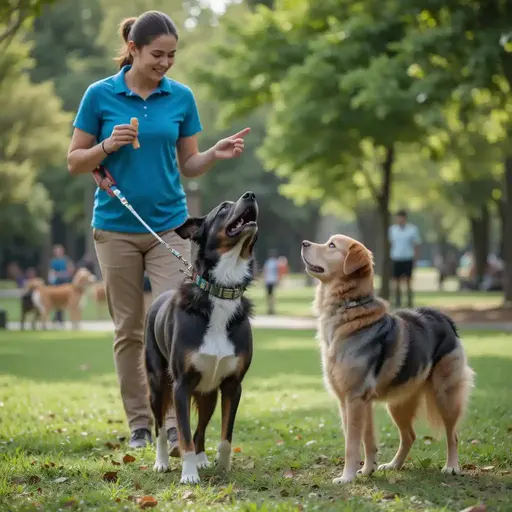
Preparing for Training Your Reactive Dog
Before diving into behavior work, lay a solid foundation. A calm baseline makes the best training methods for reactive dogs far more effective.
Meet Your Dog’s Basic Physical & Mental Needs
- Exercise: 30–60 minutes of brisk walking, fetch, or scent work daily helps burn off excess energy and lower baseline stress.
- Mental enrichment: Puzzle feeders, “find it” games, or short obedience drills keep the brain occupied.
- Health check: Rule out pain, thyroid issues, or vision problems that can amplify anxiety.
Set Realistic, Measurable Goals
| Goal | How to Measure | Target Timeline |
|---|---|---|
| Decrease bark duration | Stopwatch during walks | 50% reduction in 2 weeks |
| Increase distance from triggers | Measure in feet with a tape | +10 ft every 4 weeks |
| Achieve calm “look at me” cue | Count successful cues per session | 3 consecutive calm cues within 1 month |
Writing these goals in a training journal helps you stay objective and celebrate progress. Treat the timelines above as a starting point, not a guarantee — every dog’s pace is different.
Choose the Right Training Tools
- No-pull front-clip harness: Reduces neck strain and gives gentle steering.
- Clicker: Provides a precise “marker” for reward timing.
- High-value treats: Small pieces of chicken, cheese, or freeze-dried liver work best in high-distraction zones.
- Long line (20–30 ft): Allows distance-based exposure while you stay in control.
Managing Multi-Dog Households
- Train each dog separately at first to prevent competition for treats.
- Use calm-entry routines (e.g., “sit” before opening the door) to keep the reactive dog from taking the spotlight.
- Gradually reintroduce parallel walks once both dogs show consistent calmness at a distance.
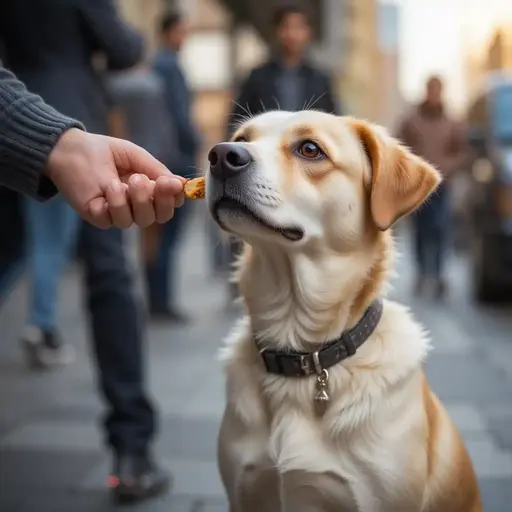
Best Training Methods for Reactive Dogs – Core Principles
The most reliable approach blends three pillars: positive reinforcement, desensitization + counter‑conditioning, and structured management. Below is a step‑by‑step guide for each pillar.
Positive Reinforcement
Positive reinforcement rewards behaviors you want to see more of. It reinforces calm choices instead of fearful ones and strengthens the human-dog bond, which is why veterinary behavior organizations consistently recommend it as the training foundation over correction-based methods.
How to apply it:
- Pick a high-value treat (≤ 2 seconds to consume).
- Mark the exact moment your dog looks at you, sits, or turns away from a trigger with a click or verbal cue (“Yes!”).
- Reward instantly—the faster the marker, the stronger the association.
Tip: Use a “quiet” cue (“soft”) during low-intensity exposures and gradually increase difficulty without losing the reward timing.
Desensitization & Counter‑Conditioning
These two techniques work hand-in-hand. Desensitization lowers the emotional intensity of a trigger; counter-conditioning replaces the trigger’s negative valence with something positive.
Step-by-Step Checklist
| Step | Action | Success Indicator |
|---|---|---|
| 1. Identify triggers | List stimuli (e.g., joggers, other dogs) and rank from least to most intense. | Clear hierarchy in a notebook. |
| 2. Determine “threshold distance” | Find the distance where your dog notices the trigger but stays calm. | Relaxed tail and ears, no lunging or barking. |
| 3. Pair with treats | The moment the dog notices the trigger at threshold distance, mark and reward with a high-value treat. | The dog takes the treat calmly and glances back at you. |
| 4. Decrease distance | Move 1–2 feet closer each session once the dog consistently chooses the treat over reacting. | Maintains calmness at the new distance. |
| 5. Increase duration | Hold the trigger exposure longer while continuing to reward calm behavior. | Dog remains composed for 30 seconds or more. |
| 6. Generalize | Practice in varied locations and with different people or dogs. | Calm behavior transfers across settings. |
Quick-Reference Desensitization Table
| Session | Starting Distance | Target Distance | Reward Frequency |
|---|---|---|---|
| 1–2 | 30 ft | 25 ft | Every calm look (100%) |
| 3–4 | 25 ft | 20 ft | Every 2nd calm look (80%) |
| 5–6 | 20 ft | 15 ft | Every 3rd calm look (60%) |
| 7+ | 15 ft | 10 ft | Every 4th calm look (40%) |
Adjust the numbers based on your dog’s speed of learning — these starting distances work well for many dogs but aren’t a fixed rule.
Management Strategies
Even the best training methods for reactive dogs need day-to-day management to prevent setbacks.
- Visual barriers: Umbrellas, jackets, or car windows can block the line of sight to a trigger.
- Route planning: Choose quieter streets, park benches, or early-morning walks to lower encounter rates.
- Treat “on-hand” policy: Carry a treat pouch; never be without a reward when a trigger appears.
- Calm exit plan: If a situation escalates, move to a pre-identified “safe zone” (e.g., a side alley) and reset with treats.
Impulse-Control Exercises
Impulse control builds a dog’s tolerance for frustration, making them less likely to react.
| Exercise | Cue | How to Practice |
|---|---|---|
| Leave it | “Leave it” | Place a low-value treat on the floor, cover it with your hand, and reward when the dog backs away. |
| Wait | “Wait” | Only open the door after a 5-second sit, then reward. |
| Find it | “Find it” | Hide high-value treats in a room; the search redirects energy away from triggers. |
| Stay with distractions | “Stay” | Ask the dog to stay while you walk around, gradually increasing distance and adding noises. |
Progress by increasing duration, distance, and distraction level in small steps.
Leash-Training Techniques for Reactive Dogs
Leash reactivity can turn the leash itself into a source of stress. The best training methods for reactive dogs incorporate leash work that teaches calm walking.
- Front-clip harness – redirects pulling without choking.
- “Stop-and-Go” method: When tension builds, stop walking, wait for slack, then click and reward; repeat.
- “Turn-and-Reward”: Pivot in the opposite direction of the trigger, reward the loose leash, and continue walking.
- “Look at Me” cue on leash: Train a reliable eye-contact cue indoors, then apply it during outdoor walks, rewarding the dog for choosing you over the trigger.
Relaxation & Stress-Reduction Techniques
Incorporating calming practices speeds up the efficacy of the best training methods for reactive dogs. For a deeper look at these tools and how to combine them, see our full guide to calming an anxious pet.
- Canine-friendly music: Calmer, slower-tempo playlists made for dogs can help settle a dog during training sessions and at home.
- Thundershirt or calming vest: Provides gentle, consistent pressure that many dogs find soothing.
- Short massage strokes: Rub the shoulders and chest for 30 seconds before exposure to a trigger.
- Pheromone diffusers: Synthetic dog-appeasing pheromones (DAP) can help create a calmer environment, especially for mild to moderate anxiety.
Sample 4-Week Training Schedule
| Week | Focus | Daily Routine (≈ 20 min) |
|---|---|---|
| 1 | Identify thresholds & basic “watch me” cue | 5 min walk (observe distance) → 5 min cue practice → 5 min impulse control → 5 min play/relax |
| 2 | Begin desensitization at safe distance | 5 min “watch me” + treat → 5 min controlled exposure → 5 min leash “stop-and-go” → 5 min calm down |
| 3 | Decrease distance + add mild distractions | 5 min cue → 5 min exposure with background noise (radio) → 5 min “wait” at doors → 5 min free play |
| 4 | Generalize across locations | 5 min “watch me” in new park → 5 min longer exposure → 5 min leash “turn-and-reward” → 5 min relaxation (music + massage) |
Stick to the schedule, adjust distances as needed, and keep a log of successes and setbacks.
Advanced Training Techniques & Professional Support
When the core methods plateau, it may be time to add advanced tools or seek expert help.
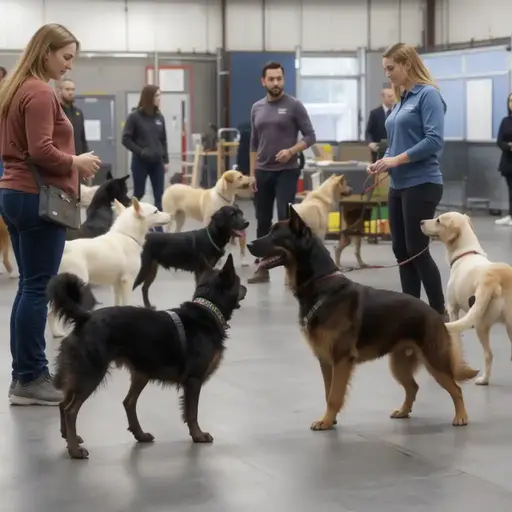
Structured Group Classes (Force-Free)
- Pros: Controlled exposure to other dogs, social learning, and professional oversight.
- Cons: Requires a calm baseline; overcrowded classes can backfire.
- Selection tips: Choose a class built around clicker training and reward-based methods that keeps groups small (≤ 4 dogs), and starts each session with a “calm-enter” routine.
One-on-One Sessions with a Certified Behaviorist
- Tailored plans: The behaviorist conducts a functional analysis, pinpoints subtle triggers, and designs a customized desensitization ladder.
- Real-time feedback: Immediate correction of subtle cues (e.g., body tension) that owners often miss.
- Home visits: Allow assessment of environmental stressors such as noisy appliances or high-traffic rooms.
Muzzle Training (When Safety Is Critical)
| Phase | Activity | Duration | Reward |
|---|---|---|---|
| 1. Introduction | Place treats inside a loose-fit basket muzzle. | 2–3 min | Treat for sniffing |
| 2. Positive Association | Wear the muzzle while eating dinner. | 5–10 min | Meal is the reward |
| 3. Short Walks | Walk on a loose leash in a quiet area with the muzzle on. | 5–15 min | Treats for each calm step |
| 4. Incremental Exposure | Increase walk length and exposure to mild triggers. | 15–30 min | High-value treats for calm reactions |
Never use the muzzle as a punishment; it should be a neutral or positive tool within the best training methods for reactive dogs.
Medication & Nutritional Support (Veterinary-Guided)
- SSRIs (e.g., fluoxetine): May lower anxiety in severe cases when combined with behavioral work.
- Supplements: L-theanine, tryptophan, or omega-3 fatty acids can modestly improve stress tolerance for some dogs.
- Important: Always consult a veterinary behaviorist before starting any medication or supplement regimen.
Monitoring Progress & Adjusting the Plan
Consistent tracking turns intuition into data, allowing you to tweak the best training methods for reactive dogs precisely.
Daily Training Log
| Date | Trigger | Distance (ft) | Response | Reward Used | Notes |
|---|---|---|---|---|---|
| 08/01 | Jogger | 30 | Calm (eye contact) | Chicken bits | Low wind, sunny |
| 08/02 | Other dog | 20 | Lunged | — | Leash tight, dog barked |
Review the log weekly; a trend of “Calm” responses indicates the plan is working.
Behavioral Rating Scale (1-5)
| Rating | Description |
|---|---|
| 1 | Severe reaction (lunges, barks continuously) |
| 2 | Frequent reaction, occasional calm glances |
| 3 | Mostly calm, occasional brief reactivity |
| 4 | Calm most of the time, brief alert on trigger |
| 5 | Fully relaxed, no reaction even at close range |
Assign a rating after each training session. Aim to increase the rating by at least one point every two weeks, though plateaus are normal and don’t necessarily mean the plan isn’t working.
Objective Measures
- Heart-rate monitoring: A canine fitness tracker can show your dog’s heart rate settling lower and recovering faster after exposure to a trigger over successive sessions — a useful trend to watch, even though there’s no single bpm number that applies to every dog.
- Cortisol testing (vet): Your vet can run a saliva or blood cortisol panel as an objective marker alongside your behavioral log; ask your vet how much training time makes sense before retesting for your dog specifically.
If progress stalls, consider:
- Re-evaluating the distance threshold (you may be too close).
- Increasing the treat value for higher motivation.
- Adding an extra calm-down activity (short walk, play) before the next exposure.
Combining these objective measures with your daily log and rating scale gives you a fuller picture than gut feeling alone, and helps you catch a plateau early.
Common Pitfalls and How to Fix Them
Even seasoned owners stumble. Below are the most frequent mistakes and the corrective actions that keep the best training methods for reactive dogs on track.
| Pitfall | Why It Happens | Fix |
|---|---|---|
| Skipping the “threshold” step | Eager owners jump straight to “close” exposure. | Begin every new trigger at the distance where the dog stays calm; only then start moving closer. |
| Inconsistent reward timing | Delayed clicks dilute the marker’s meaning. | Use a clicker or a crisp “Yes!” within 1 second of the desired behavior. |
| Using treats that lose value | Low-value kibble becomes background noise. | Rotate high-value treats (e.g., freeze-dried liver) and keep them fresh. |
| Punishing accidental reactions | Frustration or embarrassment in public leads owners to correct instead of redirect. | Reset calmly, step back to a safe distance, and start the exposure again with rewards. |
| Training only in “perfect” conditions | Owner only practices on quiet streets, but real-world triggers are louder and less predictable. | Gradually introduce mild distractions (radio, traffic) before tackling busier environments. |
Addressing these issues early prevents setbacks and ensures steady progress.
FAQs
How long does it usually take to see improvement with the best training methods for reactive dogs?
Most dogs show noticeable calming within 3–6 weeks of daily, short-duration sessions. Full generalization to all environments can take 4–6 months, depending on the dog’s history and the consistency of the training.
Can I use a shock-collar or prong-collar to stop reactivity?
No. The American Veterinary Society of Animal Behavior’s position statement on humane training finds no role for aversive tools like shock or prong collars in any dog training context, including behavior modification — they carry real welfare risks and no evidence of being more effective than reward-based methods. The best training methods for reactive dogs rely on reward-based techniques that build trust rather than intimidation.
My dog reacts only when on a leash; can I train him off-leash first?
Start by strengthening “watch me” and impulse-control cues off-leash in a low-distraction area. Once the dog reliably chooses you over a trigger, transition to a loose-leash environment while keeping the same reward structure.
Should I use a muzzle during daily walks?
A properly fitted muzzle is safe for short periods and can prevent bites if a reaction escalates. However, it should never replace the core reward-based work; use it only as a safety adjunct while you continue the desensitization ladder.
Is professional help necessary, or can I do it all myself?
If your dog’s reactivity is mild and you can maintain a consistent routine, the best training methods for reactive dogs can be applied at home. For severe fear, aggression, or when progress stalls, a certified behaviorist provides personalized guidance and may suggest medication if needed.
How do I find a qualified trainer or behaviorist for a reactive dog?
Look for a force-free trainer with a credential such as CPDT-KA, KPA-CTP, or IAABC, or — for more severe cases — a veterinary behaviorist (Dip. ACVB) who can also assess medical contributors and prescribe medication if needed. Avoid anyone who talks about “dominance,” uses alpha rolls, or promises a fast fix; reactivity work is gradual by nature.
Conclusion
The best training methods for reactive dogs blend positive reinforcement, systematic desensitization + counter-conditioning, and thoughtful management into a step-by-step plan that respects your dog’s emotional state.
By meeting basic needs, setting measurable goals, using high-value rewards, and tracking progress, you can transform fear-driven reactions into calm, confident behavior. If challenges arise, professional help or muzzle training as a safety tool can keep both safety and progress on track. Start today with a short, reward-focused session—your dog’s calmer future begins with one mindful step.