





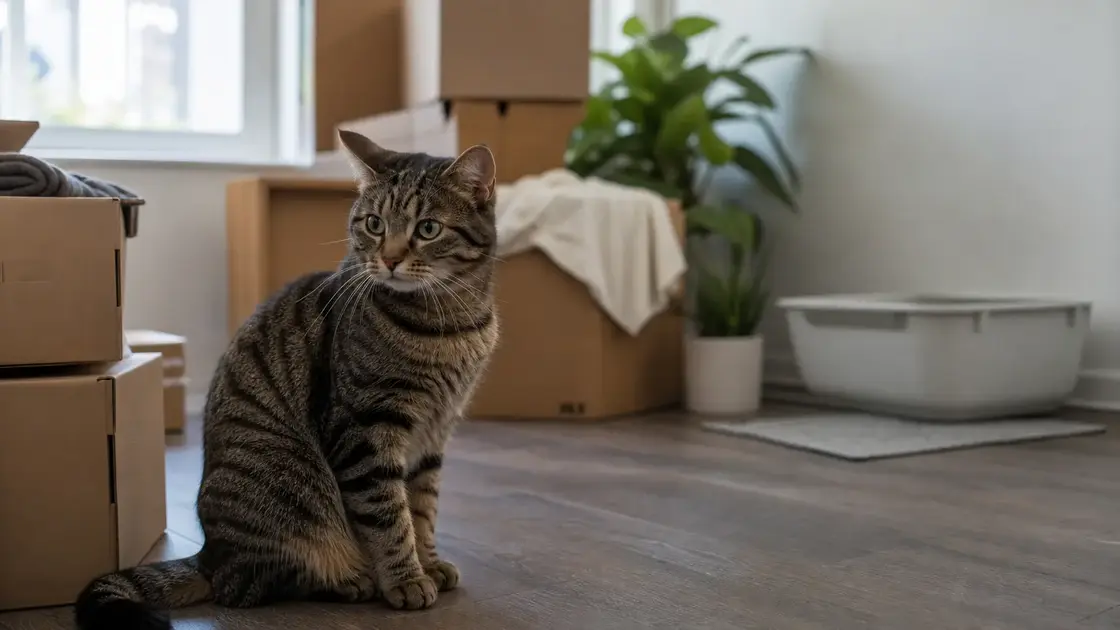
You spent weeks packing, coordinating movers, and settling into your new home. Everything’s finally coming together—except your cat has decided your fresh carpet makes a better bathroom than the pristine litter box you just set up. Sound familiar?
When a cat not using litter box after moving becomes your reality, it’s easy to feel frustrated or even betrayed. But here’s what most pet owners don’t realize: your cat isn’t being spiteful. They’re speaking the only language they know—stress.
Moving ranks as one of the most disruptive events in a cat’s life, upending their territorial security and triggering instinctive behaviors that include avoiding the litter box entirely. This guide walks you through exactly why this happens and, more importantly, how to fix it using veterinarian-informed strategies that work within 7-14 days.
Key Takeaways
- Moving disrupts your cat’s territorial instincts, causing stress-related litter box avoidance that typically lasts 1-2 weeks.
- Never punish your cat for accidents—increase litter boxes to one per cat plus one extra, placed in quiet, accessible locations.
- Use familiar litter and boxes from your old home initially, then transition gradually over 2-3 weeks.
- Create safe zones with familiar scents, hiding spots, and consistent routines to rebuild confidence.
- Consult your veterinarian if problems persist beyond 2 weeks to rule out medical issues like urinary tract infections or feline idiopathic cystitis, a common stress-linked bladder condition.
Why Moving Triggers Litter Box Problems
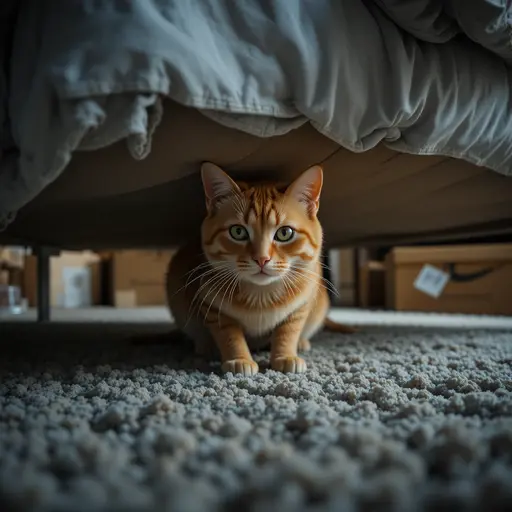
Let’s address the elephant in the room: your cat isn’t angry at you. They’re not “getting back” at you for uprooting their life. When you see a cat peeing outside the litter box after a move, you’re witnessing a stress response rooted in feline survival instincts.
Cats are territorial creatures. Their sense of security comes from controlling and recognizing their environment through scent marking. Your home wasn’t just where they lived—it was their kingdom, mapped out through facial pheromones, paw pad scents, and familiar routines. Moving erases that map.
Moving is also just one of several disruptions—a new pet, a change in your work schedule, even rearranged furniture—that can trigger a sudden shift in a cat’s usual behavior. Litter box avoidance is often the first visible sign that something in their environment feels wrong.
The most common myths about post-move litter box problems:
Myth: “My cat is being defiant and needs discipline.”
Truth: Punishment increases stress and worsens the problem. Cats don’t connect punishment with “accidents” the way dogs might.
Myth: “They’ll adjust in a day or two.”
Truth: Most cats need 1-2 weeks minimum to feel secure; some take a month or longer.
Myth: “I should clean accidents with regular cleaner.”
Truth: Standard cleaners leave odor molecules that attract cats back to the same spot. You need enzymatic cleaners specifically designed for pet urine.
Cat litter box problems after moving typically manifest in three ways:
- Complete avoidance – Cat refuses to use any litter box
- Location confusion – Cat urinates near but not in the box
- Inconsistent use – Cat uses the box sometimes but has random accidents
Understanding which pattern your cat displays helps you target solutions more effectively.
Understanding Your Cat’s Stress Response
Imagine waking up tomorrow in a country where you don’t speak the language, the street signs are unfamiliar, and someone has replaced all your furniture with strange objects. That’s moving from your cat’s perspective.
When cats experience stressed litter box situations, their bodies flood with cortisol—the stress hormone. This triggers their sympathetic nervous system (fight-or-flight response), which directly impacts their bathroom habits in two critical ways:
Physiological Impact:
- Increased urgency to urinate (stress makes them need to go more frequently)
- Heightened vigilance (they can’t relax enough to use the box)
- Territorial marking instincts (urinating outside the box becomes a way to reclaim space)
Behavioral Impact:
- Hiding and avoidance behaviors
- Refusal to explore unfamiliar areas (including where you placed the litter box)
- Preference for “safe” surfaces like soft carpet or cool tile
Many veterinary behaviorists frame litter box avoidance after moving as a communication problem rather than a behavioral one. Your cat is telling you: “I don’t feel safe, and I need help re-establishing my territory.”
The Scent Factor
Here’s what many pet owners overlook: your cat’s litter box in the new home smells wrong. Even if you used the same brand of litter, the box itself, the surrounding area, and the ambient scents are all foreign. Cats identify their litter box primarily through smell, not sight.
This explains why some cats will use the box perfectly in the old home but treat it like an alien object in the new one. The scent markers they relied on are gone.
Step-by-Step Solutions to Fix Litter Box Problems After Moving
Now let’s get practical. Here’s your action plan to resolve the issue of the cat not using the litter box after moving, organized by priority.
Immediate Actions (First 48 Hours)
1. Set Up a Safe Room
Before your cat even enters the new home, prepare one quiet room (bathroom, spare bedroom, or laundry room) with:
- Their litter box (ideally the same one from the old home)
- Food and water bowls (a timed automatic feeder can help keep feeding consistent if moving day itself turns chaotic)
- Familiar bedding and toys
- A hiding spot (a cardboard box with a blanket works perfectly)
This becomes their command center—a small, manageable territory they can claim before facing the entire house.
2. Use the Same Litter
If possible, bring litter from your old home. If you must buy new litter, mix it 50/50 with old litter for the first week, then gradually transition to all new litter over 7-10 days.
3. Increase Litter Box Count
Follow the golden rule: one box per cat, plus one extra. If you have one cat, provide two boxes. Two cats? Three boxes. Place them in different quiet locations, not all clustered together.
Week 1-2: Building Confidence
4. Strategic Litter Box Placement
| DO | DON’T |
|---|---|
| Place in quiet, low-traffic areas | Put next to loud appliances (washer/dryer) |
| Ensure easy access (no climbing required) | Hide in hard-to-reach closets |
| Provide escape routes (not cornered) | Block the only exit |
| Keep away from food/water stations | Place directly next to the feeding area |
5. Clean Accidents Properly
When your cat has an accident:
- Blot (don’t rub) fresh urine immediately
- Apply an enzymatic cleaner like Nature’s Miracle or Rocco & Roxie
- Let it sit for the full recommended time (usually 10-15 minutes)
- Never use ammonia-based cleaners (they smell like urine to cats)
6. Create Positive Associations
- Place your cat gently in the litter box after meals and naps
- Praise calmly (no loud excitement) when they use it correctly
- Never force them to stay if they’re uncomfortable
- If your cat needs extra help settling in generally, broader anxiety-calming techniques can complement this litter box work
Week 2-4: Gradual Expansion
7. Slowly Expand Territory
Once your cat uses the litter box consistently in their safe room for 3-4 days:
- Open access to one additional room
- Place a second litter box in this new area
- Monitor for 2-3 days before expanding further
8. Address Multi-Cat Dynamics
If you have multiple cats, moving can trigger territorial disputes that worsen cat litter box problems:
| Sign of Tension | Solution |
|---|---|
| One cat guarding the box | Add more boxes in separate locations |
| Ambushing near the box | Create visual barriers and multiple escape routes |
| Submissive cat avoiding box | Provide boxes in areas the dominant cat rarely visits |
Helpful Products for Stressed Cats
Consider these veterinarian-recommended tools:
- Feliway diffusers – Synthetic pheromones that mimic natural calming scents
- Automatic self-cleaning litter boxes – Options like the Litter-Robot 4 keep the box consistently clean and odor-controlled, which can help scent-sensitive, stressed cats feel more at ease using it. Introduce any new box design gradually rather than during the height of moving stress, though—novelty on top of novelty can backfire.
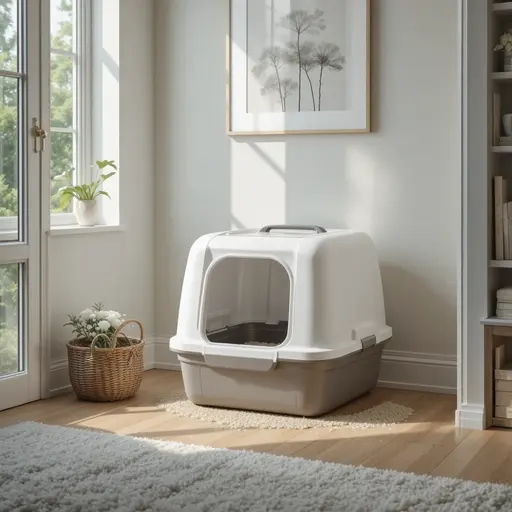
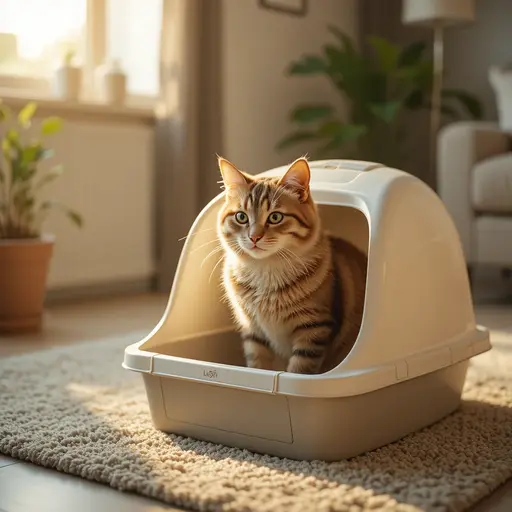
- Covered litter boxes – Provide privacy (though some cats prefer open boxes)
- Litter attractants – Powders like Dr. Elsey’s Cat Attract that encourage use
- Calming supplements – Products with L-theanine or tryptophan (consult your vet first)
Expected Results & Prevention Timeline
Here’s what realistic progress looks like when addressing a cat not using a litter box after moving:
Recovery Timeline
Days 1-3: Accidents are common. Focus on safe room setup and stress reduction. Don’t expand territory yet.
Days 4-7: You should see noticeable improvement if you’ve followed the protocol—fewer accidents and more consistent use of the box in the safe room.
Week 2: Gradual expansion to other rooms. Occasional accidents may still happen, but should decrease in frequency.
Week 3-4: Most cats return to normal litter box habits. If problems persist beyond this point, consult your veterinarian.
When to Call the Veterinarian
Contact your vet immediately if you notice:
- Straining to urinate with little or no output (potential urinary blockage—this is an emergency)
- Blood in urine
- Excessive licking of the genital area
- No improvement after 2 weeks of consistent intervention
- Sudden increase in water consumption
Cat-stressed litter box issues can sometimes mask underlying medical conditions like urinary tract infections, bladder stones, or kidney disease. Feline idiopathic cystitis (FIC)—the single most common bladder condition in cats—is directly linked to stress and is often triggered by exactly this kind of environmental upheaval, so don’t assume moving stress automatically rules out a physical component. A veterinary exam is always warranted if behavioral interventions don’t resolve the problem.
Older cats add another wrinkle: arthritis pain can make climbing into a high-sided box uncomfortable enough to cause avoidance that looks identical to moving-related stress. If your cat is a senior, it’s worth reading our guide to managing arthritis in senior cats alongside ruling out stress.
Prevention for Future Moves
If you anticipate another move:
- Keep your cat’s routine as consistent as possible during packing
- Use Feliway sprays in carriers and new spaces
- Maintain the same litter brand and box style
- Consider boarding your cat during the actual moving day chaos, then introducing them to the new home when it’s quieter
Frequently Asked Questions
How long does it take for a cat to adjust to a new home and use the litter box?
Most cats adjust within 1-2 weeks, though some need up to a month. Litter box use typically returns to normal within 7-14 days if you follow proper stress-reduction protocols.
Should I change my cat’s litter type after moving?
Absolutely not during the transition. Use the same litter from your old home. If you want to switch litter types, wait at least 4-6 weeks after your cat has fully settled, then transition gradually over 10-14 days.
My cat used the litter box perfectly for a week, then stopped again. What happened?
This is common and usually means you expanded their territory too quickly. Return to the last area where they were successful for 2-3 days, then try expanding more slowly.
Can I use puppy pads as a temporary solution?
While not ideal, puppy pads can work as a temporary measure if placed near the litter box. However, transition back to the box quickly, as pads can create long-term confusion about appropriate elimination surfaces.
Will neutering/spaying help if my cat is marking territory after moving?
If your cat isn’t already spayed or neutered, this can significantly reduce territorial marking. However, if they’re already fixed, the behavior is stress-related rather than hormonal, and you’ll need to focus on environmental modifications.
Conclusion
Moving is hard on everyone—including your cat. But a cat not using a litter box after moving isn’t a permanent problem. With patience, proper litter box management, and stress-reduction strategies, most cats return to normal habits within two weeks.
Remember: your cat isn’t giving you a hard time. They’re having a hard time. By creating safe spaces, maintaining familiar scents, and expanding their territory gradually, you’re speaking their language and rebuilding the security that moving destroyed.
Start today by setting up that safe room and adding an extra litter box. Your future self—and your carpets—will thank you.
Have you dealt with litter box problems after moving? Share your experience in the comments below or join our PetsMirror community, where thousands of cat owners support each other through every pet parenting challenge.