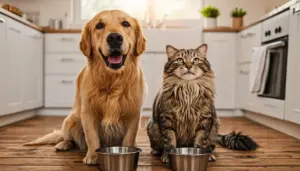




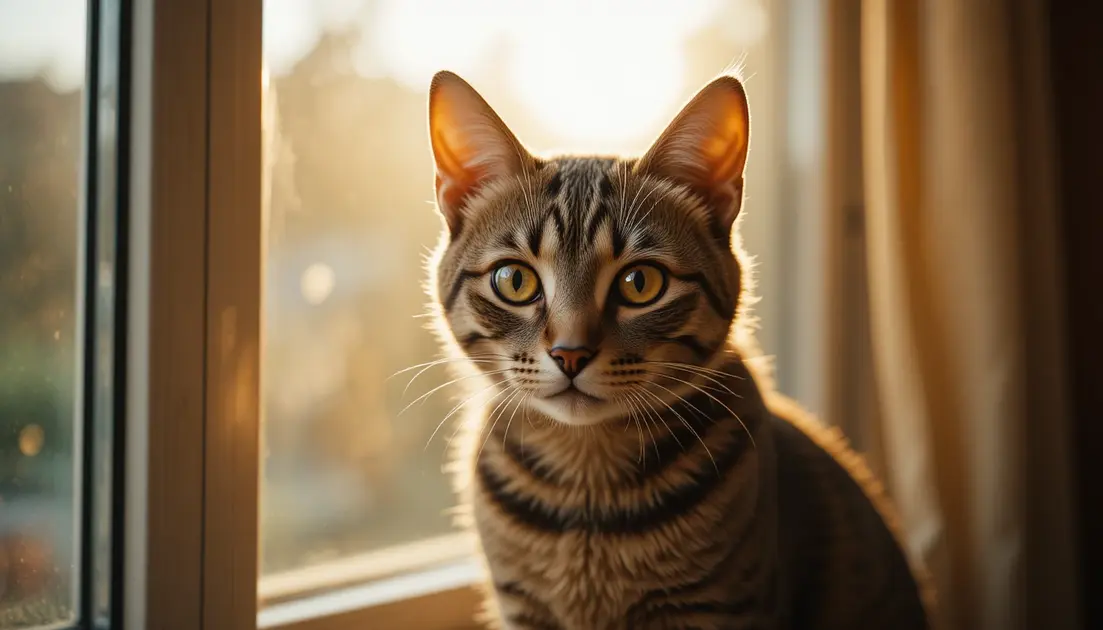
Why does my cat stare at me without blinking? Most often, it’s a sign of focused curiosity, trust, or a request for food or attention. In the feline world, a relaxed, unblinking gaze isn’t inherently threatening — it simply means your cat is engaged. However, if the stare is accompanied by dilated pupils, flattened ears, or a stiff body, it may signal fear or aggression. Urgency level: Mild to moderate. If staring is paired with disorientation, head pressing, or sudden behavior changes, contact your veterinarian within 24 hours.
Why Does My Cat Stare at Me Without Blinking?
If you’ve ever looked up from your laptop to find your cat locked onto you with an intense, unblinking gaze, you’re not alone. For many cat owners, this behavior is a daily mystery. Is it affection? A demand? A warning?
The truth is that cats are masters of nonverbal communication, and their eyes are one of their most expressive tools. Understanding the context — body posture, ear position, and the environment — is the key to decoding what your cat is trying to tell you.
The Science of the Feline Stare
Cats are crepuscular predators with highly specialized vision. Their eyes contain a high density of rod cells, which allow them to see clearly in low light, and they have a wider field of peripheral vision than humans. This means that when your cat stares at you, they aren’t just looking — they’re processing a vast amount of visual information. That heightened visual awareness is part of a much longer story between cats and people; our cat domestication timeline traces how that relationship shaped the behaviors we see today.
A 2020 study published in Scientific Reports by researchers at the University of Sussex confirmed that cats use specific eye movements, including narrowing and half-blinks, as deliberate communicative signals.
The research found that cats respond to human-initiated slow blinks with their own eye-narrowing movements, and they’re more likely to approach a person after such an interaction. This suggests that eye-based communication is a learned, intentional behavior in domestic cats.
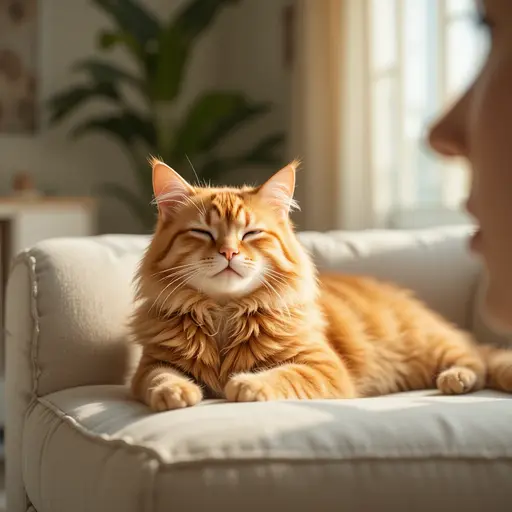
Common Reasons Your Cat Stares at You Without Blinking
Curiosity and Observation
Cats are naturally inquisitive. Your cat may stare at you simply because you’re the most interesting thing in the room. They’re studying your movements, learning your routines, and monitoring their territory. A relaxed body, soft eyes, and a gently swaying tail usually accompany this type of stare.
Affection and Trust
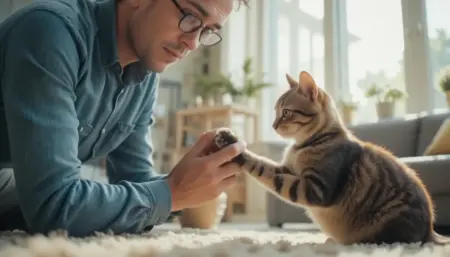
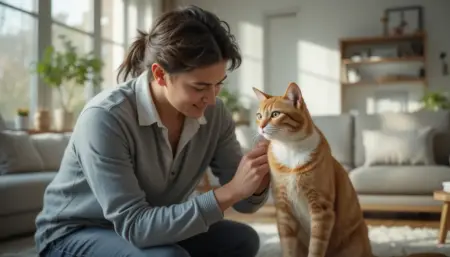
One of the most heartwarming reasons for a cat’s unblinking gaze is affection. When a cat feels safe, they’ll hold eye contact without tension. This is often followed by a slow blink — the feline equivalent of a kiss. As veterinarian Dr. Gary Weitzman, author of How to Speak Cat, put it in an interview with The Cut: the slow blink really is an acceptance gesture, one cats give when they’re absolutely comfortable with you.
You can strengthen your bond by slow-blinking back. Close your eyes for a second, then open them slowly. If your cat reciprocates, you’ve just shared a moment of trust.
Attention-Seeking Behavior
Cats are intelligent and quickly learn that staring gets results. If your cat stares at you and then meows, rubs against your leg, or leads you toward the food bowl, they’re using eye contact as a tool to communicate a need. This behavior is common around meal times or when a favorite toy is out of reach.
Hunger or Routine Reminder
Cats are creatures of habit. If your cat stares at you around the same time each day, they may be reminding you of a routine — breakfast, a scheduled play session, or bedtime treats. The stare is their way of saying, “It’s time.” If mealtime staring turns into a daily standoff, an automatic cat feeder can help keep feeding times consistent so you’re not the one being watched down.
Fear or Aggression
Not all staring is friendly. A hard, unblinking stare paired with a stiff body, flattened ears, dilated pupils, and a puffed-up tail is a threat display.
Board-certified veterinary behaviorist Dr. Wailani Sung, writing for PetMD, explains that this kind of hard stare is the cat’s way of warning the other party to back off before the situation escalates into a confrontation.
If you encounter this, don’t stare back. Avert your gaze, keep still, and give the cat space. Once you’re at least five feet away, you can try to redirect their attention with a toy. Similar warning signs — a stiff body and dilated pupils — also show up when a cat that was enjoying petting suddenly turns to swat; our guide to petting-induced aggression in cats breaks down how to read that overstimulation response.
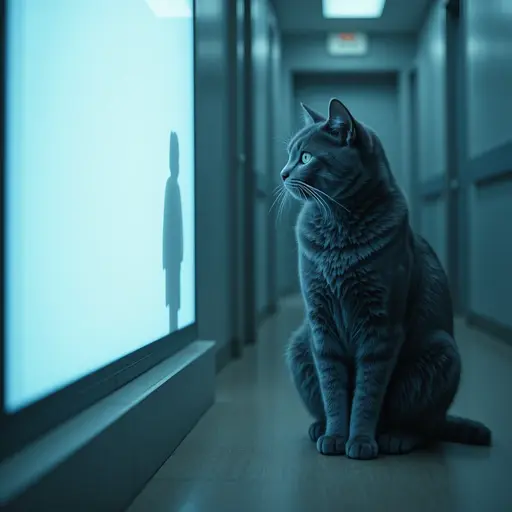
Why Does My Cat Stare at Nothing?
Sometimes the stare isn’t directed at you at all. You may find your cat gazing intently at a blank wall, an empty corner, or thin air. Before you worry about ghosts, consider these explanations.
Superior Senses at Work
Cats can hear frequencies up to 64,000 Hz — nearly three times the human range. They can also detect ultraviolet light and see movement in low light that’s invisible to us. That “nothing” your cat is staring at could be a dust mote, a tiny insect, or the sound of a mouse behind the wall.
The Hunting Instinct
Even well-fed domestic cats retain strong predatory drives. Staring is a critical part of the hunting sequence. Your cat may be in assessment mode, calculating distance and timing before a pounce — even if the “prey” is a speck of dust.
Simple Daydreaming
Cats, like humans, sometimes zone out. A brief, unfocused stare is usually harmless and simply means your cat is relaxed and processing internal stimuli.
When Staring Signals a Medical Problem
While most staring is benign, persistent or unusual staring can indicate an underlying health issue. This is especially true in senior cats.
Feline Cognitive Dysfunction (FCD)
Also known as cat dementia, FCD is estimated to affect more than 55% of cats aged 11 to 15 and over 80% of cats aged 16 to 20, according to the ASPCA. The Cornell Feline Health Center lists spatial disorientation, excessive sleeping, altered sleep-wake cycles, and “long periods of staring blankly into space or at walls” among the condition’s hallmark symptoms.
If your senior cat has started staring at walls alongside other behavioral changes, a veterinary evaluation is essential. Cognitive decline often overlaps with other age-related conditions, so it’s worth reading our guide to managing arthritis in senior cats as well, since joint pain can compound confusion and change how a senior cat moves and behaves.
Feline Hyperesthesia Syndrome
This condition involves episodes of skin twitching, excessive grooming (especially at the tail base), dilated pupils, and loud vocalization. Some cats enter trance-like states and stare at walls between episodes. The cause isn’t fully understood, but it may have a neurological or anxiety-related component.
Partial Seizures
Cats more commonly experience partial seizures than full-body convulsions. These can manifest as brief staring spells, twitching, drooling, or abnormal vocalization. Recording a video of the episode can help your veterinarian make a diagnosis.
Head Pressing: A Critical Emergency
If your cat progresses from staring to physically pressing their head against a wall or other surface, seek emergency veterinary care immediately. Head pressing can signal brain tumors, liver disease, poisoning, or infectious meningitis.
The Cat Slow Blink Meaning: What It Really Means
The slow blink is one of the most misunderstood and endearing behaviors in the feline repertoire. When your cat looks at you and deliberately closes their eyes halfway before slowly reopening them, they’re performing what behaviorists call a “slow blink sequence.”
The Research Behind the Blink
A landmark 2020 study in Scientific Reports experimentally tested the slow blink in cat-human interactions. Researchers found that cats delivered significantly more eye-narrowing movements when their owners slow-blinked at them compared to a neutral interaction.
In a second experiment, cats were more likely to approach an unfamiliar human after a slow blink exchange than after a neutral facial expression.
A follow-up study published in Animals found that shelter cats who responded to human slow blinking with eye closures were adopted faster than those who did not. This suggests the behavior isn’t only communicative but may have been selectively advantageous during domestication.
How to Slow Blink at Your Cat
- Get their attention — Make sure your cat is looking at you.
- Relax your face — Tension will be read as threatening.
- Close your eyes slowly — Hold them shut for about one second.
- Open them slowly — Do not snap your eyes open.
- Repeat — Some cats respond immediately; others take a few tries.
If your cat slow-blinks back, you’ve received a feline “I love you.”
How to Respond When Your Cat Stares at You
Your reaction should depend entirely on the context and your cat’s body language.
| Body Language | What It Means | How to Respond |
|---|---|---|
| Relaxed posture, soft eyes, slow tail sway | Curiosity or affection | Slow blink back, speak softly, offer gentle petting |
| Stare + meow + movement toward food bowl | Hunger or routine request | Check feeding schedule, offer a small meal |
| Crouched stance, dilated pupils, swishing tail | Play solicitation | Grab an interactive toy and initiate a play session |
| Stiff body, flattened ears, piloerection | Fear or aggression | Avert gaze, back away slowly, do not touch |
| Fixed stare at wall + disorientation (senior cat) | Possible cognitive dysfunction | Schedule a veterinary exam |
When to Call the Vet Immediately
Most staring is harmless, but certain red flags warrant prompt professional evaluation.
Red-Flag Symptoms
- Head pressing against walls or furniture
- Sudden onset of staring in a senior cat
- Staring paired with seizures, circling, or loss of balance
- Disorientation or inability to recognize familiar people
- Dilated pupils that do not respond to light
- Changes in appetite, elimination, or sleep patterns
- Excessive vocalization, especially at night
If you observe any of these, contact your veterinarian within 24 hours. For head pressing or seizure activity, seek emergency care.
Preventing Problematic Staring Behaviors
Environmental Enrichment
Boredom can lead to obsessive staring. Ensure your cat has:
- Vertical spaces (cat trees, shelves)
- Puzzle feeders and foraging toys
- Daily interactive play sessions (10–15 minutes, twice daily)
- Window perches for visual stimulation
For more ways to keep an indoor cat engaged, see our enrichment activities guide.
Routine and Predictability
Cats thrive on consistency. Feed, play, and sleep schedules should remain as predictable as possible, especially for senior cats showing early signs of cognitive decline.
Regular Veterinary Screenings
The American Animal Hospital Association recommends discussing behavioral changes at every veterinary visit, regardless of a cat’s age. Early detection of cognitive dysfunction, hyperthyroidism, or hypertension can significantly improve outcomes.
Frequently Asked Questions
Is it normal for my cat to stare at me without blinking?
Yes, in most cases. A relaxed, unblinking stare is usually a sign of curiosity, trust, or a request for attention. It becomes concerning only when paired with stress signals or sudden behavioral changes.
Why does my cat stare at me while I sleep?
Your cat may be guarding you, waiting for you to wake up for breakfast, or simply enjoying your presence. Some cats are more nocturnal and become active when their owners are still.
Do cats stare at people they love?
Yes. Calm eye contact, especially when followed by a slow blink, is a strong indicator of affection and trust in cats.
Can staring mean my cat is sick?
In rare cases, yes. Staring at walls, disorientation, or a fixed gaze paired with other symptoms can indicate neurological issues, vision problems, or cognitive dysfunction. When in doubt, consult your veterinarian.
Why does my cat stare at nothing?
Cats have superior hearing and vision. They may be detecting sounds, movements, or light spectra that humans cannot perceive. Alternatively, they may simply be resting their gaze.
Key Takeaways
Your cat’s unblinking stare is rarely a cause for alarm. Most often, it’s a form of communication — an expression of trust, a request for interaction, or a moment of focused observation. The slow blink, in particular, is one of the most reliable signs of feline affection, backed by peer-reviewed science.
That said, context matters. A stare accompanied by a stiff body and flattened ears demands space, not engagement. And in senior cats, new or excessive staring at walls can be an early sign of cognitive dysfunction or other medical conditions that benefit from early veterinary intervention.
By learning to read your cat’s body language and understanding the science behind their gaze, you can respond appropriately — deepening your bond when the moment is right and seeking help when it’s needed.
The next time your cat stares at you without blinking, take a moment to observe, interpret, and, if the moment feels right, slow-blink back.