



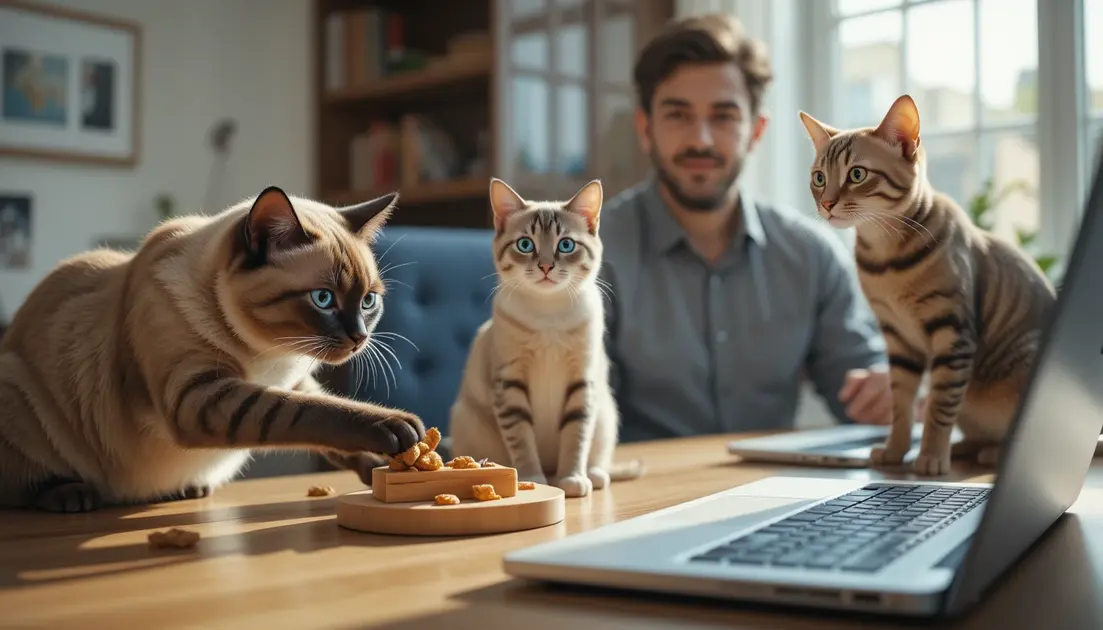
As a pet owner, you want a companion who’s not just cute, but mentally engaging and emotionally rewarding. Intelligence in cats isn’t just about tricks—it’s about problem-solving, social bonding, and adaptability. But smarter cats also come with unique challenges: boredom, mischief, and demanding stimulation needs.
This guide breaks down the smartest cat breeds, what makes them tick, and how to provide the enriched life they need.
Key Takeaways
- Cat intelligence is about problem-solving, social bonding, and environmental manipulation, not obedience—and it comes with real challenges like boredom-driven destruction.
- The 13 breeds profiled range from the Abyssinian and Bengal (highest energy, most demanding) to the Persian and Scottish Fold (calmer, better for first-time owners).
- Smart cats need genuine daily enrichment: vertical space, foraging opportunities, and 2+ hours of interactive play, not just toys left on the floor.
- Several of the most intelligent breeds (Siamese, Oriental Shorthair, Tonkinese) are prone to serious separation anxiety and do best in pairs or with an owner who’s home most of the day.
- Budget for the full picture: enrichment, pet insurance, and breed-specific vet care can push lifetime costs to $15,000–$45,000, well beyond the purchase price.
Understanding Feline Intelligence: What “Smart” Really Means
Before diving into breeds, let’s decode what “smart” means for cats. Unlike dogs, feline intelligence isn’t about obedience—it’s about adaptive problem-solving, social cognition, and environmental manipulation.
Three Pillars of Cat Intelligence:
- Cognitive Flexibility: Can they solve puzzles, open doors, or learn from observation?
- Social Intelligence: Do they read human emotions, respond to names, and form deep bonds?
- Trainability: Can they learn commands, walk on leashes, or play fetch?
A 2024 study by the University of Detroit Mercy and the University of Tennessee at Chattanooga, published in the journal Animals, found that more socialized cats solved a food-puzzle box faster and approached novel objects more confidently than less socialized cats—evidence that a cat’s comfort around people, not just its breed, shapes how sharp it looks day to day.
Separately, Kyoto University researchers have shown cats can retain “what and where” memory of a single experience (which food bowl they’d already eaten from) after a 15-minute gap, the same kind of episodic memory long documented in dogs. Either way, the takeaway is the same: mental stimulation matters. Without it, intelligent cats become destructive.
The Top 13 Smartest Cat Breeds: Detailed Profiles
1. Abyssinian: The “Einstein” of Cats
Origin: Ethiopia/Egypt | Lifespan: 14-17+ years | Weight: 6-12 lbs
The Abyssinian tops every intelligence list for a reason. These cats are relentless explorers with exceptional detective skills. They’ll dismantle puzzle toys, learn leash-walking in days, and shadow you from room to room, “supervising” every task.
Why Owners Love Them: Unmatched curiosity, dog-like loyalty, and athletic grace.
Concerns for Owners:
- High boredom threshold: An under-stimulated Abyssinian will open cabinets, unroll toilet paper, and steal small objects.
- Needs vertical space: Cat trees must be 6+ feet tall; they thrive on elevation.
- Not a lap cat: They love being near you, not on you—and can feel aloof with cuddly owners.
Best For: Active families, experienced cat owners, homes with cat-safe outdoor access or a catio.
2. Siamese: The Vocal Genius
Origin: Thailand | Lifespan: 15-20 years | Weight: 8-15 lbs
Siamese cats are conversationalists. They don’t just meow—they communicate with tonal variations, learning your routine and anticipating your moves. Famous for opening doors and turning on faucets, they crave social interaction.
Why Owners Love Them: Deeply affectionate, trainable for tricks, and endlessly entertaining.
Concerns for Owners:
- Separation anxiety: Cannot be left alone for 8+ hours; may develop stress-induced over-grooming.
- Destructive when bored: Will systematically knock items off shelves for attention.
- Vocal demands: Their loud, frequent “talking” can frustrate noise-sensitive owners.
Best For: Multi-pet households, retirees, work-from-home professionals.
3. Bengal: The Wild-Looking Athlete
Origin: USA (hybrid) | Lifespan: 12-20 years | Weight: 6-15 lbs
Bengals possess a wild cat’s intelligence with a domestic cat’s loyalty. They learn leash-walking, fetch, and even swim. Their problem-solving is physical—they’ll figure out how to reach the highest shelf or open refrigerators.
Why Owners Love Them: Stunning coat, dog-like playfulness, and impressive agility.
Concerns for Owners:
- Extreme energy: Requires 2+ hours of active play daily; a laser pointer won’t suffice.
- Water obsession: May flood toilets or bathtubs.
- Expensive: $1,500-$3,000; early-generation hybrids (F1-F3) are banned in some states.
Best For: Experienced owners, homes with older children, those seeking an adventure cat.
4. Savannah Cat: The Tallest Mastermind
Origin: USA (Serval hybrid) | Lifespan: 12-15 years | Weight: 9-15 lbs
The Savannah is among the tallest domestic cats and a genius-level escape artist. They can jump 8 feet from a standstill, learn to unlock doors, and need puzzle feeders to slow their eating.
Why Owners Love Them: Exotic appearance, loyal to “their person,” and learn tricks rapidly.
Concerns for Owners:
- Not for beginners: High prey drive; can be dangerous to small pets.
- Space requirements: Need large, enriched environments; apartments are cruel.
- Legal restrictions: Illegal in some areas; check local exotic pet laws.
- Cost: $1,500-$25,000 depending on generation.
Best For: Dedicated exotic pet owners, rural homes, and those with large enclosures.
5. Cornish Rex: The Eternal Kitten
Origin: UK | Lifespan: 9-13+ years | Weight: 6-9 lbs
The Cornish Rex has a Peter Pan personality—playful, curious, and athletic. They master fetch by 6 months old and adapt to new environments in days. Their soft, curly coat sheds less than a typical double coat, which can make life easier for allergy sufferers, though no cat is truly allergen-free.
Why Owners Love Them: Low-shedding coat, clownish antics, and trainability.
Concerns for Owners:
- Heat-seeking: Will sleep on electronics; risk of burns or damage.
- High metabolism: Needs frequent meals; prone to food theft.
- Clinginess: Follows you constantly; can trip owners.
Best For: Allergy-conscious owners, apartment dwellers (with vertical space), playful seniors.
6. Scottish Fold: The Puzzle-Lover
Origin: Scotland | Lifespan: 13-15 years | Weight: 6-13 lbs
Don’t let the folded ears fool you—these cats are strategic thinkers. They love puzzle toys, sit upright like owls, and observe patterns. They’re moderately active but mentally sharp.
Why Owners Love Them: Unique appearance, calm demeanor, and gentle with kids.
Concerns for Owners:
- Cartilage issues: The fold gene causes osteochondrodysplasia; ethical breeding is critical.
- Lower energy: Can become overweight without portion control.
- Not acrobatic: Prefers ground-level puzzles to climbing.
Best For: First-time owners, families with kids, those wanting a “thinking” cat without chaos.
7. Tonkinese: The Social Engineer
Origin: USA (Siamese/Burmese cross) | Lifespan: 14-16 years | Weight: 6-12 lbs
Tonkinese inherit the best of both worlds: Siamese talkativeness and Burmese affection. They collect items, learn phrases, and solve food puzzles in minutes. They’re known for stealing jewelry to build treasure hoards.
Why Owners Love Them: Velcro cat loyalty, moderate energy, and comedic timing.
Concerns for Owners:
- Demand companionship: Need another pet or constant human presence.
- Theft behavior: Will hide keys, remotes, and shiny objects.
- Vocal: Not as loud as Siamese but still chatty.
Best For: Multi-pet homes, owners wanting an interactive companion.
8. Turkish Angora: The Water-Loving Scholar
Origin: Turkey | Lifespan: 15-18 years | Weight: 5-10 lbs
These cats are highly trainable and famously love water. They open faucets, play fetch, and bond deeply with one family member. Their curiosity drives them to explore cabinets and drawers.
Why Owners Love Them: Elegant appearance, playful water antics, and devotion.
Concerns for Owners:
- Single-person bond: May ignore other family members.
- Water mess: Splashes in toilets and sinks.
- Fur maintenance: A long coat needs daily grooming.
Best For: Dedicated single owners, homes with cat water fountains.
9. Burmese: The Velcro Intellectual
Origin: Burma/Myanmar | Lifespan: 12-16 years | Weight: 8-12 lbs
Burmese form intense bonds and learn routines instantly. They ride shoulders, fetch obsessively, and communicate with soft voices. They’re low-maintenance but high-affection.
Why Owners Love Them: Lap-cat cat intelligence, social with strangers, and a sturdy build.
Concerns for Owners:
- Weight gain: Prone to obesity; strict portion control needed.
- Separation anxiety: Destructive if left alone; needs a companion pet.
- Possessive: Can be jealous of new pets.
Best For: Families, owners wanting a “dog-like” cat in a quieter package.
10. Oriental Shorthair: The Attention-Seeking Prodigy
Origin: UK | Lifespan: 12-15 years | Weight: 6-12 lbs
With 300+ color patterns and a Siamese-like body, Orientals are brilliant but needy. They learn tricks, solve puzzles, and follow you obsessively. They thrive on constant mental input.
Why Owners Love Them: Stunning variety, trainable, and deeply attached.
Concerns for Owners:
- Severe separation anxiety: Cannot be alone; will shred furniture.
- Vocal demands: Loud, frequent meowing for attention.
- Restlessness: Needs new toys weekly to prevent boredom.
Best For: Work-from-home owners, cat agility enthusiasts.
11. Maine Coon: The Gentle Problem-Solver
Origin: USA (Maine) | Lifespan: 12-15 years | Weight: 10-25 lbs
America’s gentle giant is a stealthy intellectual. They figure out latches, open doors, and manipulate their environment. Their patience makes them excellent family pets.
Why Owners Love Them: Dog-like loyalty, kid-friendly, and quiet intelligence.
Concerns for Owners:
- Slow maturity: Takes 3-5 years to fully physically and mentally mature.
- Grooming needs: Long coat mats without daily brushing.
- Joint issues: Weight strains the hips; needs joint supplements.
Best For: Families, first-time owners wanting a large, calm, smart cat.
12. Sphynx: The Naked Genius
Origin: Canada | Lifespan: 12-15 years | Weight: 6-12 lbs
Hairless but brain-packed, Sphynx cats learn routines, perform for attention, and adapt instantly. They know which human gives treats and what time you wake up.
Why Owners Love Them: Low-dander coat, comedic, and loves to cuddle.
Concerns for Owners:
- Skin care: Needs weekly baths; oily skin causes acne.
- Temperature-sensitive: Needs sweaters in winter, shade in summer.
- Food-motivated: Steals food; prone to obesity.
Best For: Allergy-conscious owners, owners wanting a “clown” cat.
13. Persian: The Quiet Observer
Origin: Iran | Lifespan: 14-15 years | Weight: 8-15 lbs
Persians are selectively intelligent—they learn but choose when to obey. They thrive in quiet homes, learning routines, and bonding with a few trusted people. Their intelligence is subtle.
Why Owners Love Them: Calm, beautiful, and low-energy smart cat.
Concerns for Owners:
- Flat-faced health: Brachycephalic; breathing and dental issues.
- Grooming: Daily brushing is mandatory; mats cause skin infections.
- Not playful: Won’t fetch or walk on leash.
Best For: Quiet households, owners wanting beauty over activity.

The Dark Side of Intelligence
Smart cats aren’t just cute tricksters—they’re high-maintenance. Here’s what veterinarians and behaviorists warn about:
1. Destructive Boredom
A bored Abyssinian or Bengal won’t just nap—they’ll redecorate. Common issues:
- Cabinet raiding: Child locks become necessary.
- Toilet paper destruction: A 5-minute shower = 1 roll shredded.
- Door opening: Lever handles must be replaced with knobs.
- Water play: Flooded bathrooms from faucet manipulation.
Solution: Rotate toys every 3 days. Provide puzzle feeders for all meals. Build a “catio” for safe outdoor stimulation.
2. Separation Anxiety
Siamese, Oriental, and Tonkinese can develop clinical anxiety when alone. Signs:
- Excessive vocalization (neighbors complain)
- Over-grooming to bald patches
- Urine marking on your belongings
Solution: Adopt in pairs. Use pet cameras with treat dispensers. Hire daily cat sitters for 30-minute play sessions.
3. Escapism
Savannahs and Bengals can open windows, squeeze through small gaps, and jump 8-foot fences. Outdoor access is dangerous for them.
Solution: Install secure screens. Microchip and GPS collar. Build enclosed “catios” with climbing structures.
4. Cognitive Overload in Shelters
Smart cats decline in shelters. They hide, stop eating, and become “unadoptable.” Abyssinians and Bengals are often returned for “being too much.”
Solution: If adopting, ask about the cat’s history. Prepare a “sanctuary room” with climbing shelves and puzzle toys before bringing them home.
Engineering the Perfect Environment for Smart Cats
Your home must be a feline enrichment lab. Here’s the blueprint:
1. Vertical Territory
- Minimum: 6-foot cat tree per cat
- Ideal: Wall-mounted shelves creating a “superhighway.”
- Pro tip: Place near windows for bird-watching
2. Foraging Opportunities
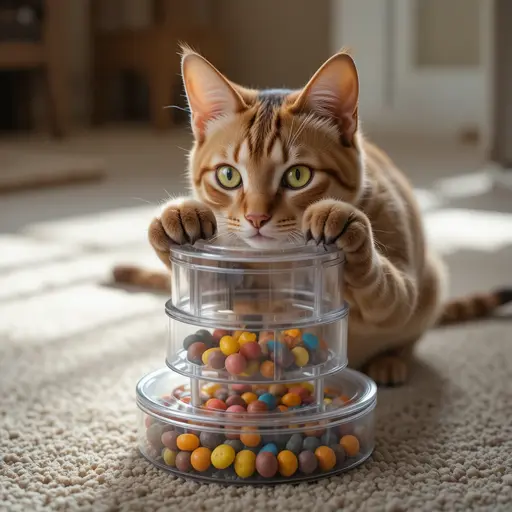
- Puzzle feeders: Use for dry food (Doc & Phoebe’s Indoor Hunting Feeder)
- Scent work: Hide treats in cardboard boxes with holes
- Meal variety: Offer 3-4 small meals vs. free-feeding
3. Cognitive Training
- Clicker training: 5-minute sessions, 2x daily
- Tricks to start: “Sit,” “high-five,” “fetch.”
- Advanced: Leash walking, agility courses
4. Sensory Enrichment
- Cat TV: YouTube videos of birds/squirrels
- Window perches: Different views per room
- Safe plants: Cat grass, catnip, valerian root
5. Social Structure
- Pair adoption: Critical for Siamese, Oriental, Tonkinese
- Human interaction: Minimum 2 hours daily active play
- Routine: Feed and play at the same time daily
Choosing the Right Smart Breed: A Decision Matrix
| Breed | Energy | Vocal | Grooming | Best For | Warning |
|---|---|---|---|---|---|
| Abyssinian | Extreme | Low | Low | Active owners | Needs constant novelty |
| Siamese | High | Extreme | Low | Companionship | Separation anxiety |
| Bengal | Extreme | Moderate | Low | Experienced owners | Escapism, water damage |
| Savannah | Extreme | Low | Low | Exotic experts | Legal issues, space |
| Cornish Rex | High | Moderate | Very low | Allergy-conscious owners | Clingy, heat-seeking |
| Scottish Fold | Moderate | Low | Moderate | Families | Cartilage health risks |
| Tonkinese | High | High | Low | Multi-pet homes | Theft behavior |
| Turkish Angora | High | Moderate | High | Single owners | Water mess, one-person bond |
| Burmese | Moderate | Moderate | Low | Families | Obesity, possessiveness |
| Oriental | High | Extreme | Low | Dedicated owners | Severe anxiety alone |
| Maine Coon | Moderate | Low | High (daily) | Families | Slow mental maturity |
| Sphynx | High | Moderate | Very high (baths) | Allergy-conscious owners | Skin issues, cold |
| Persian | Low | Low | Extreme | Quiet homes | Health issues, not trainable |
The Vet’s Perspective: Health Risks in Smart Breeds
As veterinarian and pet-health writer Dr. Sarah Wooten has noted in her writing for veterinary and pet-care publications, many intelligent cat breeds carry breed-specific health risks that can be made worse by the stress of an under-stimulated life—a good reason to treat enrichment as part of preventative care, not an optional extra.
Breed-Specific Concerns:
- Abyssinian: Pyruvate kinase deficiency (PKD), progressive retinal atrophy (PRA)
- Siamese: Asthma, dental disease, obsessive-compulsive disorders
- Bengal: Hypertrophic cardiomyopathy (HCM), patellar luxation
- Savannah: Hybrid health issues, shorter lifespan in early generations
- Scottish Fold: Osteochondrodysplasia (painful arthritis)
- Maine Coon: HCM, hip dysplasia
- Persian: Brachycephalic syndrome, polycystic kidney disease (PKD)
Action Plan:
- Genetic testing: Mandatory for breeding stock
- Annual cardiac ultrasounds: For Bengals, Maine Coons
- Joint supplements: Start at age 2 for large breeds
- Pet insurance: Non-negotiable for hybrids
Real Owner Stories: The Good, Bad, and Chaotic
Case Study 1: The Abyssinian Architect
“Raj learned to open the fridge by watching me. I installed a child lock. He then learned to unscrew the child lock with his claws. Now I have a fridge alarm.” – Amanda, Seattle.
Case Study 2: The Siamese Alarm Clock
“Every morning at 6:47 AM, my Siamese, Luna, yanks my hair until I get up. She learned my work schedule and monitors my Zoom calls—meows when I’m muted.” – James, Austin.
Case Study 3: The Bengal Flood
“Came home to water flowing down the stairs. My Bengal, Zeus, had turned on the bathtub faucet, plugged the drain with toys, and was swimming.” – Priya, Miami.
Cost of Ownership: Budgeting for Brainiacs
Smart cats cost more—not just purchase price, but enrichment and veterinary care.
Initial Costs:
- Purchase: $800-$3,000 (purebred)
- Adoption: $100-$300 (seek breed-specific rescues)
- Setup: $500-$1,200 (cat trees, puzzles, secure screens)
Annual Costs:
- Food: $400-$800 (high-protein diet)
- Vet: $500-$2,000 (breed-specific issues)
- Enrichment: $200-$500 (new toys, climbing upgrades)
- Pet sitting: $500-$1,500 (daily visits if you travel)
Lifetime (15 years): $15,000-$45,000
Pro Tip: Foster first. Many smart breeds are surrendered and need experienced foster homes.
Frequently Asked Questions
What is the smartest cat breed?
The Abyssinian is most often ranked as the single smartest cat breed for its relentless curiosity, quick learning, and knack for figuring out latches and puzzle toys, though Siamese, Bengal, and Savannah cats are close contenders known for their own kinds of intelligence.
Can smart cats be trained like dogs?
Yes. Many of the breeds on this list—Bengals, Savannahs, Siamese, and Cornish Rex among them—can learn leash-walking, fetch, and simple commands through consistent, short clicker-training sessions, though cats generally need food or play motivation rather than praise alone.
Do intelligent cat breeds need more attention than average cats?
Generally yes. Higher-intelligence breeds are more prone to boredom-driven problems like cabinet raiding, door-opening, and destructive scratching when they don’t get enough mental stimulation, so they typically need daily interactive play and rotating puzzle toys rather than just food and a litter box.
Are smart cat breeds a good choice for first-time cat owners?
Some are, and some aren’t. Calmer, more predictable breeds like the Scottish Fold, Maine Coon, or Persian tend to suit first-time owners better, while high-energy, escape-prone breeds like the Bengal or Savannah are usually better suited to experienced owners who can meet their exercise and enrichment needs.
How do I know if my cat is bored rather than sick?
Boredom in intelligent cats usually shows up as destructive behavior directed at specific objects—unrolling toilet paper, opening cabinets, knocking things down—that improves with more play and puzzle feeding. Sudden appetite changes, hiding, vomiting, or changes in litter box habits point to a possible medical issue instead, and are worth a vet visit rather than more toys.
Final Verdict: Should You Get a Smart Cat?
Yes, if you can commit to:
- 2+ hours daily interactive play
- Weekly toy rotation and environmental changes
- Pet insurance and proactive vet care
- A second pet for separation anxiety-prone breeds
No, if you:
- Work 10+ hours away from home
- Want a low-maintenance lap cat
- Have a small, unenrichable apartment
- Are a first-time owner (consider Scottish Fold or Maine Coon instead)
Smart cats are partners, not pets. They’ll train you as much as you train them.