





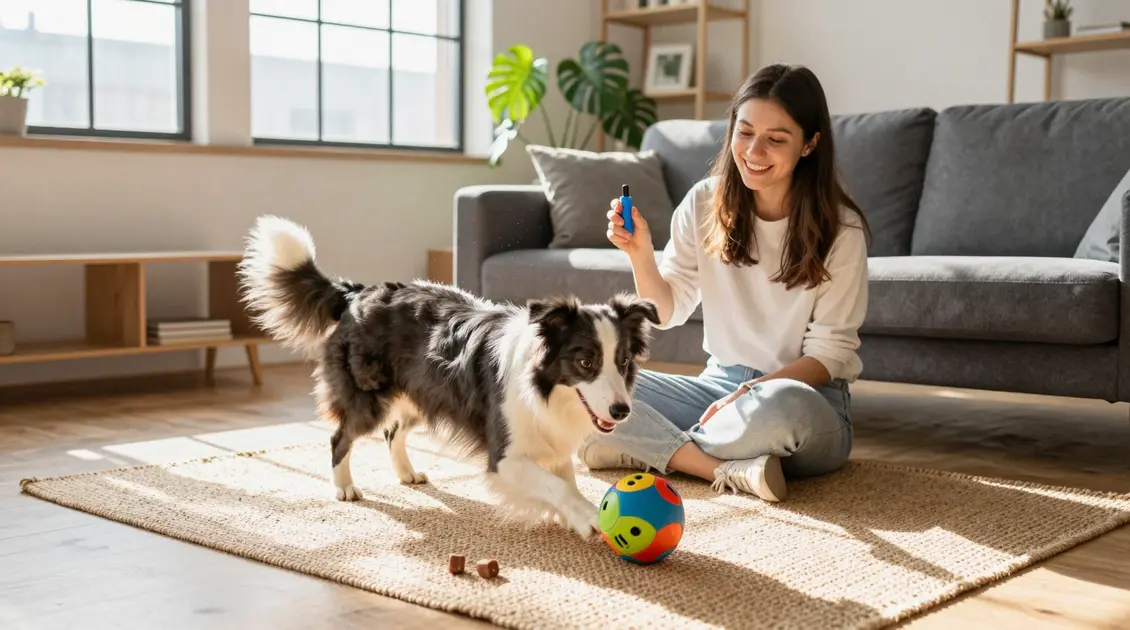
Indoor enrichment for high-energy dogs in apartments combines mental stimulation, short bursts of physical exercise, and sensory activities that satisfy breed-specific drives without requiring outdoor space. A structured daily routine prevents destructive behavior and reduces anxiety in confined environments.
Most behavioral issues in apartment-dwelling dogs stem from understimulation, not defiance. Implementing a decision-based framework helps owners choose the right mix of puzzle toys, scent work, and training games for their specific dog and space constraints.
Living with a high-energy dog in an apartment feels like housing a tornado in a shoebox. The pacing, the whining, the explosion of energy at 10 p.m.—these are not signs of a bad dog. They are symptoms of an unmet biological need.
When square footage is limited and outdoor access is restricted, owners must make deliberate decisions about how to channel that energy constructively.
This article provides a decision-making framework for enriching apartment dogs. It moves beyond generic advice and gives you specific, actionable strategies tailored to small spaces, high-energy breeds, and real-world schedules.
Why Indoor Enrichment for High-Energy Dogs in Apartments Matters
Dogs bred for herding, hunting, or retrieving possess genetic drives that do not disappear because the living room is small. A Border Collie does not know it lives in a studio apartment. A Jack Russell Terrier does not understand that the hallway is only fifteen feet long.
These breeds require outlets for their energy, and when those outlets are not provided, the energy turns inward or outward in destructive ways.
The common misconception is that a tired dog is a well-behaved dog, and that physical exhaustion is the only path to calmness. This is only half true.
Physical exercise matters, but mental stimulation for dogs in small space environments often produces greater behavioral benefits than pure physical exertion.
A dog that has run for an hour but solved no problems is often more restless than a dog that has engaged in twenty minutes of scent work and training.
Research from veterinary behavior programs consistently shows that environmental enrichment reduces unwanted behaviors like excessive barking, destructive chewing, and repetitive pacing.
The Ohio State University Veterinary Medical Center notes that simply letting a dog out into a yard does not ensure activity will happen; many dogs will stand and wait to be let back inside.
Structured indoor engagement is often more effective than passive outdoor time. Read more from Ohio State’s Indoor Pet Initiative.
The Indoor Enrichment Decision Framework
Before buying puzzle toys or rearranging furniture, you need a framework. Random activities produce random results. A decision-based approach ensures that every minute you spend on enrichment actually addresses your dog’s specific needs.
Step 1: Assess Your Dog’s Energy Profile
Not all high-energy dogs are the same. A high-energy Labrador Retriever needs different stimulation than a high-energy Australian Cattle Dog. Retrievers often satisfy their drive through fetch and carrying games. Herding breeds need problem-solving tasks and directional commands. Terriers require digging and scent-based outlets.
Observe your dog for three days without judgment. Note when they pace, bark, or seek attention. Note which toys they ignore and which ones hold their focus. This energy audit reveals whether your dog is physically under-stimulated, mentally bored, or both.
Step 2: Audit Your Available Space
You do not need a large apartment to provide effective indoor dog exercise. You need usable space. A clear hallway becomes a sprint track. A bathroom becomes a scent-work arena.
A living room corner becomes a puzzle station. Measure your open floor space and identify three zones: a movement zone, a mental work zone, and a calm zone.
The movement zone needs enough length for your dog to run a short distance or play tug-of-war safely. The mental work zone should be low-traffic and free from distractions.
The calm zone is where your dog rests after enrichment, reinforcing the cycle of activity and recovery.
Step 3: Match Activity Type to Need
Once you know your dog’s profile and your space, match the two. If your dog is physically energetic but mentally calm, prioritize stair sprints, hallway fetch, and structured tug games.
If your dog is physically satisfied but mentally restless, prioritize puzzle feeders, scent work, and training sessions. Most high-energy apartment dogs need both, but the ratio varies by breed and individual.
Step 4: Build a Sustainable Routine
Enrichment fails when it is inconsistent. A perfect Saturday of activities does not compensate for five days of neglect. Design a routine you can maintain.
Ten minutes of morning scent work, five minutes of training before dinner, and one structured play session in the evening often outperform an occasional hour-long effort.
Proven Indoor Enrichment Strategies
The following strategies are categorized by type. Mix and match based on your decision framework.
Physical Exercise in Small Spaces
Stair Sprints: If you have access to stairs, supervised stair climbing provides excellent cardiovascular exercise. Start with five round trips and increase gradually. Avoid this for puppies under eighteen months, senior dogs, and breeds prone to joint issues.
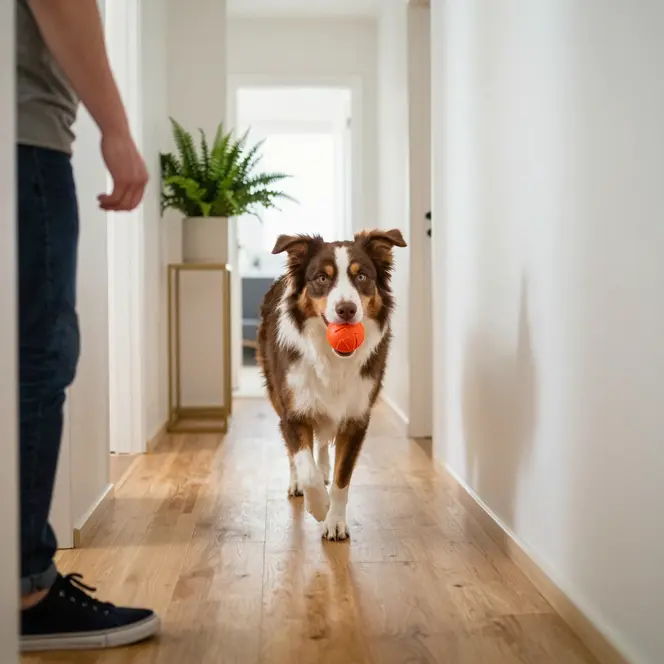
Hallway Fetch: Use a soft ball or rubber toy to prevent wall damage. The confined space actually works in your favor—it teaches your dog to drop the toy immediately and wait for the next throw, adding impulse control to physical exercise.
Tug-of-War Protocols: Tug is not only physically demanding but also mentally engaging when structured correctly. Use a command to start and a command to stop. This turns a simple game into a training exercise that builds self-control while burning energy.
Body Awareness Exercises: Teach your dog to back up, weave through your legs, or place their paws on specific targets. These exercises build core strength and coordination without requiring running room.

Mental Stimulation and Puzzle Games
Food Puzzle Feeders: Replace the food bowl with a puzzle feeder for at least one meal per day. Kongs, snuffle mats, and treat-dispensing balls force your dog to problem-solve for their calories. This extends mealtime from thirty seconds to fifteen minutes and satisfies foraging instincts.
DIY Puzzle Toys: Place treats in a muffin tin and cover the cups with tennis balls. Hide kibble in a rolled-up towel. Freeze wet food in a silicone mold. These low-cost options prevent toy fatigue and keep your dog engaged.
Scent Work: Hide treats around a single room and tell your dog to “find it.” Start with easy, visible placements and gradually increase difficulty. Scent work is uniquely calming because it allows dogs to use their primary sensory organ—their nose—in a species-typical way.
Training Sessions: Teach a new trick every two weeks. Rotate between obedience drills, trick training, and impulse control exercises. Five minutes of focused training provides more mental fatigue than thirty minutes of unstructured play.
Sensory and Environmental Enrichment
Window Perches: High-energy dogs often benefit from visual stimulation. A window perch or designated lookout spot allows your dog to observe the street, which provides passive mental engagement during rest periods.
Sound Therapy: Classical music or specifically designed dog relaxation tracks can reduce anxiety in confined spaces. Use this during the calm zone portion of your routine.
Texture Exploration: Create a sensory box with different fabrics, cardboard, and safe natural items. Supervise closely to prevent ingestion, but allow your dog to explore varied textures with their paws and nose.
Rotating Toys: Keep two-thirds of your dog’s toys stored away at any time. Rotate them weekly. Novelty is a powerful form of environmental enrichment that costs nothing.
Daily Routine Scenario Breakdown
Scenario A: The Full-Time Worker
You leave at 8 a.m. and return at 6 p.m. Your dog is alone for ten hours with a midday walker.
Morning (15 minutes): Ten minutes of scent work or puzzle feeding before you leave. Five minutes of training.
Midday: The dog walker should do more than a bathroom break. Ask them to engage in five minutes of structured play or a short training refresher.
Evening (20 minutes): Fifteen minutes of physical exercise (hallway fetch, tug, or stair sprints). Five minutes of calm settling practice.
This routine provides approximately forty minutes of direct enrichment daily, which is sufficient for most adult high-energy breeds when the activities are mentally demanding.
Scenario B: The Multi-Dog Household
Two high-energy dogs in a one-bedroom apartment amplify both the energy and the chaos.
Separate Enrichment: Dogs in multi-dog households sometimes default to each other for play, which is fine but not sufficient. Each dog needs individual mental work. Separate them for puzzle feeding and training sessions.
Joint Physical Play: Use tug-of-war with two dogs, but supervise closely. Teach a “settle” command that both dogs understand.
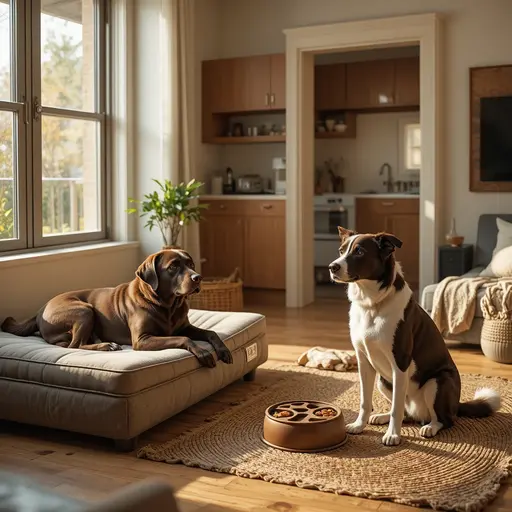
Space Management: Create separate calm zones so each dog can rest without being pestered.
Scenario C: The High-Energy Puppy in a Studio
Puppies have energy in bursts, not sustained drives. A studio apartment requires strict zone management.
Frequent Short Sessions: Puppies need ten to fifteen minutes of enrichment, followed by a forced nap. Repeat this cycle four to six times per day.
Safe Chewing Outlets: Provide multiple appropriate chew items. Boredom in puppies almost always manifests as inappropriate chewing.
Crate as an Enrichment Tool: A properly introduced crate becomes a calm zone, not a punishment. Puppies need enforced rest to process stimulation.
Risk vs. Benefit Analysis
Over-Exercise Risks
More exercise is not always better. High-impact activities on hard surfaces can stress developing joints in puppies and exacerbate arthritis in seniors.
Overheating is a risk in poorly ventilated apartments. Mental overstimulation can produce anxiety rather than calmness. Watch for excessive panting, disinterest in continuing, or agitation after activity. These signs indicate you have crossed the line from enrichment into stress.
Under-Stimulation Consequences
The risks of under-stimulation are more visible and more costly. Destructive behavior, excessive vocalization, leash reactivity, and separation anxiety often trace back to unmet enrichment needs.
In apartment settings, these behaviors create neighbor complaints, property damage, and strained human-animal relationships. The cost of replacing furniture and managing noise complaints far exceeds the cost of a puzzle feeder and ten minutes of daily training.
The Mental Fatigue Advantage
Mental stimulation produces a different type of fatigue than physical exercise. A mentally tired dog settles more deeply and stays settled longer. This is particularly valuable in apartments where space constraints limit physical activity.
Fifteen minutes of scent work can produce two hours of calm behavior. Twenty minutes of fetch may produce thirty minutes of calm. For indoor dog exercise in small spaces, mental fatigue is your most efficient tool.
Product vs. DIY: Making Smart Choices
Commercial enrichment products are not always necessary, but some are worth the investment.
Worth Buying: Durable puzzle feeders like Kongs and West Paw Toppls, which withstand heavy use. Snuffle mats, which are difficult to replicate safely at home. High-quality tug toys that will not shred and become ingestion hazards.
Safe DIY Alternatives: Cardboard box puzzles, muffin tin games, frozen broth in ice cube trays, and homemade agility obstacles using broomsticks and pillows.
What to Avoid: Cheap plastic puzzle toys that break into swallowable pieces. Rope toys that unravel and cause intestinal blockages. Any DIY item with small parts, toxic adhesives, or sharp edges.
When to Seek Professional Help
Enrichment solves many problems, but not all. If your dog exhibits persistent destructive behavior despite a consistent enrichment routine, consult a professional.
If your dog shows signs of clinical anxiety—pacing that does not stop, self-harm, or aggression during play—schedule an appointment with a veterinary behaviorist.
The Behavior Service at the UC Davis Veterinary Hospital specializes in companion animal behavior and can distinguish between training issues and medically rooted anxiety. Learn more about UC Davis Behavior Services.
Professional dog trainers can help if your dog ignores commands during play or if you struggle to implement the decision framework. Look for trainers certified by the Certification Council for Professional Dog Trainers (CCPDT) or the International Association of Animal Behavior Consultants (IAABC).
Veterinary behaviorists at Cornell University’s Riney Canine Health Center also emphasize that enrichment needs evolve as dogs age, and modified activities can keep senior dogs mentally sharp and physically engaged. Explore Cornell’s senior enrichment guidance.
Frequently Asked Questions
How much indoor exercise does a high-energy dog need?
Most high-energy adult dogs need thirty to sixty minutes of combined physical and mental activity daily. In apartments, prioritize mental stimulation, as it produces longer-lasting calm than physical exercise alone. Split this time into two or three sessions.
Can apartment dog enrichment replace walks?
No. Walks provide olfactory exploration and social exposure that indoor activities cannot replicate. However, on days when weather or schedule prevents outdoor time, a robust indoor enrichment routine can prevent behavioral regression.
What are the best indoor dog exercise toys?
The best toys depend on your dog’s drive. For retrievers, soft hallway fetch toys work well. For terriers, puzzle feeders and digging boxes are ideal. For herding breeds, treat-dispensing balls that require directional pushing provide both physical and mental engagement.
How do I mentally stimulate my dog in a small space?
Scent work requires almost no space. Hide treats in a bathroom or closet. Training sessions need only enough room for your dog to sit, stand, and lie down. Puzzle feeders work on a single mat. Small spaces do not limit mental stimulation.
Is indoor enrichment enough for working breeds?
Indoor enrichment is a necessary component but rarely sufficient alone for working breeds like Border Collies, Belgian Malinois, or Australian Shepherds. These dogs also need structured outdoor exercise and, ideally, a sport or job. However, good indoor enrichment prevents the behavioral deterioration that occurs between outdoor sessions.
How do I know if my enrichment routine is working?
A well-enriched dog settles voluntarily, sleeps soundly, and engages with toys without demanding constant human interaction. If your dog still paces, barks, or destroys items after four weeks of consistent enrichment, reassess your routine or consult a professional.

Final Thoughts
Indoor enrichment for high-energy dogs in apartments is not about buying the most expensive toys or dedicating hours each day. It is about making deliberate decisions that match your dog’s biological needs to your spatial and temporal constraints. Use the decision framework: assess your dog, audit your space, match activities to needs, and build a sustainable routine.
Start tomorrow morning. Replace the food bowl with a puzzle feeder. Spend five minutes on scent work before you leave for work. Add one structured training session in the evening.
These small, consistent decisions compound into a calmer, happier dog and a more peaceful apartment. Your high-energy companion does not need a mansion. They need a plan.