


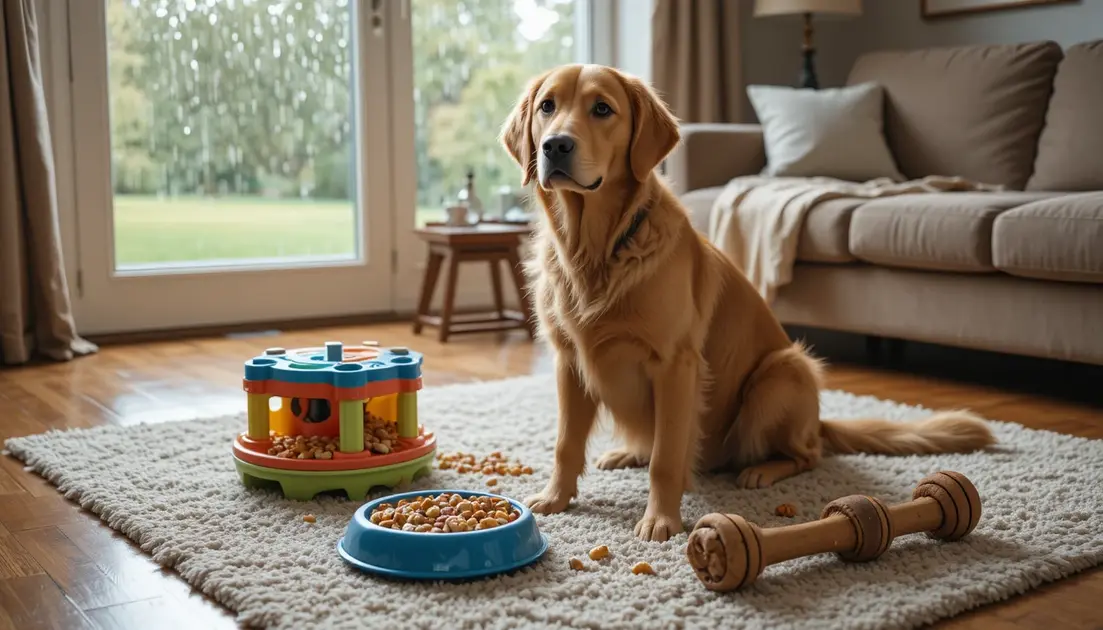
Indoor dog enrichment costs $10–$150, depending on gear choice. Puzzle feeders range from $15 to $50, while DIY options cost under $10. For moderate restlessness, start with food-based activities before investing in expensive equipment.
Pent-up energy becomes a behavioral crisis within 24–48 hours of inactivity. Mild cases respond to home enrichment. Severe anxiety or destructive behavior requires professional intervention within 72 hours to prevent escalation.
Rainy days trap dogs inside, and trapped energy creates problems. Your dog isn’t being difficult—they’re experiencing a genuine behavioral crisis that needs immediate attention.
This guide delivers actionable indoor dog enrichment solutions with honest cost comparisons so you can make the right decision today.
Recognizing Pent-Up Energy: Symptom Chart
Before spending money, identify where your dog falls on the urgency scale. This determines which enrichment approach works best.
| Symptom | Severity Level | Action Required | Timeframe |
|---|---|---|---|
| Pacing, whining | Mild | Home enrichment | Within 4 hours |
| Destructive chewing | Moderate | Structured activities + gear | Within 2 hours |
| Excessive barking | Moderate | Immediate intervention | Within 1 hour |
| Self-injury attempts | Emergency | Veterinary consultation | Immediately |
| Aggression toward family | Emergency | Professional behaviorist | Within 24 hours |
Red-Flag Symptoms Requiring Professional Help:
- Biting or snapping at household members
- Attempting to escape through windows or doors
- Self-mutilation (chewing paws, tail, or skin raw)
- Refusing food for more than 12 hours
- Trembling or panic attacks that don’t resolve
When these symptoms appear, indoor dog enrichment alone won’t solve the problem. Contact a certified animal behaviorist or your veterinarian immediately.
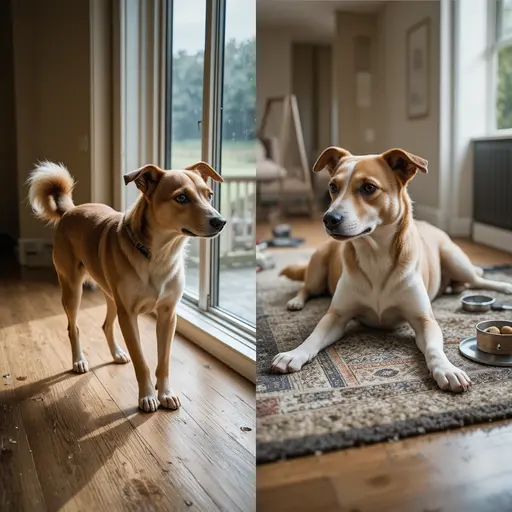
Root Causes of Indoor Restlessness
Understanding why your dog struggles inside informs which solution works. Three primary drivers create behavioral crises during confinement:
Physical Energy Accumulation
Working breeds and high-energy dogs store physical energy that demands release. Without an outlet, this converts to destructive behavior within hours.
Mental Stimulation Deficit
Dogs process the world through scent and problem-solving. Indoor environments strip these opportunities, creating frustration that manifests as anxiety.
Routine Disruption
Dogs thrive on predictability. Rainy days break established exercise patterns, triggering stress responses even in typically calm pets.
Indoor Dog Enrichment: Cost Breakdown Table
Budget matters when solving behavioral problems. Here’s what you’ll actually spend on proven enrichment options.
| Enrichment Type | Low-Cost Option | Mid-Range | Premium | Effectiveness Rating |
|---|---|---|---|---|
| Puzzle Feeders | $10–$20 | $25–$45 | $50–$80 | ★★★★☆ |
| Snuffle Mats | $8–$15 | $20–$35 | $40–$60 | ★★★★☆ |
| Chew Toys | $5–$12 | $15–$30 | $35–$55 | ★★★☆☆ |
| Training Sessions | Free (DIY) | $50–$80/session | $100–$150/session | ★★★★★ |
| DIY Activities | $0–$5 | N/A | N/A | ★★★☆☆ |
| Interactive Toys | $15–$25 | $30–$60 | $70–$120 | ★★★★☆ |
Key Cost Variables:
- Dog size affects toy durability needs (larger dogs destroy cheaper options faster)
- Breed intelligence determines the puzzle complexity required
- Anxiety severity may require professional intervention beyond gear
- Multi-dog households need duplicate items to prevent resource guarding
Ways to Reduce Cost Safely
Cheaper isn’t always better, but smart spending protects both your budget and your dog’s wellbeing.
Safe Cost-Cutting Strategies:
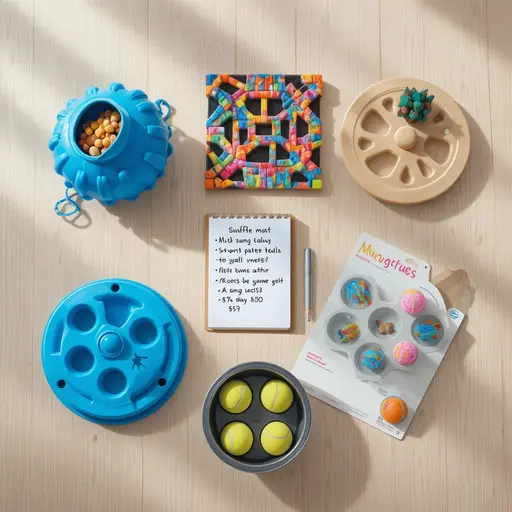
- Rotate existing toys weekly to maintain novelty without new purchases
- Use household items like muffin tins with tennis balls for DIY puzzles
- Freeze treats in Kong toys for extended engagement (costs nothing extra)
- Buy durable brands once rather than replacing cheap toys monthly
- Join local dog groups for toy-swapping opportunities
When Cheaper Options Become Risky:
- Thin plastic puzzle feeders break into swallowable shards
- Untested materials may contain toxic chemicals or dyes
- Poorly constructed toys create choking hazards
- Ineffective enrichment wastes time while behavior escalates
Invest in quality for items your dog interacts with unsupervised. The $40 puzzle feeder that lasts two years costs less than replacing $15 versions every month.
Side-by-Side Comparison: Top Enrichment Methods
Not all indoor dog enrichment approaches work equally. Match your choice to your dog’s specific needs.
| All dogs, especially anxious ones | Best For | Time Investment | Cost | Long-Term Value |
|---|---|---|---|---|
| Food Puzzles | Food-motivated dogs | 5 min setup | $ | High |
| Scent Games | High-energy breeds | 10–15 min | Free | Medium |
| Training Sessions | All dogs, especially anxious | 15–20 min | Free–$$$ | Very High |
| All dogs, especially anxious ones | Teething puppies, stress relief | None | $ | Low |
| Treadmill/Wheel | Working breeds, extreme energy | 20–30 min | $$$$ | Medium |
Pros and Cons by Category:
Puzzle Feeders
- ✓ Extends mealtime, reduces boredom
- ✓ Works unsupervised
- ✗ Some dogs lose interest after repeated use
- ✗ Requires cleaning after each use
DIY Activities
- ✓ Zero cost, immediately available
- ✓ Customizable to your dog’s skill level
- ✗ Time-intensive to create
- ✗ Less durable than commercial products
Professional Training
- ✓ Addresses root behavioral causes
- ✓ Provides long-term management strategies
- ✗ Highest upfront cost
- ✗ Requires scheduling and travel
Best Choice by Scenario
Scenario 1: First-Time Rainy Day Confinement
Start with DIY scent games and frozen treats. Cost: under $5. Monitor response before purchasing gear.
Scenario 2: Chronic Indoor Anxiety
Invest in a puzzle feeder system ($40–$60) plus one professional consultation ($75–$150). Address underlying causes, not just symptoms.
Scenario 3: Multi-Dog Household
Purchase individual enrichment items to prevent resource guarding. Budget $20–$30 per dog for basic setup.
Scenario 4: High-Energy Working Breed
Combine physical (indoor fetch, treadmill) with mental (advanced puzzles, training) enrichment. Expect an initial investment of $100–$200 for quality equipment.
Scenario 5: Senior Dog with Limited Mobility
Focus on low-impact mental stimulation. Snuffle mats and gentle training work best. Cost: $15–$40.
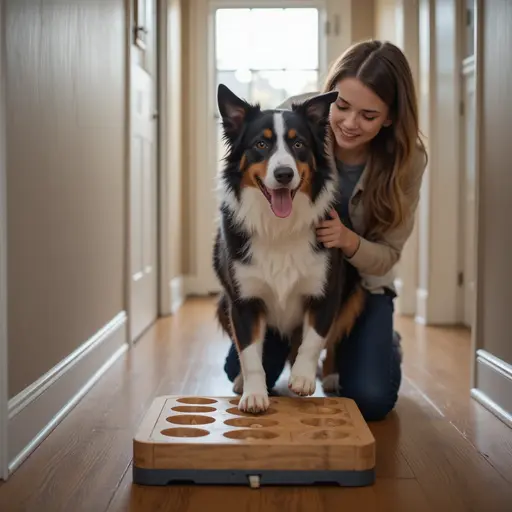
Immediate Intervention Steps
When your dog shows moderate to severe restlessness, act within the first hour using this protocol:
Step 1: Remove Triggers (5 minutes)
Close curtains if outside activity excites your dog. Create a calm environment with minimal stimulation.
Step 2: Physical Release (15 minutes)
Indoor fetch, stair climbing, or tug-of-war burns immediate energy. Even small spaces work with creative movement.
Step 3: Mental Engagement (20 minutes)
Deploy puzzle feeder or scent game. Mental exhaustion often exceeds physical tiredness in effectiveness.
Step 4: Calm-Down Period (30+ minutes)
Provide a long-lasting chew toy in a quiet space. Allow natural decompression without interaction.
Step 5: Evaluate and Adjust
If symptoms persist after 2 hours, escalate to professional consultation. Don’t wait for behavior to worsen.
Common Mistakes to Avoid
Well-intentioned owners often make these errors that worsen indoor behavioral crises:
Mistake 1: Over-Exercising Before Confinement
Exhausted dogs often rebound with hyperactivity. Aim for satisfied, not depleted.
Mistake 2: Using Enrichment as Punishment
Crate time with puzzles should feel rewarding, not like isolation. Association matters.
Mistake 3: Ignoring Breed-Specific Needs
Border Collies need different enrichment than Bulldogs. Match activities to your dog’s genetics.
Mistake 4: Inconsistent Implementation
Random enrichment creates confusion. Establish predictable rainy-day routines that your dog recognizes.
Mistake 5: Waiting Too Long for Professional Help
If home interventions fail after 3 consecutive days of confinement, contact a behaviorist. Early intervention prevents entrenched problems.
Decision-Making Framework
Use this flowchart approach when choosing indoor dog enrichment solutions:
Question 1: What’s the severity level?
- Mild → DIY + existing toys
- Moderate → Purchase targeted gear
- Severe → Professional consultation first
Question 2: What’s your budget?
- Under $20 → Focus on DIY and rotation strategies
- $20–$75 → Invest in 2–3 quality puzzle feeders
- $75+ → Combine gear with professional guidance
Question 3: How long will confinement last?
- Single day → Temporary solutions are adequate
- Multiple days → Need sustainable, varied system
- Ongoing (mobility issues) → Require long-term investment
Question 4: What’s worked before?
Track which activities calm your dog effectively. Build on proven successes rather than experimenting during crisis moments.
Risk vs. Benefit Analysis:
| Option | Risk | Benefit | Recommendation |
|---|---|---|---|
| DIY only | Low effectiveness for severe cases | Zero cost | Try first for mild symptoms |
| Budget gear | Durability concerns | Accessible pricing | Acceptable for supervised use |
| Premium gear | Higher upfront cost | Long-term value | Best for chronic issues |
| Professional help | Cost and scheduling | Addresses root causes | Required for severe/escalating cases |
Prevention Guidance
Preventing indoor behavioral crises requires proactive planning before rainy seasons arrive.
Build an Enrichment Toolkit:
Keep 3–5 different activity types ready. Rotation prevents boredom and maintains effectiveness.
Establish Rainy-Day Routines:
Dogs feel secure knowing what happens when walks are canceled. Practice indoor protocols during good weather.
Monitor Energy Patterns:
Track which weather conditions trigger restlessness. Prepare enrichment before symptoms appear.
Maintain Veterinary Relationships:
Annual checkups include behavioral screening. Discuss enrichment plans with your vet during routine visits.
When to Seek Professional Help
Indoor dog enrichment solves most confinement challenges, but some situations require expert intervention.
Contact a Professional If:
- Destructive behavior continues after 3 days of consistent enrichment
- Your dog injures themselves attempting escape
- Aggression emerges during confinement periods
- Anxiety symptoms interfere with eating or sleeping
- You feel overwhelmed managing the behavior
Types of Professionals:
- Veterinarian: Rules out medical causes, prescribes medication if needed
- Certified Animal Behaviorist: Addresses complex behavioral patterns
- Professional Dog Trainer: Implements structured enrichment protocols
Find credentialed professionals through the American Veterinary Medical Association or the International Association of Animal Behavior Consultants.
FAQ: Indoor Dog Enrichment Questions
How long should indoor enrichment sessions last?
Aim for 15–30 minute focused sessions, 3–4 times daily. Shorter, frequent engagement works better than one long session.
Can I leave puzzle feeders out unsupervised?
Only if your dog doesn’t destroy toys. Monitor the first several uses to assess safety before leaving unattended.
What if my dog ignores enrichment toys?
Try higher-value treats inside puzzles. Some dogs need motivation buildup before engaging with new activities.
Is indoor exercise enough for high-energy breeds?
Usually not long-term. Indoor dog enrichment manages confinement days, but regular outdoor exercise remains essential for health.
How do I know if enrichment is working?
Look for reduced pacing, calmer body language, and willingness to rest after activities. Track improvements over 3–5 days.
Conclusion
Indoor dog enrichment isn’t an optional luxury—it’s essential behavioral management when weather traps your dog inside. Start with symptom assessment to determine urgency level. For mild restlessness, DIY activities and toy rotation often suffice.
Moderate cases benefit from targeted puzzle feeders in the $25–$50 range. Severe behavioral crises require professional intervention within 72 hours to prevent escalation.
Invest wisely based on your dog’s specific needs, not marketing claims. Quality enrichment equipment pays for itself through preventing destruction and reducing stress. Most importantly, recognize when home solutions aren’t enough. Seeking professional help demonstrates responsible ownership, not failure.
Your dog’s well-being during confinement depends on proactive planning and appropriate indoor dog enrichment strategies. Start today before the next rainy season catches you unprepared.