



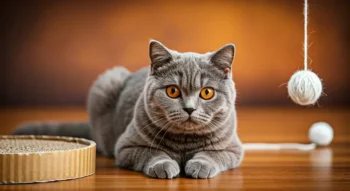
British Shorthair paws are large, round, and heavily padded, giving the breed exceptional stability and a famously quiet step. Their distinctive bone structure supports the breed’s sturdy, “cobby” build.
These traits make them well-suited to balance and calm, deliberate movement around the house. While often overlooked, British Shorthair paws are a defining feature of this beloved breed.
Understanding their unique anatomy helps owners provide better care and appreciate why these cats move with such quiet confidence.
Key Takeaways
- British Shorthair paws are proportionally large, round, and densely padded, a hallmark of the official breed standard, not just a cute quirk.
- Thick pads and toe fur cushion movement and insulate against temperature, but they also trap debris and dry out more easily, so monthly paw checks matter.
- Hyperkeratosis (thickened, cracked pads), obesity-related joint strain, and debris trapped in toe fur are the most common paw problems in the breed.
- Warm, dry, or dilated paw pads are usually normal circulation at work, but limping, swelling, discharge, or blue/purple pads need a vet visit right away.
- Never use human nail clippers, lotions, or warming treatments on your cat’s paws; stick to cat-specific tools and vet-approved products.
Why British Shorthair Paws Stand Out From Other Breeds
The paws of a British Shorthair are instantly recognizable to feline experts and enthusiasts alike.
Unlike the dainty feet of Siamese cats or the oval-shaped paws of Bengals, British Shorthair paws are consistently large, rounded, and cushioned with thick pads.
This isn’t just cosmetic; it reflects the breed’s history as a sturdy, working landrace cat in Britain, prized for a solid, well-muscled build rather than speed or agility.
Today, these paws remain a hallmark of the breed standard set by major cat associations like TICA and CFA.
Here’s what sets British Shorthair paws apart:
- Size Proportionality: Their paws look noticeably large relative to body size compared to many domestic breeds, helping distribute weight evenly across a stocky frame.
- Rounded Shape: British Shorthair paws are rounder than the oval or tapered paws common in leaner, more agile breeds, a trait called out specifically in show standards.
- Dense Padding: Thick pads act as natural shock absorbers, cushioning jumps and landings.
- Sturdy Bone Structure: Short, well-knuckled toes and strong bones provide a stable base for their muscular frame.
When you see those round feet, you’re seeing a body type bred for substance and stability rather than speed.
The Role of Paws in the British Shorthair Breed Standard
Cat fanciers’ associations document ideal paw traits closely. The Cat Fanciers’ Association’s official standard describes the breed overall as compact, well-balanced, and powerful, with rounded paws that fit the breed’s short-to-medium, sturdy legs.
This isn’t arbitrary judges assessing paws during shows because shape and structure affect movement and long-term joint health.
A British Shorthair with small or narrow paws would be penalized for lacking breed type.
The rounder shape helps distribute weight evenly across the toes, which matters given the breed’s tendency toward a heavier body. Males commonly reach 17+ lbs at full maturity (around 3 years old), with females somewhat smaller.
What Makes British Shorthair Paws Special
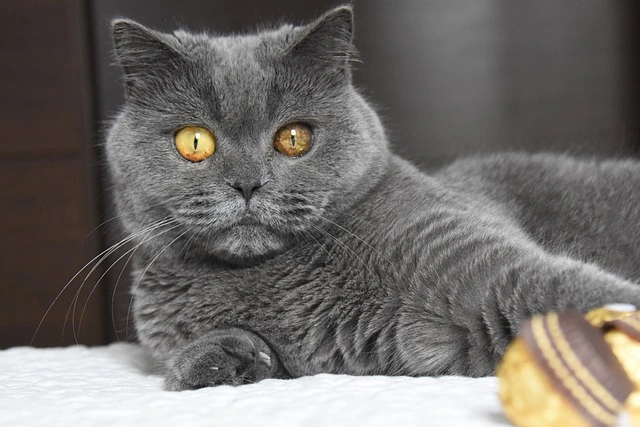
Understanding the physical structure of British Shorthair paws reveals why they’re so functional.
Unlike breeds bred primarily for speed, British Shorthairs evolved for strength and stability traits reflected in every aspect of their paw anatomy.
Owners often notice how quietly these cats move; that’s the padding and bone structure at work together.
Bone Structure: Built for Stability
The skeletal foundation of British Shorthair paws is notably robust:
- Short, Strong Bones: The bones in the paw and lower leg tend to be shorter and thicker than in leaner breeds, contributing to a low center of gravity.
- Compact Toes: Short, well-knuckled toes sit close together, forming the breed’s signature rounded footprint.
- Firm Digital Pads: Each toe pad is supported by strong ligaments that help the foot stay compact rather than splaying under weight.
This sturdy structure is one reason British Shorthairs tend to hold up well physically for a cat of their size, though, like any breed, individual cats can still develop joint or mobility issues, especially with age or excess weight. If you ever notice limping, stiffness, or reluctance to jump, that’s worth a vet visit rather than something to attribute to “just being a big cat.”
Paw Pads: Nature’s Cushioning
British Shorthair paw pads aren’t just thick, they’re built to absorb impact and regulate temperature.
| Pad Type | Function | Notable Trait in British Shorthairs |
|---|---|---|
| Digital Pads | Absorb landing impact | Noticeably thicker and firmer than in leaner breeds |
| Metacarpal Pad | Distributes weight during walking | Larger and more rounded, covering most of the paw’s underside |
| Dewclaw | Assists with grip when climbing | Present on the front paws, unlike the weight-bearing toes, it normally stays off the ground during walking. |
These pads contain fat that stays flexible in cooler temperatures, useful for a breed whose ancestors worked outdoors in Britain’s damp, chilly climate.
Owners may notice their British Shorthair’s pads feel warm to the touch; this is normal and reflects healthy blood flow, not a fever.
Fur Coverage: More Than Just Fluff
The fur between their toes serves practical purposes:
- Insulation: Helps protect pads from cold floors and outdoor surfaces.
- Traction: Fine hairs add a bit of extra grip on smooth flooring.
- Debris Protection: Helps keep small debris from working directly into the skin between the toes, though regular checks are still needed since debris can still get trapped in the fur itself.
Unlike breeds such as the Sphynx, British Shorthairs have moderate toe fur, not as sparse as a Sphynx’s, and not as long or prone to matting as a Persian’s.
Why Those Paws Matter Every Day
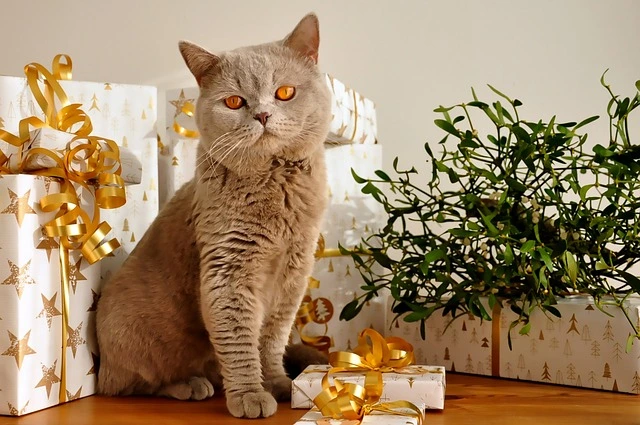
British Shorthair paws aren’t relics of their working-cat past; they actively shape how these cats move through daily life.
Owners often notice how quietly their British Shorthair moves, or how solidly they land jumps despite their stocky build. Understanding the anatomy behind these behaviors helps owners appreciate quirks that might otherwise seem puzzling, like a preference for lower perches over tall shelves.
Silent Movement: A Breed Trait
That famous British Shorthair “creep” comes down to a few anatomical factors working together:
- Thick Pads: Dense padding helps absorb and muffle the sound of footsteps.
- Even Weight Distribution: The rounded paw shape spreads weight across the whole foot rather than concentrating it on the toes.
- Fur Insulation: Toe fur reduces direct pad-to-floor contact noise.
This is why British Shorthairs often seem to appear silently beside their owners. In multi-cat households, quiet movement can also be a subtle advantage during food or territory disputes.
Balance & Stability
British Shorthairs carry a lot of body mass relative to their height, and their paws help offset that:
- Wide Base of Support: Large, round paws create a broader stance than narrower, oval-pawed breeds, which helps lower the effective center of gravity.
- Grippy Pads: Paw pad texture helps cats catch and hold surfaces during sudden stops or turns.
- Front Dewclaw: Provides extra purchase when climbing or gripping objects, even though it isn’t a primary weight-bearing structure.
This combination is part of why British Shorthairs tend to move with controlled, deliberate precision rather than the springy agility of a Siamese or Bengal, though, like any generalization about a breed, individual cats vary.
Temperature Regulation
Paw pads play a real role in how cats manage body heat:
- Heat Release: In warm conditions, blood vessels in the pads can dilate, which is why paws sometimes feel warmer during or after activity.
- Cold Tolerance: Paw pad fat is adapted to stay flexible even as the pad cools, unlike some other tissues.
- Slight Moisture: Cat paw pads are naturally slightly moist. This is normal and not a sign of a problem.
If you live somewhere cold, you may notice your British Shorthair tolerates cool floors reasonably well. Never apply warming ointments, heating pads directly to bare skin, or human lotions to a cat’s paws; their pads regulate temperature on their own, and many common human products are unsafe for cats if licked.
Caring for Your British Shorthair’s Paws
Proper paw care matters for every British Shorthair. Their dense pads and fur-covered toes create maintenance needs that, left unaddressed, can lead to painful problems.
Debris can lodge fairly easily between their thick pads, and because the breed is stoic by nature, injuries aren’t always obvious right away. A monthly paw check is a reasonable habit to build alongside routine grooming and dental care. Many owners skip this step simply because it’s easy to overlook, not because it’s difficult.
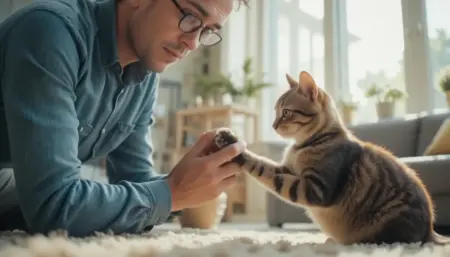
Approach paw handling calmly and patiently. Many British Shorthairs, being independent by nature, need time to get comfortable with having their feet touched.
Essential Monthly Paw Check Routine
A simple, low-stress way to check paws at home:
- Timing Matters: Check paws when your cat is relaxed, such as after a nap, and offer treats throughout.
- Gentle Handling: Cradle one paw at a time. Press lightly on the pad to expose the fur between toes; never force the toes apart.
- Inspect Thoroughly: Look for:
- Embedded objects: grass seeds, thorns, or litter granules between the pads
- Pad damage: cracks, cuts, or unusual color changes (yellowing can indicate infection)
- Fur matting: clumped hair that traps moisture near the skin
- Toe Examination: Check between toes for redness, swelling, or discharge.
- Nail Assessment: Nails shouldn’t touch the floor or curl inward when your cat is standing normally.
Frequency Tip: Do a quick visual check during regular petting sessions, and a full hands-on inspection about once a month.
Safe Cleaning & Grooming Techniques
British Shorthair paws benefit from a bit of specialized care:
- Between-Toe Fur Trimming: Use rounded-tip scissors to carefully trim fur between the pads to roughly ¼-inch length. This helps prevent matting and debris trapping. Never trim while the cat is moving.
- Pad Cleaning: Dampen a soft cloth with warm water (no soap) to wipe dirt from the pads, then dry thoroughly. Trapped moisture encourages bacterial or fungal growth.
- Debris Removal: For visible, accessible stuck objects, tweezers can work. If you can’t see it clearly or it seems embedded, see a vet forcing removal risks injury.
- Cracked Pad Treatment: A vet-approved paw balm can help with minor cracks. Avoid human lotions, which often contain ingredients that are toxic to cats if licked.
Important: Never use human nail clippers on a cat. A guillotine-style pet nail clipper is safer and better suited to a British Shorthair’s thicker nails.
When to Call the Vet: Warning Signs
Contact your vet if you notice:
- Limping lasting more than 24 hours
- Bleeding, pus, or a foul odor from the pads
- Swollen or discolored pads (blue or purple can signal a circulation problem)
- Reluctance to put weight on a paw
British Shorthairs tend to be stoic, so subtle signs, such as reduced jumping, excessive licking of one paw, or general slowing down, are worth paying attention to. Catching problems early generally leads to easier, less invasive treatment.
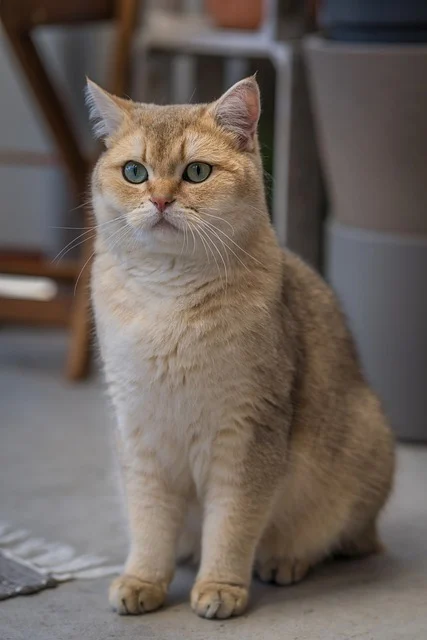
Common Paw Problems in British Shorthairs
Despite their sturdy build, British Shorthair paws have a few specific vulnerabilities that owners should watch for.
Pad hyperkeratosis thickened, cracked, and sometimes hair-like pad growth is a real condition seen across cat and dog breeds, and dry indoor air can make it worse in any pet, including dense-padded breeds like this one.
Meanwhile, the breed’s tendency toward a heavier body puts extra strain on paw joints over time, which can contribute to arthritis.
Most of these issues are manageable with consistent, proactive care.
Hyperkeratosis: The “Hairy Paw” Condition
- What happens: Excess keratin production causes pads to thicken, crack, and sometimes develop hair-like projections at the edges.
- Why it matters for British Shorthairs: Dry indoor air, especially with winter heating, can dry out any cat’s pads, and this breed’s dense pad structure means cracking can be uncomfortable given how much weight those pads bear.
- Prevention Strategy:
- Keep indoor humidity in a comfortable range, especially during heating season.
- Ask your vet about a suitable paw balm if you notice early dryness or cracking.
- Avoid harsh floor cleaners that can dry out paw pads
If you notice thickened, cracked, or “hairy-looking” pads, have a vet take a look. Hyperkeratosis has several possible underlying causes, and a vet can rule out anything more serious.
Obesity-Related Strain
- The Problem: Extra body weight puts more pressure on paw joints with every step. British Shorthairs are prone to weight gain, given their stocky build and generally moderate activity level.
- Key Risks: Earlier-onset arthritis, joint strain, and pad bruising from added impact.
- Prevention Strategy:
- Monitor body condition regularly. Ribs should be easy to feel but not visibly prominent.
- Provide ramps or steps for furniture access if your cat is overweight or aging.g
- Talk to your vet about an appropriate calorie target and feeding plan; see our guide to essential nutrients for cats for more on portioning and ingredient quality.
Action Step: If you notice a meaningful weight change over a month or two, check in with your vet before adjusting food on your own.
Debris Trapping in Toe Fur
- Why It Happens: The fur between the toes can catch litter, grass, and small debris.
- Consequences: Irritation, limping, or excessive licking if debris isn’t removed.
- Prevention Strategy:
- Trim toe fur every 3–4 weeks
- Consider a paper-based litter, which tends to stick less than clay
- Wipe paws after time spent outdoors
Pro Tip: Keep rounded-tip scissors handy for quick fur trims between full grooming sessions. Most British Shorthairs tolerate brief, frequent handling better than one long session.
British Shorthair Paws vs. Other Breeds
Not all cat paws are built the same. British Shorthair paws sit in a distinct middle ground compared with more delicate show breeds.
Understanding these differences helps owners recognize what’s normal for their own cat and when something’s off. Breed-specific paw traits affect care needs and mobility in real, practical ways.
Size & Shape Comparison Chart
| Breed | Paw Shape | Relative Size | Key Functional Trait |
|---|---|---|---|
| British Shorthair | Rounded | Large relative to body | Stability and quiet movement |
| Siamese | Oval, dainty | Small | Speed and agility |
| Maine Coon | Large, oval, tufted | Very large | Snowshoe effect for cold climates |
| Sphynx | Small, delicate | Small | Sensitivity to temperature |
| Bengal | Medium, oval | Moderate | Grip for climbing |
Why it matters: British Shorthair paws distribute weight more evenly than the oval paws of leaner breeds, which helps reduce joint stress, though it comes at some cost to climbing agility.
Their build and paw structure trace back to a breed originally suited to Britain’s cooler climate.
Movement Style Differences
All domestic cats, British Shorthairs included, are naturally “digitigrade” walkers, meaning they walk on their toes with the heel raised off the ground, not on the full sole. This is what gives cats their quiet, springy gait in general.
What differs between breeds is how that basic gait is expressed:
- British Shorthair: A deliberate, controlled gait suited to a stocky, well-muscled build. Jumps are powerful but tend to be lower and more measured than in leaner breeds.
- Siamese: Quick, springy steps and higher vertical jumps, reflecting a lighter, more agile frame.
- Maine Coon: A large but proportionally built cat, often described as agile for its size, with the tufted paws that help on snow and uneven ground.
This measured movement style is part of why British Shorthairs rarely knock things over; they tend to place their weight carefully. Their build generally makes them stronger horizontal movers than vertical climbers compared with more athletic breeds like Bengals.
A note on gait: If you ever notice a cat walking flat on its heels with an unusually “flat-footed” look, true plantigrade walking that’s not a normal breed trait in any cat. It can be a sign of an underlying issue, such as diabetic neuropathy, and it’s worth a prompt vet visit.
Care Requirement Variations
| Issue | British Shorthair Risk | Higher-Risk Breeds |
|---|---|---|
| Debris trapping | Medium (due to toe fur) | Persian, Ragdoll (longer fur) |
| Pad cracking | Elevated (dense pads can dry out) | Sphynx (little fur protection) |
| Obesity strain | Elevated (stocky build, moderate activity level) | Other large or heavy-bodied breeds, including Maine Coon and Norwegian Forest Cat |
| Nail overgrowth | Medium | Sedentary indoor cats of any breed |
British Shorthair owners generally get the most benefit from prioritizing pad hydration and weight management. Owners of more active, outdoor-scratching breeds may need to focus more on nail wear and scratching outlets. See our guide to cat breeds that don’t scratch furniture much for more on how claw habits vary by breed.
FAQs
Are British Shorthair paws really larger than those of other cats?
Yes, they’re proportionally large relative to body size for most breeds, with a round shape and thick pads that support their muscular build. This isn’t just for looks; it contributes to stability and their characteristically quiet movement.
Why do my British Shorthair’s paws feel warmer than those of other cats?
This is usually normal. Paw pads have a strong blood supply for temperature regulation, and warmth generally reflects healthy circulation. Pay attention if pads feel unusually hot alongside redness or swelling, or unusually cool; either can be worth mentioning to your vet.
How often should I trim my British Shorthair’s paw fur?
Every 3–4 weeks is a reasonable interval to prevent matting and debris trapping. Use rounded-tip scissors and trim fur between the pads to roughly ¼-inch length. If your cat resists, try trimming during naps or pairing it with high-value treats.
My British Shorthair hates having its paws touched. How can I change this?
Start with brief daily touches during calm moments. Hold one paw for a few seconds while offering treats, and gradually increase the duration. Never force handling; most cats tolerate paw checks better when the habit is built gradually and paired with something they enjoy.
Can I use human lotions on cracked British Shorthair paw pads?
No. Many human skincare products contain ingredients that are toxic to cats if licked, such as salicylic acid. Stick to veterinary-approved paw balms, and check with your vet before trying anything new, especially if cracking is persistent or severe.
Conclusion
British Shorthair paws are more than a cute detail; they’re a working part of the breed’s balance, quiet movement, and temperature regulation.
Their large, round shape and dense padding connect directly to the breed’s history as a sturdy, hardy landrace cat, providing stability that suits their stocky frame.
Consistent care, regular paw checks, fur trimming, and weight management prevent most of the common problems while honoring this distinctive trait.
Your simplest habit to start today: gently press each pad during a normal petting session to check for lumps, cracks, or tenderness. It takes about 10 seconds and can catch problems early.
By understanding and caring for these paws, you’re supporting both your cat’s comfort and their long-term health one quiet footstep at a time.