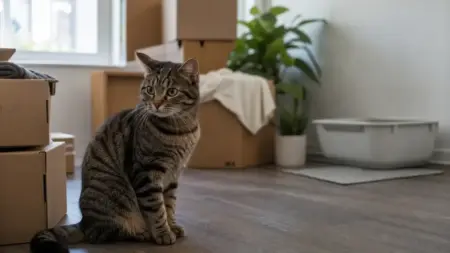






Cat breeds that don’t scratch furniture are those with calm temperaments and a naturally low urge to damage upholstery, such as Ragdolls, British Shorthairs, and Persians. While no cat is truly “scratch-proof,” choosing these breeds and giving them proper outlets can dramatically cut furniture wear.
If you’re dreaming of a snag-free sofa, read on to discover the science behind scratching, the ten best breeds, training tips, and the perfect post for your feline friend.
Key Takeaways
- No cat breed is scratch-proof; calm, low-energy breeds like Ragdolls, British Shorthairs, and Persians simply have a lower drive to target furniture in the first place.
- Scratching is a physical need, not misbehavior. It maintains claw health, marks territory, and relieves stress, so redirecting it works far better than trying to stop it outright.
- Post placement matters as much as breed. A scratching post within a few feet of the couch, in a texture and orientation your cat already prefers, gets used far more reliably than one tucked in a corner.
- Declawing doesn’t solve scratching and is banned or restricted in many countries because it’s a painful amputation, not a training fix.
- Consistent, reward-based redirection plus regular nail trims protects furniture with any breed, even naturally busier scratchers.
Why Understanding Cat Scratching Matters
Scratching is a built-in feline instinct: it trims claw sheaths, marks territory with scent glands, and stretches muscles. When this natural behavior meets a plush couch, owners often feel frustrated and worried about costly repairs.
Recognizing the why behind scratching helps you address the root cause rather than merely covering up the symptoms.
- Claw health – Regular scratching removes the dull outer layer of a cat’s nails.
- Territory signaling – Paw pads release pheromones that tell other cats, “this is my space.”
- Stress relief – The act helps a cat release tension, part of why anxious or bored cats often scratch more.
How common is this, really? A 2022 survey of 2,465 cat owners in the US and Canada found that 57.5% reported their cat had damaged household items through scratching — and when damage occurred, furniture was the target 85% of the time, far more than carpets (38.7%), walls (12.4%), or curtains (10.8%). If your cat scratches something it shouldn’t, there’s a good chance it’s your couch.
By providing appropriate outlets, you protect both your furniture and your cat’s well-being.

How to Choose Cat Breeds That Don’t Scratch Furniture
Not all cats are created equal when it comes to furniture-friendly habits. Breed temperament, energy level, and intelligence influence how quickly a cat adopts a scratching post instead of a couch.
- Calm temperament – Breeds that stay relaxed tend to scratch less out of boredom.
- Low to moderate energy – Cats that don’t need constant high-intensity play are easier to redirect.
- Trainability – Intelligent, reward-responsive cats learn appropriate scratching faster.
When you match a breed’s natural tendencies with your lifestyle, you set the stage for a harmonious home.
A quick honesty check before the list:
What’s commonly reported: cat-care writing (including this article) commonly describes certain breeds — Ragdolls, British Shorthairs, Persians, and others — as calmer or less prone to destructive scratching, based on general temperament observations.
What the research actually found: in the largest survey on this topic to date (n = 2,465), breed was not a statistically significant predictor of unwanted scratching once cat age, enrichment, and owner management were accounted for.
What we recommend: use the breed profiles below as a reasonable starting point for temperament fit — not a guarantee. The management strategies later in this guide, which the same data does support, matter more than breed alone.
Top 10 Cat Breeds That Don’t Scratch Furniture
Below is the definitive list of the most furniture-friendly cats. Each breed’s profile includes temperament, typical scratching behavior, and tips for keeping your home scratch-free.
| Rank | Breed | Typical Temperament | Scratching Tendencies | Ideal Scratching Solutions |
|---|---|---|---|---|
| 1 | British Shorthair | Laid-back, independent | Low – prefers lounging | Sturdy vertical sisal post near favorite resting spot |
| 2 | Ragdoll | Docile, “puppy-like” | Very low – loves to be held | Wide horizontal pad beside the sofa |
| 3 | Persian | Quiet, low-energy | Minimal – enjoys grooming | Low-profile carpeted scratcher near sunny windows |
| 4 | Scottish Fold | Adaptable, affectionate | Low when trained early | Dual-style post (vertical + horizontal) |
| 5 | Maine Coon | Gentle giant, curious | Moderate – likes tall surfaces | Tall sisal trunk with a perch on top |
| 6 | Siamese | Vocal, intelligent | Moderate – needs mental stimulation | Interactive climbing tower with scratching wraps |
| 7 | Sphynx | Energetic, skin-sensitive | Low – prefers rubbing | Soft fabric pad with catnip sprinkle |
| 8 | Russian Blue | Reserved, graceful | Low – calm demeanor | Narrow vertical post placed near a quiet corner |
| 9 | American Shorthair | Easygoing, adaptable | Low to moderate | Horizontal cardboard scratcher paired with toys |
| 10 | Norwegian Forest Cat | Independent, loves heights | Moderate – seeks tall structures | Sturdy log-style post with natural bark texture |
1. British Shorthair – Calm and Low-Maintenance
Why it’s furniture-friendly: This breed’s steady, low-energy nature means it rarely seeks an outlet for excess activity.
- Key traits: Rounded face, plush coat, stoic demeanor.
- Scratching tip: Place a sturdy sisal post near the favorite chair; the cat will quickly claim it as its own.
2. Ragdoll – Docile and Affectionate
Why it’s furniture-friendly: Ragdolls prefer to be cradled rather than climb, making them natural couch companions without destructive claws.
- Key traits: Blue eyes, silky semi-long hair, “floppy” when held.
- Scratching tip: Offer a wide, low horizontal pad; reward with treats when used.
3. Persian – Quiet and Less Active
Why it’s furniture-friendly: Persians spend most of their day grooming, so they have little drive to scratch aggressively.
- Key traits: Flat face, luxurious coat, calm disposition.
- Scratching tip: Provide a soft carpeted scratcher; keep nails trimmed weekly.
4. Scottish Fold – Trainable and Adaptable
Why it’s furniture-friendly: Their mellow, easygoing personality means they respond well to positive reinforcement.
- Key traits: Rounded ears, round eyes, easygoing.
- Scratching tip: Use a dual-style post; reward with a clicker and treat when the cat uses the vertical side.
- Before you adopt: The same gene mutation that folds a Scottish Fold’s ears also affects cartilage elsewhere in the body, causing a lifelong joint condition called osteochondrodysplasia to some degree in every cat that carries it. Ask any breeder about health screening, and favor rescues or breeders who never pair two folded-ear cats.
5. Maine Coon – Gentle Giants
Why it’s furniture-friendly: Although large, Maine Coons are generally gentle and love sturdy, tall scratching structures more than they love a sofa arm.
- Key traits: Bushy tail, tufted ears, friendly.
- Scratching tip: A tall sisal trunk with a perch satisfies their love of height and keeps sofas safe.
6. Siamese – Intelligent and Trainable
Why it’s furniture-friendly: Their high intelligence makes them quick learners, especially when training is fun.
- Key traits: Almond eyes, sleek body, vocal.
- Scratching tip: Combine a climbing tower with hidden toys; praise every successful use.
7. Sphynx – Hairless and Less Destructive
Why it’s furniture-friendly: Lacking fur, they often prefer soft surfaces to scratch and focus on warmth.
- Key traits: Wrinkled skin, large ears, playful.
- Scratching tip: Offer a soft fabric pad; a dab of catnip will entice them to use it.
8. Russian Blue – Quiet and Undemanding
Why it’s furniture-friendly: Their reserved nature means they rarely act out, and they enjoy calm environments.
- Key traits: Silvery coat, emerald eyes, shy at first.
- Scratching tip: Place a narrow vertical post in a quiet corner; reinforce with occasional treats.
9. American Shorthair – Easygoing and Adaptable
Why it’s furniture-friendly: This breed’s adaptability lets them thrive in apartments with modest enrichment.
- Key traits: Classic tabby patterns, friendly, low maintenance.
- Scratching tip: Provide a horizontal cardboard scratcher near the favorite window perch.
10. Norwegian Forest Cat – Independent but Gentle
Why it’s furniture-friendly: Their natural love for high places means they prefer logs or tall posts over sofas.
- Key traits: Thick double coat, lynx-like ear tufts, adventurous.
- Scratching tip: Offer a log-style post wrapped in natural bark; add a hanging toy for extra allure.
Training and Enrichment Tips to Keep Any Cat From Scratching Furniture
Even the calmest cat breeds that don’t scratch furniture benefit from proper training and environmental enrichment. Follow these evidence-based steps to channel scratching into safe zones.
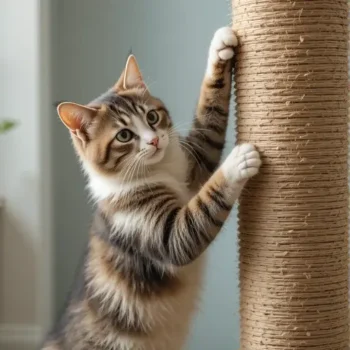
- Introduce the right scratching post early. Place the post next to the piece of furniture the cat currently targets, and use a feather wand or laser pointer to lure the cat onto the post.
- Reward every successful scratch. Offer a small treat or a burst of praise immediately after the cat uses the post. Consistency builds a positive association that outweighs the lure of the sofa.
- Consider deterrents, but don’t rely on them alone. Double-sided tape or a plastic scratch guard on chair arms is a commonly tried fix, and some owners find their cats avoid the sticky texture. Worth knowing: the same 2022 survey found no measurable difference in unwanted scratching between owners who used tape/deterrents and those who didn’t — treat this as a possible extra layer, not a primary fix. A dedicated scratching post placed nearby (step 1) has real evidence behind it.
- Skip the punishment. Yelling, spraying with water, or physically moving your cat away from the furniture might feel like it’s working in the moment, but the same survey found owners who used verbal or physical correction reported more unwanted scratching, not less. That doesn’t necessarily mean correction causes scratching — it’s a survey, not a controlled experiment, so the direction of cause and effect isn’t proven. But it does mean there’s no evidence correction helps, and added stress from punishment could plausibly make scratching worse. Redirecting to an appropriate post (step 1) and rewarding its use (step 2) has real evidence behind it; correction doesn’t.
- Rotate toys and climbing structures. A bored cat may turn to the couch for entertainment. Keep a small selection of interactive toys, like puzzle feeders, on rotation to maintain novelty.
- Trim nails regularly. Trim every two to three weeks; keep claws short enough to minimize damage but long enough for the cat to maintain natural wear. Use a cat-specific nail file or guillotine clipper for safety, or ask your vet or a groomer to show you the technique.
- Consider soft nail caps. Vinyl caps slide over the claws and dull the impact on upholstery. Apply them after a calm grooming session, and replace them roughly every four to six weeks as claws grow.
By following these steps, you’ll find that even active breeds quickly learn to respect your furniture, reinforcing the idea that cat breeds that don’t scratch furniture can thrive anywhere with proper guidance.
Choosing the Right Scratching Post for Your Cat
A well-chosen scratching post is the cornerstone of a scratch-free home. Below are the key factors to consider.
Types of Scratching Posts
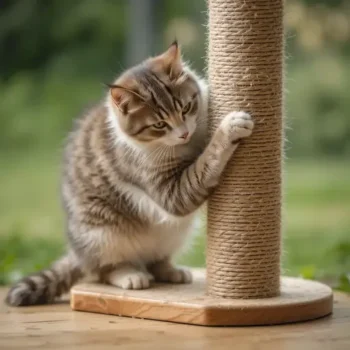
- Vertical posts – Ideal for full-body stretches; simulate a tree trunk.
- Horizontal pads – Preferred by cats that love to “paw” at ground surfaces.
- Combo towers – Offer both vertical and horizontal surfaces, perfect for versatile breeds like the Siamese or Maine Coon.
Selection Criteria
| Factor | What to Look For | Why It Matters |
|---|---|---|
| Height | At least as tall as the cat’s outstretched front legs | Allows a full stretch without the cat feeling cramped. |
| Stability | Heavy base or wall-mounting options | Prevents wobbling, which can discourage use. |
| Material | Sisal rope, carpet, or corrugated cardboard | Each mimics natural textures cats love; sisal is the most durable. |
| Location | Near favorite sleeping spots or the furniture the cat currently scratches | Increases visibility and convenience, encouraging adoption. |
DIY Scratching Post Ideas
- Sisal-Wrapped Log – Secure sisal rope around a sturdy wooden log using non-toxic glue; add a weighted base.
- Cardboard Box Tower – Layer several corrugated boxes, cut entry holes, and tape them together; sprinkle catnip for extra appeal.
- PVC Pipe Scratcher – Join PVC pipe sections vertically, wrap in carpet or sisal, and attach to a heavy base.
Pro tip: After placing a new post, rub catnip on it and immediately reward the cat for using it. This accelerates the habit formation process.
Common Myths About Cat Scratching Debunked
| Myth | Reality |
|---|---|
| Only certain breeds scratch. | Every cat scratches; breed influences how often and where, not whether. |
| Declawing solves the problem. | Declawing removes a vital defense tool, causes pain, and does not stop the urge to scratch. |
| Scratching is just bad behavior. | Scratching fulfills essential physiological needs: claw maintenance, scent marking, and stress relief. |
| Calm or low-energy breeds don’t need a scratching post. | Even low-energy breeds require vertical space and mental stimulation to stay content. |
| Pheromone sprays replace training. | Sprays can reduce anxiety, but they won’t teach a cat where to scratch; they work best alongside rewards. |
Understanding these facts helps you apply practical solutions rather than relying on misconceptions.
What the Research Actually Shows
A lot of scratching advice gets repeated so often it starts to sound like settled science. Here’s what a 2022 survey of 2,465 cat owners actually found made a measurable difference to reported unwanted scratching:
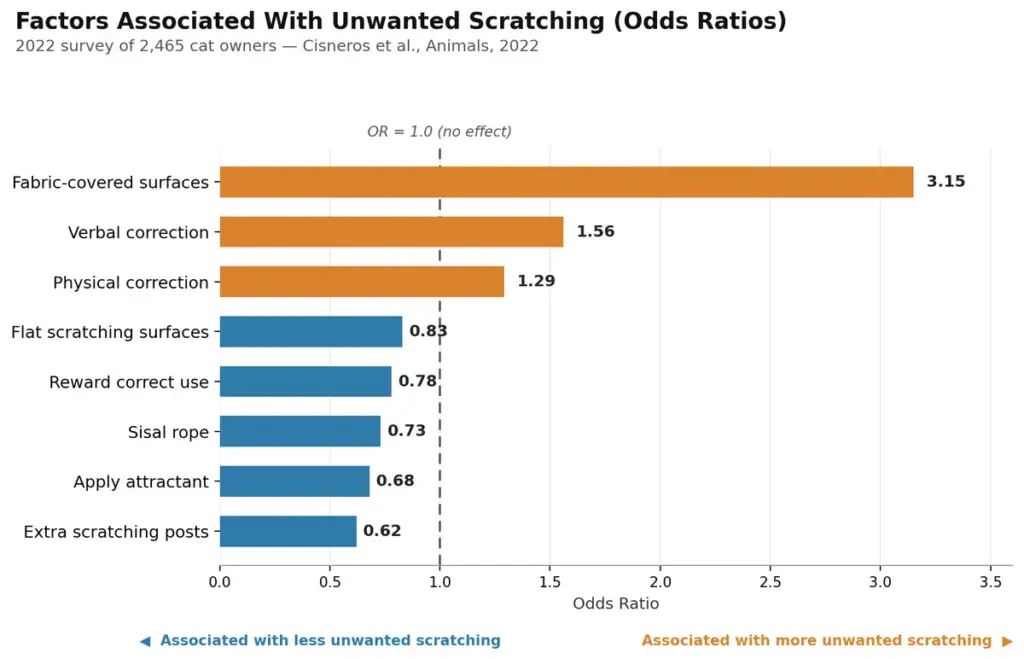
Associated with less unwanted scratching: sisal rope, flat scratching surfaces, extra scratching posts, rewarding correct use, and applying an attractant like catnip to the preferred scratching spot.
Associated with more unwanted scratching: fabric-covered scratching surfaces, and using verbal or physical correction.
No measurable effect either way: tape or foil deterrents, nail trims, and nail caps.
This is survey data, not a controlled experiment — it shows what’s associated with less scratching, not proof that any single change will fix a particular cat’s behavior. But it’s a genuinely useful starting point for deciding where to spend your effort first.

FAQs
Will switching to a different breed stop my cat from scratching?
Changing breeds can reduce the frequency of destructive scratching because some cats have calmer temperaments. However, all cats have the instinct to scratch; proper training and enrichment are still essential.
How many times a day should my cat use a scratching post?
It varies a lot by cat, but owner surveys of scratching-post use consistently find that the large majority of cats use their preferred post at least once a day, and most use it several times a day. Providing multiple posts encourages the habit and spreads use across the house.
Are soft nail caps safe for long-haired breeds?
Yes, nail caps work for any coat type. They must be fitted correctly and checked regularly for wear. Long-haired cats may need a brief grooming session after each replacement to prevent matting.
What’s the best material for a scratching post?
Sisal rope is the most durable and mimics tree bark, which many cats favor. Cardboard is an inexpensive alternative that many cats love, but it needs frequent replacement.
My cat still scratches despite training—what next?
If scratching persists, consult your veterinarian to rule out medical issues (e.g., arthritis, nail infections). A certified feline behaviorist can then design a custom enrichment and behavior-modification plan.
Conclusion
Choosing the right cat breeds that don’t scratch furniture is a smart first step, but lasting success hinges on matching each cat’s instincts with suitable scratching outlets, consistent positive reinforcement, and a cat-friendly environment.
By selecting a calm, low-energy breed, providing stable, textured posts, and using gentle deterrents, you can protect your sofa while keeping your feline companion happy and healthy.
Start today: pick a recommended breed, set up a sturdy sisal post, and reward every respectful scratch—you’ll soon enjoy a scratch-free home and a contented cat.
If your cat’s scratching feels more urgent than routine breed selection, PetsMirror’s full guide to stopping furniture scratching walks through immediate deterrents, a cost breakdown of posts under $50, and when to call in a professional.