





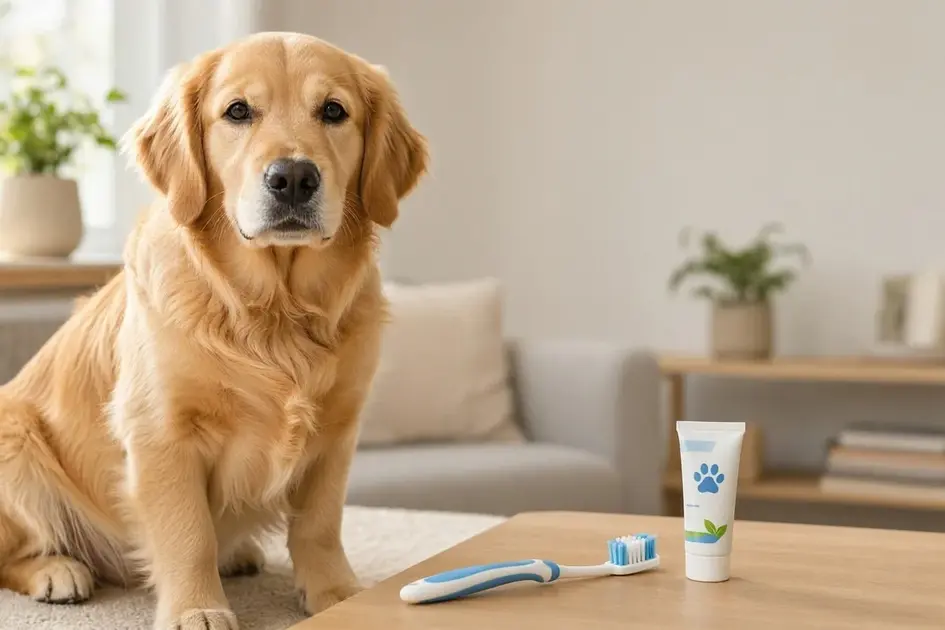
To clean your dog’s teeth at home, introduce mouth handling gradually, then gently brush the outside surfaces with a soft dog toothbrush and dog-specific toothpaste. Work at your dog’s pace and stop if they’re uncomfortable. Brushing helps remove soft plaque, but it cannot remove hardened tartar or replace a veterinary dental assessment.
If brushing hasn’t worked for you before, you don’t have to start with the whole mouth. Getting your dog comfortable with a toothbrush is a useful first step.
Key takeaways
- Plaque is a soft bacterial film; tartar is hardened buildup. Brushing helps remove plaque, not hardened tartar.
- Choose a soft dog toothbrush or finger brush and toothpaste made for dogs.
- Introduce handling and brushing gradually, using rewards and letting your dog set the pace.
- Some dental products can help control plaque or tartar, but their claims vary. They don’t replace an examination.
- Contact a veterinarian if you notice concerning changes in your dog’s mouth or eating habits.

Why home dental care matters—and what it cannot do
A dog’s teeth collect plaque, a soft, sticky layer containing bacteria. Minerals can harden that buildup into tartar, also called calculus. Plaque and tartar aren’t the same thing: brushing helps remove soft plaque, while hardened tartar resists brushing.
Home care gives you a way to clean accessible tooth surfaces between veterinary visits. It also gives you opportunities to notice changes in your dog’s mouth.
But an owner looking at visible teeth can’t see everything. Dental problems can exist beneath the gumline, and clean-looking teeth don’t necessarily mean the whole mouth is healthy. A veterinary dental assessment and, when appropriate, professional care address things that home brushing cannot.
What you need to clean your dog’s teeth
Keep the setup simple:
- A soft-bristled dog toothbrush that fits your dog’s mouth, or a dog finger brush if that is easier to handle.
- Toothpaste made for dogs. Dogs swallow toothpaste, so don’t substitute your own.
- A reward your dog enjoys, such as a small treat or a favorite activity.
- Optional dog dental wipes or plain gauze for introducing gentle tooth contact if your dog accepts it.
Choose a quiet place where your dog can stand, sit, or lie comfortably. Put supplies within reach so you don’t have to hold your dog in position while searching for them.
Don’t use human toothpaste. Human toothpaste is not formulated to be swallowed, and some products contain xylitol, which is dangerous to dogs. If you suspect your dog has swallowed a product containing xylitol, contact a veterinarian or animal poison-control service immediately.
How to introduce and use a toothbrush
Think of this as a series of small practice steps rather than one task to finish today. Move on only when your dog is comfortable; repeat an earlier step whenever needed.
1. Make the supplies familiar
Let your dog see and sniff the toothbrush. Offer a reward, then put the brush away. You can also let your dog taste a little dog-specific toothpaste.
If your dog moves away, give them space. The goal is to make the equipment unremarkable, not to persuade them to tolerate it by force.
2. Practice gentle face handling
When your dog is relaxed, briefly touch the side of their face and reward them. If they’re comfortable, gradually work toward lifting a lip gently, then reward again.
Keep your hands away from the mouth if your dog may bite. If your dog is worried about face handling, pause and ask for help rather than restraining them.
3. Introduce contact with the teeth
Once your dog accepts a lifted lip, you can gently touch the outside surface of a tooth with a finger or plain gauze. Start with just an accessible tooth or two and reward your dog.
There’s no need to force the mouth open or continue if your dog pulls away.
4. Add the toothbrush
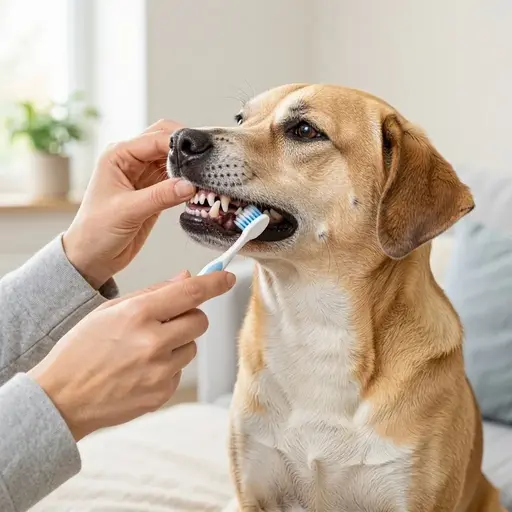
When the earlier steps are comfortable, touch the brush gently to an outside tooth surface and reward. Gradually introduce brushing, adding more teeth over time as your dog accepts it.
Apply a small amount of dog toothpaste to the brush. Lift the lip gently and brush the outside surfaces of the teeth, including the area near the gumline, without pressing hard. You can work on one part of the mouth at a time.
5. Finish while your dog is comfortable
End with praise or a reward. Rinse the toothbrush after use and wash your hands.
Progress won’t look the same for every dog. A calm session spent practicing a lip lift is more useful than forcing a full brushing session that leaves your dog frightened.
How often should you brush?
Daily brushing is the goal for maintaining your dog’s dental health. AAHA recommends brushing every day for it to be beneficial. VCA recommends brushing twice daily and identifies three times a week as its minimum recommendation for helping remove plaque and prevent tartar buildup.
Build toward a consistent routine gradually rather than rushing your dog. If daily brushing isn’t manageable, don’t assume that occasional brushing provides the same benefit. Ask your veterinarian what home-care routine is appropriate for your dog.
If your dog has mouth discomfort or you’re unsure whether brushing is appropriate, contact your veterinarian before continuing.
What if your dog resists brushing?
Resistance is a reason to slow down, not hold on tighter.
Try returning to the last step your dog accepted comfortably. That might be seeing the toothbrush, touching the side of the face, or lifting the lip briefly. Reward that step and stop before your dog becomes distressed.
If your dog turns away, stiffens, growls, or appears uncomfortable, stop. If you notice bleeding or other concerning mouth changes, stop and contact a veterinarian for assessment. Brushing inflamed gums can be painful.
If mouth handling remains difficult, ask your veterinarian for help. A qualified reward-based trainer may also help with gradual handling practice. Some dogs may need a different home-care approach.
Dental chews, water additives, diets and wipes
If brushing is difficult—or you want to supplement it—other dog dental products may be worth discussing with your veterinarian. Their effects depend on the specific product, not just the category.
The Veterinary Oral Health Council’s accepted-products list includes selected dog dental chews, diets, water additives, and wipes. A listed product may have a claim for helping control plaque, helping control tartar, or both. Check the exact product and claim on the current list. VOHC reviews submitted evidence; the seal is not a promise that a product is suitable for every dog.
- Dental chews: Some accepted chews help control plaque, tartar, or both. Choose the labeled size for your dog and supervise chewing.
- Water additives and dental diets: Some have accepted plaque or tartar claims. Ask your veterinarian whether a product is appropriate before changing your dog’s diet or routine.
- Dental wipes or gauze: These can be used for gentle contact with accessible tooth surfaces if your dog accepts handling. Some specific wipes appear on the VOHC list, but evidence for one wipe doesn’t establish the performance of all wipes.
These options are not treatments for existing dental disease and do not replace an examination.
What not to do
- Don’t scrape or pick tartar off teeth at home. Brushing doesn’t remove hardened tartar; ask a veterinarian to assess the mouth instead.
- Don’t force your dog’s mouth open or continue through distress.
- Don’t use human toothpaste or unproven household remedies as dental treatments. Use toothpaste made for dogs.
- Don’t rely on an anesthesia-free surface scaling as a substitute for veterinary dental care. Surface cleaning cannot adequately address the areas beneath the gumline.
- Don’t assume every hard chew is safe. Cornell notes that hard objects, including bones and antlers, can fracture teeth or cause other harm.
Raw bones are sometimes promoted for cleaning teeth, but they are not a substitute for dental care. For more context on the claims and risks, see what to know about raw diets and bones.
Signs your dog should be examined
Contact a veterinarian if you notice changes such as:
- Bad breath
- Bleeding from the mouth
- Drooling
- Difficulty eating or a decrease in appetite
- Swelling of the face or jaw
These signs don’t tell you exactly what is wrong. A veterinarian can assess the mouth and discuss next steps. Some dental problems may not be obvious from what you can see at home.
Frequently asked questions
Are you supposed to clean your dog’s teeth?
Home dental care is an important part of caring for your dog’s mouth. Brushing helps remove plaque, while veterinary examinations can identify problems that home care cannot assess.
Is it too late to start brushing my dog’s teeth?
An adult dog can learn to accept brushing. Start gradually and work at your dog’s pace. If you notice concerning mouth changes or your dog seems uncomfortable, contact a veterinarian before continuing.
How can I remove plaque from my dog’s teeth?
Gentle brushing helps remove soft plaque from the tooth surfaces you can reach. Introduce the brush gradually and use a soft dog toothbrush with dog-specific toothpaste.
Can I use human toothpaste on my dog?
No. Use toothpaste made for dogs. Some human toothpastes contain xylitol, which is dangerous to dogs, and human toothpaste is not formulated to be swallowed.
Is it safe to scrape tartar off a dog’s teeth?
Don’t scrape or pick tartar off at home. Hardened tartar resists brushing, and visible teeth don’t tell you what is happening beneath the gumline. Ask a veterinarian to assess your dog’s mouth.
Can dental chews replace brushing?
Dental chews are not a complete substitute for brushing or veterinary assessment. Some specific chews have VOHC claims for helping control plaque or tartar, but claims differ by product.
A manageable routine is a good place to start.
Learning how to clean your dog’s teeth can begin with a toothbrush on the floor and a calm reward—not a full brushing session. Build the routine at your dog’s pace, aim for consistency, and ask for help if handling is difficult or you notice changes in the mouth.