






Training a service dog for eight weeks is an activity in which dogs slow biological aging in women veterans with PTSD, according to a new study led by Florida Atlantic University in collaboration with the University of Maryland School of Nursing, the Medical College of Georgia, and Warrior Canine Connection. Researchers found that hands-on weekly training sessions were linked to longer telomeres — the protective caps on your cells’ DNA — while watching training videos instead was linked to shorter ones.
This matters because it suggests the physical act of working with a dog creates measurable changes at the cellular level, not just an emotional lift. It’s early evidence from a small study, but it points to something researchers rarely see: an intervention that may actually lengthen telomeres instead of just slowing their decline.
Key Study Facts at a Glance
- Participants: 28 U.S. female veterans with PTSD, ages 32–72
- Duration: 8 weeks, one hour of hands-on training per week (13 women trained dogs; 15 watched training videos as a comparison group)
- Method: Hands-on service dog training vs. watching dog-training videos
- Primary Measure: Telomere length (a biological marker of cellular aging), measured from saliva samples
- Key Result: The training group’s telomeres lengthened while the video group’s shortened — the effect was strongest, and only reached statistical significance, among women with a history of combat exposure
- Mental Health: Both groups reported similar improvements in PTSD symptoms, stress, and anxiety
- Best For: Women veterans with PTSD, especially those with combat exposure — though the researchers believe the underlying mechanisms likely apply more broadly

What The Study Revealed About Cellular Aging
Researchers tracked telomere length in both groups before and after the eight-week program. Telomeres are the protective caps on the ends of your chromosomes — think of them like the plastic tips on shoelaces that keep the strands from fraying.
The training group, who spent an hour a week hands-on with service dogs, showed measurable telomere lengthening. The video group, who watched training footage instead of interacting with dogs, showed telomere shortening over the same period.
This happened despite both groups reporting similar improvements in PTSD symptoms, stress, and anxiety. The implication is notable: watching animals provides psychological comfort, but physically working with them appears to trigger bigger physiological changes.
The study was published in the journal Behavioral Sciences in September 2025 and is among the first controlled investigations into how animal interaction affects biological aging markers.
| Group | Activity | Telomere Change | Mental Health Impact | Biological Effect |
|---|---|---|---|---|
| Training Group | Hands-on dog training | Increased | Improved | Slower aging |
| Video Group | Watched training videos | Decreased | Improved | Faster aging |
How Scientists Measured The Anti-Aging Effect
Researchers collected saliva samples to analyze telomere length, a reliable marker of biological age. Telomeres naturally shorten as cells divide, and shorter telomeres are linked to age-related diseases, chronic stress, and higher mortality risk.
Participants also wore monitoring devices to track heart rate variability (HRV) during sessions — a measure of autonomic nervous system function and stress. Interestingly, HRV actually decreased in the training group during sessions, a sign of acute physiological stress, while it stayed stable in the video group. Researchers believe this reflects the physical and mental demands of learning new skills and handling animals rather than a negative outcome; it didn’t cancel out the telomere benefit measured afterward.
The 28 volunteers were female veterans diagnosed with PTSD, ages 32 to 72, randomly divided into two groups. Thirteen women completed eight weeks of hands-on training, working with service dogs for one hour each week through the Warrior Canine Connection program in Boyds, Maryland. These dogs were being prepared to assist wounded soldiers, giving the veterans a purposeful role. The remaining 15 women served as a comparison group, watching videos of dog training sessions instead of working with animals directly.
This design allowed researchers to isolate the physical component of animal interaction from the psychological effect of simply thinking about dogs.
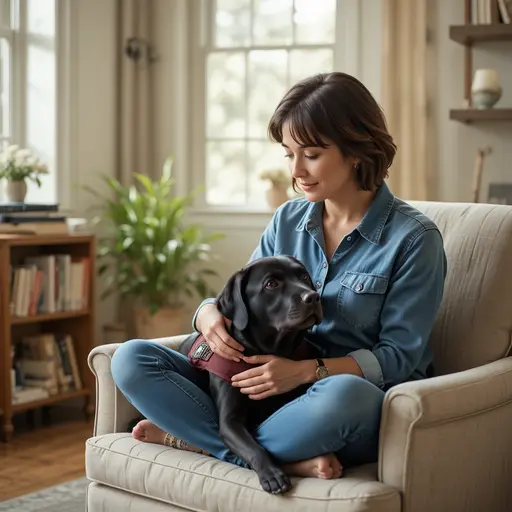
Why Physical Interaction Matters For Biological Benefits
The difference between groups highlights a crucial point: not all animal-related activities are equal. Physical touch, movement, and real-time bonding appear necessary to trigger the cellular benefits.
When you train a dog, you’re engaged in multiple beneficial activities simultaneously. You’re moving your body, which improves circulation and reduces inflammation. You’re experiencing tactile contact, which releases oxytocin — the “bonding hormone” that helps lower cortisol.
You’re also engaging in purposeful work, which provides a sense of meaning that passive observation doesn’t replicate.
The video group still enjoyed mental health improvements, likely from the calming effect of watching dogs and the social support of being in a study. However, their cells didn’t receive the same protective benefit. This suggests that while pet-related videos or social media content can boost mood, they don’t appear to deliver the same effect on cellular aging as real interaction.
For pet owners, this early study suggests that cuddling, playing with, and actively caring for your dog isn’t just emotionally rewarding — it may also be protective at the cellular level.
The PTSD Connection: Why Women Veterans Benefit Most
Female veterans face distinct reintegration challenges that traditional PTSD treatments often overlook. Combat experience, military sexual trauma, and the transition to civilian life create unique stress patterns that conventional therapy may not fully address. This study suggests animal interaction offers an unconventional but powerful support system.
Cheryl Krause-Parello, Ph.D., Associate Dean for Research at FAU’s Christine E. Lynn College of Nursing and the study’s lead author, put it directly: “Nontraditional approaches like connecting with animals can offer meaningful support.” She has also noted that female veterans face reintegration challenges that many standard PTSD treatments don’t fully address.
Training a service dog creates a mutual dependency that can help rebuild trust and purpose.
The biological angle matters for PTSD specifically because chronic stress is known to accelerate telomere shortening. If dog training can help counteract that process, it may offer a way to address some of the premature cellular aging that trauma causes — on top of, not instead of, standard treatment.
The weekly commitment provided structure and accountability, while the physical activity helped engage the nervous system.
While the study focused on veterans, the mechanisms at work — stress reduction, purpose, physical activity, and social bonding — plausibly apply more broadly to anyone dealing with chronic psychological distress, though that hasn’t been tested directly.

What This Means For Everyday Pet Owners
You don’t need a formal service-dog program to apply the core lesson here: active engagement beats passive observation.
- Daily Walks: Moving alongside your dog combines physical activity with bonding.
- Training Sessions: Teaching new commands or tricks engages purpose and focus, similar to the study’s mechanism.
- Grooming: Brushing or bathing your dog provides tactile contact and oxytocin release.
- Interactive Play: Fetch, tug-of-war, or puzzle toys create the movement-plus-bonding combination the study highlights.
- Consistency: The study’s participants trained weekly for eight weeks — regular, sustained interaction seems to matter more than occasional intense sessions.
Passive activities like watching your dog from across the room or scrolling through pet videos won’t hurt you, but based on this study, they’re unlikely to deliver the same cellular benefit as hands-on time.
Expert Insights On The Findings
Dr. Krause-Parello’s research frames these results within a broader understanding of women’s health needs. Traditional PTSD treatments, while effective for some, don’t always address the holistic requirements of female veterans.
Medication and talk therapy help with symptoms but may not address the cellular effects of chronic stress. Animal-assisted interventions appear to work differently, engaging physical, emotional, and social pathways at once.
Oxytocin release during positive dog interaction is thought to counteract stress hormones. Physical activity reduces inflammation, a known driver of aging. A sense of purpose can help rebuild self-worth eroded by trauma.
Telomere lengthening is rare in adults — most lifestyle changes only slow the rate of shortening rather than reverse it. That’s part of why this finding, while preliminary, has drawn attention: it points to a possible synergistic effect worth investigating further.
Researchers are careful to note this isn’t a standalone treatment. Dog training didn’t outperform passive video-watching for mental health symptoms — both groups improved about equally. The added biological benefit, though, makes hands-on interaction a promising complement to existing treatments, especially for people concerned about stress-related aging.
Open questions remain about dosage: would more frequent sessions amplify the benefit? Do different dog breeds or activities produce different effects? These are the questions driving the next round of research.
Current Limitations And Future Research Questions
This study offers early, promising evidence, but it comes with real limits worth understanding before concluding.
The most important one: the overall telomere difference between the training and video groups trended toward significance but didn’t independently clear the standard statistical threshold on its own. The effect only became statistically significant once researchers accounted for combat exposure — women with combat experience who trained dogs showed the largest telomere gains, while women with combat experience in the video group showed the steepest declines. That’s a meaningful finding, but a narrower one than “dog training slows aging in veterans” taken at face value.
The sample size of 28 participants is small, which limits how broadly the findings generalize. All participants were female U.S. veterans, a specific population whose experiences may not translate directly to civilian women or men.
Eight weeks may also be too short a window to reliably capture telomere change, and the study didn’t follow participants afterward, so it’s unclear whether the benefit holds, grows, or fades once training ends.
The control group watched videos rather than doing a neutral, active alternative. That raises a fair question: did their telomeres shorten because they were more sedentary, or because passively watching dogs without interacting was mildly frustrating? Future studies need more active comparison groups to rule this out.
Researchers tracked combat exposure but didn’t formally assess other trauma types, even though some participants’ PTSD stemmed from military sexual trauma rather than combat — a distinction that may matter for who benefits most and hasn’t yet been studied on its own.
Other aging markers, like epigenetic clocks or inflammatory cytokines, weren’t measured, so telomere length only tells part of the biological aging story here. And the underlying mechanism remains unclear: is it the physical activity, the bond formation, the sense of purpose, or some combination that drives the effect?
For transparency: the study was funded by the National Institutes of Health’s Eunice Kennedy Shriver National Institute of Child Health & Human Development, and one co-author directs Warrior Canine Connection, the program used in the study — a relationship the researchers disclosed themselves.
Dogs slow biological aging FAQs
Can spending time with a dog actually slow down human aging?
Early research suggests it might, but only through active, hands-on interaction. A 2025 study found that women veterans who physically trained service dogs for eight weeks showed longer telomeres, while those who only watched training videos showed shorter ones. Passive contact, like watching videos, didn’t produce the same cellular effect.
What exactly is a telomere, and why does it matter?
Telomeres are protective caps on the ends of your chromosomes, similar to the plastic tips on shoelaces. They naturally shorten each time a cell divides, and shorter telomeres are linked to accelerated aging, chronic disease, and higher mortality risk. Lengthening them, rather than just slowing their decline, is unusual in adults.
Do you have to train a service dog to get any benefit?
No. The study’s authors believe the underlying mechanisms — physical movement, touch, purposeful activity, and social bonding — likely apply to everyday dog ownership too. Regular walks, active play, grooming, and trick training combine several of these elements, even without formal service dog work.
Is this finding proven, or does it need more research?
It needs more research. With only 28 participants, and a telomere effect that only reached statistical significance once combat exposure was factored in, this is early evidence rather than a settled result. Larger, longer-term studies are needed to confirm whether the benefit holds up over time.

Conclusion
Active, purposeful interaction with dogs appears to slow biological aging — passive interaction doesn’t seem to have the same effect. This study offers early but genuinely novel evidence that physically engaging with dogs can lengthen telomeres, the cellular markers of aging, particularly for women veterans dealing with PTSD and combat-related trauma.
For pet owners, the takeaway is simple: watching cute dog videos can lift your mood, but playing, training, and physically caring for a dog may do something videos can’t — support your cells.
The combination of movement, touch, purpose, and companionship appears to create a rare synergy, one that may work against biological aging rather than just slowing it down.
Women veterans, especially those with combat exposure, may benefit most from this kind of intervention — a complement to, not a replacement for, traditional PTSD treatments.
Questions remain about optimal frequency, long-term durability, and exactly which ingredient in dog training matters most. But the early signal is worth paying attention to.
If you have a dog, consider trading a few minutes of scrolling for a few minutes of active, hands-on time together. It’s good for your bond — and, this study suggests, maybe for your cells too.